


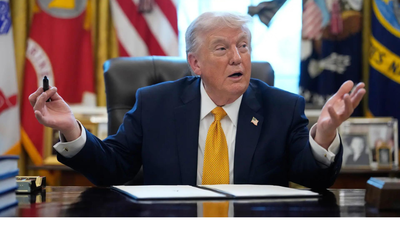
US President Donald Trump said on Monday he was “shocked” by Iran’s decision to strike US allies in the Gulf region, even as American officials and intelligence sources indicated that such retaliation had been anticipated before the conflict began, according to Reuters.
The remarks came as the US–Israeli war on Iran entered its third week, with hostilities expanding beyond initial targets to engulf key parts of the Middle East. Iranian drone and missile strikes have increasingly targeted US military positions and allied infrastructure across the Gulf, raising concerns of a broader regional escalation.
Trump Declares ‘Victory’ In Iran Conflict As US Military Faces Risky Path To End War
“They (Iran) weren’t supposed to go after all these other countries in the Middle East,” Trump said.
“Nobody expected that. We were shocked.” He repeated the claim later, adding: “Nobody, nobody, no, no, no. The greatest experts, nobody thought they were going to hit.” His comments come amid growing scrutiny over whether Washington had adequately assessed the risks of retaliation before launching strikes on Iran on February 28 alongside Israel. The widening scope of attacks, including on civilian and energy infrastructure, has intensified questions over the conflict’s trajectory and its global implications.
Poll
What is your biggest concern regarding the conflict's escalation?
Intelligence had flagged risk of wider retaliation
However, a US official and multiple sources familiar with intelligence assessments told Reuters that Iran’s response, including attacks on countries such as the UAE, Qatar, Saudi Arabia, Bahrain and Kuwait, had been considered a possible outcome.Pre-war assessments did not say retaliation was certain, but it was “on the list of potential outcomes,” one source said. Officials also said Trump had been briefed that strikes on Iran could trigger a broader regional conflict, particularly if Tehran viewed Gulf states as supporting US operations.They further indicated that Washington had been warned Iran might attempt to shut the Strait of Hormuz. Rockets and at least five drones targeted the US embassy in Baghdad early Tuesday, described by Iraqi sources as the most intense attack since the war began. No injuries were reported by US officials.Iran also launched overnight missile strikes on Israel, while the Israeli military said it was targeting “Iranian regime infrastructure” in Tehran and Hezbollah-linked sites in Beirut.
Strait of Hormuz disruption hits global markets
The conflict has severely disrupted shipping through the Strait of Hormuz, which carries about 20% of global oil and liquefied natural gas supplies. Iran has effectively halted most traffic through the route using drones and naval mines. Oil prices rose more than 5% on Tuesday amid supply concerns, with markets reacting to the prolonged disruption and rising geopolitical risk. Analysts warned of potential inflationary pressures and slower global growth.
Debate over war justification
The intelligence disclosures have also raised questions over the rationale for the US joining Israel’s military campaign against Iran on February 28. Some Democratic lawmakers said briefings provided no evidence of an imminent threat that required immediate military action.The White House and the Office of the Director of National Intelligence did not immediately comment on the intelligence assessments, Reuters reported.
War toll rises
The conflict has killed at least 2,000 people across the region, including more than 200 children in Iran, according to Iranian foreign minister Abbas Aragachi.