


AA
Text Size
- Small
- Medium
- Large
1/10
9 strange objects floating in space that still exist
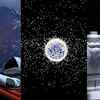
Space is a vast and infinitely expansive area with many things we know little about. If we look at how our Solar System moves regularly, we can see that there are some visitors from outside of it, like ‘Oumuamua’, which move in ways that do not fit into the expected categories given the ways we classify both comets and asteroids. However, despite being able to classify these two types of objects based on how they behave according to the laws of physics, the chemical makeup of each is likely to be different due to their potentially being made of hydrogen ice or nitrogen ice.
There are also ‘Zombie Stars,’ some white dwarfs that can either reignite or survive an explosion, even with extreme conditions. NASA Science believes that wandering interstellar objects such as Comet 2I/Borisov are helpful in learning more about the chemistry in far-off star systems.
2/10
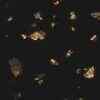
Urine Crystals from Humans ‘research gate’
When space travel first began, astronauts would release liquid waste that would instantly freeze into sparkling golden ice crystal puffs while drifting in space. Astronauts on the Apollo Lunar excursions referred to the puffs as ‘magnificent’ while travelling to and from the moon. The ISS (International Space Station) today has advanced filtration systems that recycle approximately 98% of all human fluids back into purified water, which effectively ended the phenomenon.
PC: Research Gate
3/10
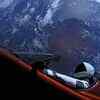
Tesla Roadster and ‘Starman’
lon Musk’s Roadster has been cruising around the Solar System since it was placed into orbit in February 2019. As of March 17, 2026, the Roadster is travelling in a never-ending, silent loop between Earth and Mars and is over 285 million kilometres from Earth and serves as a living, high-speed testament to the success of private space flight in the 21st century. It’s truly amazing to see how far these vehicles have come!
Source: SpaceX Roadster Live Tracking – TheSkyLive

4/10
Voyager’s Golden Records
Twin Voyager spacecraft flying through outer space each have a record made of gold with a collection of works compiled by Carl Sagan. These records act as a way to communicate with aliens and include over 55 different languages, 155 photographs encoded onto the records, and sounds as different as a baby crying and music by both Bach and Chuck Berry. The Voyager spacecraft and its records act as the final record of human existence within our universe.
Source: Voyager Golden Record Overview – NASA Science
5/10
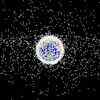
Kessler Cloud: Space Debris
Currently, Earth’s orbit contains over 35,000 pieces of debris greater than 10 centimetres, such as dead satellites and old rocket remnants. With objects moving at speeds of over 17,500 miles per hour, even a piece of paint could produce catastrophic results. Scientists fear a Kessler Syndrome scenario, where numerous collision events occur as a result of accumulated debris in Earth’s orbit that will prevent future generations from using Earth’s orbital space.
Source: Space Debris FAQ – European Space Agency (ESA)
PC: Wikipedia

6/10
J002E3: The mystery cylinder
Discovered in 2002 by an amateur astronomer, J002E3 was initially believed to be an asteroid passing through space. However, scientists were able to determine that the object was covered in white titanium dioxide paint, identical to that used on NASA rockets.
After determining that it was white titanium paint, astronomers concluded that J002E3 is, in fact, the third-stage S-IVB rocket of the Apollo 12 mission. J002E3 returned to a highly elliptical orbit around the Earth after being in space for 30 years.
Source: How a Long-Gone Apollo Rocket Returned to Earth – Astronomy Magazine
7/10
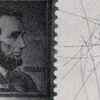
480,000,000 copper needles
As part of the Cold War effort, the United States launched Project West Ford. Project West Ford involved injecting 480,000,000 tiny copper needles into orbit to create an artificial ionosphere. The goal was to protect the US and its military from Soviet cable-cutting. However, the needles eventually became clumped. Most have decayed, but a few clumps still orbit the Earth.
Source: Project West Ford Case Study – NASA Orbital Debris Program Office
8/10
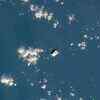
The floating toolbag is worth 100,000 dollars
The 2008 toolbag, which was lost, has been widely publicised; however, a more recent event occurred in November 2023 when astronauts released a toolbag from the outside of the space station during a solar array repair mission. For approximately six months, this white toolbag was tracked as an orbital satellite which could be viewed by binoculars from the ground before it failed to deorbit and burn up as it reentered the Earth’s atmosphere in early 2024.
Source: Tool Bag Dropped During ISS Spacewalk – AIAA
PC- Reddit (r/nasa)
9/10
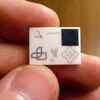
Moon Museum
The Andy Warhol ‘Moon Museum’ was allegedly smuggled onto the Apollo 12 lunar module in November of 1969. The ‘Moon Museum’ is a miniature piece of ceramic (wafer) that includes examples of the work of six different artists, including Andy Warhol.
While the NASA space program never officially approved of the artwork, an engineer allegedly put the miniature tile into the insulation on the lunar module before it was launched to the Moon. Warhol’s contribution to the artwork is a representation of his initials, which is very controversial in nature because of its anatomical interpretation.
Source: The Moon Museum 1969 – Museum of Modern Art (MoMA)
PC: Wikipedia
10/10
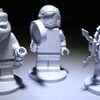
Lego minifigures orbiting Jupiter
There are three special ‘passengers’ aboard the Juno Spacecraft: LEGO figurines that are 1.5 inches tall and are made of aluminium. They represent Galileo Galilei (the Father of Astronomy), Jupiter (the Roman god) and Juno (the wife of Jupiter). The reason for using Lego figures is that they would withstand the very high radiation levels surrounding the gas planet Jupiter from the radiation belts orbiting it. The project is in collaboration with LEGO to help inspire kids to be interested in STEM and in exploring space.
Source: LEGO Figurines Aboard Juno – NASA JPL
PC: NASA Jet Propulsion Laboratory
Follow Us On Social Media