


- News
- Science News
- 10 strange scientific theories sound absurd today, but scientists once believed them
AA
Text Size
- Small
- Medium
- Large
1/11
10 strange scientific theories sound absurd today, but scientists once believed them
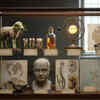
Throughout history, even the world’s most brilliant minds have fallen for theories that seem completely bizarre today. Before we had modern technology, geniuses often relied on intuition to explain the unknown. From thinking a hidden planet caused space wobbles to believing tooth worms caused cavities, these strange ideas were once defended in famous scientific journals. These ten genius failures show that the path to discovery is full of spectacular mistakes. By exploring these debunked theories- like vegetable lambs and emotional asthma- we see that science isn’t just about being right; it’s a constant, self-correcting journey toward the truth.
2/11
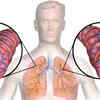
The ‘Emotional Asthma’ Theory
Psychoanalyst Franz Alexander theorised in the mid-20th century that asthma was a result of people repressing their desire for their mother. Most psychoanalysts treated their patients for breathing problems with therapy rather than medicine. Asthma is a chronic inflammatory disease of the airway caused (in one’s childhood) by an allergic reaction or one’s genetics, not by an individual’s subconscious desires to be close to their mother.

3/11
The Testicle Tonic
The famous neurologist Charles Édouard Brown-Séquard injected himself with a mixture of powdered dog and guinea pig testicles in 1889. After doing so, he reported to the Biological Society of Paris an increase in energy and mental acuity as a result. While the effects he experienced are now understood to be due to the placebo effect, his published research in the Lancet ultimately led to the emergence of the contemporary field of endocrinology.
PC: Google Gemini
4/11
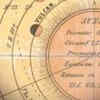
The Planet Vulcan
French astronomer and mathematician Urbain Le Verrier proposed that a hypothetical planet existed between Mercury and the Sun to account for the changes observed in Mercury’s orbit in the 19th century. Once his theory was proposed, astronomers from around the world spent more than 90 years searching for Vulcan, and some claimed to have seen it. According to NASA’s website, the idea persisted until General Relativity, as previously discussed, explained the changes observed in Mercury’s orbit.
PC: Wikipedia
5/11
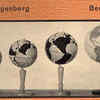
The Expanding Earth Theory
A minority of 20th-century scientists who rejected the modern concept of plate tectonics proposed that the Earth was expanding like a balloon and suggested that this was the reason that the continents fit together. While supported to varying degrees by other scientists in the early 1900s, NOAA and contemporary satellite measurements have now shown that the Earth’s radius does not change significantly due to ongoing balances between the processes of subduction and seafloor spreading.
PC: Wikipedia
6/11
The Radium Craze
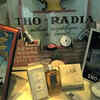
Radium was once valued as a miracle cure by scientists and other medical professionals after Marie Curie’s discovery. They began prescribing water infused with radium (Radithor) as a cure for all ailments, from fatigue to blindness. The National Museum of American History notes that this trend changed when Radium users began dying from their use, and it was discovered that the body cannot use any form of radiation to recharge or energise one’s body.
PC: Wikipedia
7/11
Tooth Worms
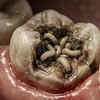
For thousands of Years, people believed that small worms lived in teeth and caused tooth decay by chewing away the enamel. It was not until the 1700’s, when Pierre Fauchard began recording his findings in journals and proposed that the cause of tooth decay came from sugar and acids rather than from worms.
PC: Google Gemini
8/11
Recapitulation Theory
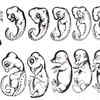
Ernst Haeckel famously stated that ‘ontogeny recapitulates phylogeny’, meaning that while a human embryo develops physically, it repeats through each stage of growth (like having fish gills) the entire life cycle of its evolutionary ancestors. While his theory was influential to early biology, current genetic studies and other developments prove that embryos develop physically using many of the same developmental processes, but embryos don’t develop through the lives of their ancestors.
PC: Wikipedia
9/11
The Vegetable Lamb of Tartary
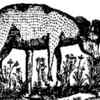
Medieval botanists believed there was a plant that produced lambs; they were all connected to the earth by a long stalk. The reason they were trying to explain why tree wool (cotton) was produced in Asia was that they thought it came from lambs, which was not true. The Biodiversity Heritage Library shows the history of the myth of lambs growing on trees until travellers figured out that lambs were actually fluffy seed pods.
PC: Wikipedia
10/11
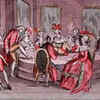
Animal Magnetism (Mesmerism)
The inventor of Mesmerism, Franz Mesmer, believed there was an invisible fluid referred to as the ‘magnetic fluid’ that flowed through all living things and that an imbalance could lead to an illness. He claimed to be able to restore this balance using magnets and through a process called ‘laying on of hands’. A Royal Commission, which included Benjamin Franklin, proved that Mesmer’s claims were incorrect and that the magnetic fluid did not exist; however, according to NIH, Mesmerism’s work had a huge impact on modern-day hypnosis.
PC: Wikipedia
11/11
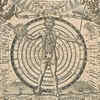
The Doctrine of Signatures
Medieval botanical theory had determined that if any plant looked similar to a body part, then it could cure problems with that body part. Thus, because of their resemblance, walnuts were eaten to promote a healthy brain. While seen as nonsense today by modern pharmacology, research shows that this view was the dominant model of medicine (combined with early observation and their mystical religious beliefs) for hundreds of years.
PC: Wikipedia
Follow Us On Social Media