


By: Anushka Verma
Date: October 27, 2025
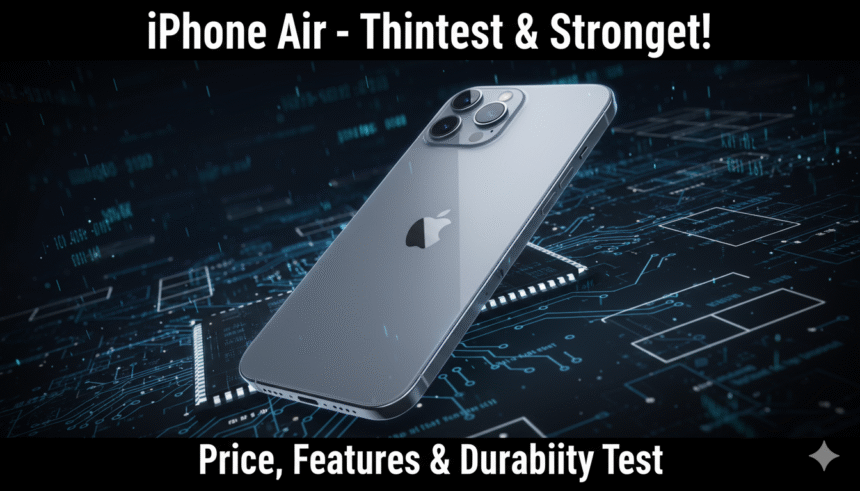
Apple has once again redefined the concept of smartphone engineering with the launch of the iPhone Air, marking the company’s boldest attempt at combining ultra-slim design with remarkable durability. Debuting alongside the iPhone 17 series, the iPhone Air is officially Apple’s thinnest smartphone, measuring just 5.6mm in thickness, while retaining flagship-level performance and build quality. The Cupertino-based tech giant claims that the iPhone Air is not only its sleekest device but also the most durable iPhone ever produced.
With the smartphone market increasingly competitive, Apple has aimed to push boundaries in design, display technology, and durability. The iPhone Air is the embodiment of this vision, offering a premium titanium frame, Ceramic Shield 2 protection, and a high-performance A19 Pro chipset. While many previous slim phones had faced criticism for bending or fragility, Apple’s latest innovation seems to have overcome these challenges.
In this article, we take an in-depth look at the iPhone Air, its design, specifications, performance, durability, and market positioning. We also analyze the results of a widely anticipated hands-on test conducted by YouTuber JerryRigEverything, providing a comprehensive view of why this device is generating immense excitement among tech enthusiasts worldwide.
Market Context: Apple’s Strategy for Slim and Durable Devices
Apple has consistently focused on aesthetic refinement and user experience as key differentiators. With smartphones becoming central to everyday life, users demand devices that are both visually appealing and durable enough to withstand regular wear and tear. The iPhone Air represents Apple’s strategic approach to meet this dual requirement.
The concept of an ultra-thin smartphone is not new. Competitors such as Samsung, Xiaomi, and Oppo have produced slim devices, but they often compromise structural integrity in favor of aesthetics. Apple, in contrast, has managed to engineer a device that retains slimness without sacrificing durability, a feat confirmed through independent testing.
Additionally, the iPhone Air serves as a flagship alternative for users who desire cutting-edge Apple technology without the bulk of larger devices. By introducing a single rear camera while maintaining excellent photography capabilities, Apple balances design elegance with performance.
Key Specifications of the iPhone Air
| Feature | Specification |
|---|---|
| Display | 6.5-inch Super Retina OLED, Ceramic Shield 2 protection |
| Body | Titanium frame, glass back |
| Thickness | 5.6 mm |
| Processor | A19 Pro chipset |
| RAM | 12 GB |
| Storage Options | 128 GB / 256 GB / 512 GB |
| Camera | Single 48MP rear camera, Center Stage front camera |
| Battery | Approx. 3,200 mAh to maintain slim design |
| Operating System | iOS 19 |
| Connectivity | 5G, Wi-Fi 7, Bluetooth 5.4, Ultra-Wideband (UWB) |
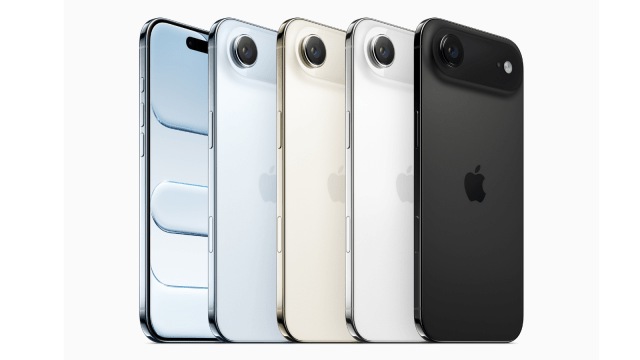
| Colors | Silver, Space Black, Blue, Gold |
| Price in India | Starting at ₹1,29,900 |
This specification table highlights Apple’s commitment to delivering high-performance hardware in an ultra-slim package, making the iPhone Air a well-rounded flagship device.
Design and Build Quality
Apple has long been celebrated for its design innovation, and the iPhone Air is no exception. Its titanium frame offers a perfect balance between lightweight construction and structural rigidity, a combination rarely seen in the smartphone industry. Titanium is lighter than stainless steel yet four times stronger than aluminum, giving users confidence in the device’s longevity.
The phone’s Ceramic Shield 2 glass adds another layer of protection. According to Apple, this shield is three times more scratch-resistant than the previous generation, allowing users to carry the device without constant concern for screen damage. The slim profile does not compromise ergonomics; the iPhone Air fits comfortably in hand while retaining a premium aesthetic.
Despite its single rear camera, the iPhone Air appears sleek and modern, maintaining Apple’s minimalist design philosophy. The 6.5-inch OLED display delivers vibrant colors, deep blacks, and excellent viewing angles, making it a strong contender for multimedia consumption.
Durability Test: JerryRigEverything Puts the iPhone Air to the Test
The durability of a smartphone is critical for consumer confidence. With the iPhone 6 facing the infamous bendgate scandal, Apple has historically faced scrutiny regarding structural resilience. The iPhone Air, however, underwent rigorous testing by JerryRigEverything, a renowned tech reviewer known for his extreme durability tests.
Scratch Test
The first part of the test involved using Mohs hardness picks to scratch the device. The Ceramic Shield 2 screen resisted scratches effectively, showing minor marks only at higher hardness levels (level 7+), which is impressive for an ultra-thin phone. The titanium frame displayed scratches under direct pressure, but this was expected given the nature of the material. The buttons, camera island, and front Center Stage camera also withstood standard scratching, demonstrating Apple’s attention to material durability.
Burn Test
The screen was exposed to a lighter flame for several seconds. Remarkably, the OLED panel did not sustain permanent damage; minor discoloration appeared momentarily but disappeared once the heat source was removed. This demonstrates the durability of the Ceramic Shield 2 and the device’s ability to withstand accidental exposure to heat.
Bend Test
Perhaps the most anticipated test, the bend test, simulated the infamous bendgate conditions. While the iPhone Air bent slightly under stress, it immediately returned to its original shape after the applied force was removed. Further testing involved a machine applying 130 pounds of pressure to the center, which is a common point of structural weakness in smartphones. The iPhone Air withstood this stress without breaking, suggesting that Apple’s claim of producing the most durable iPhone to date is well-founded.
Performance and Software
The A19 Pro chipset ensures that the iPhone Air delivers smooth performance across all applications, from gaming to professional-grade video editing. Paired with iOS 19, the device offers seamless navigation, intelligent power management, and advanced AI capabilities.
Key performance highlights include:
- Enhanced GPU rendering for graphics-intensive apps
- Optimized battery usage for longer uptime despite a smaller battery
- Advanced AI processing for photography, gaming, and augmented reality
Users can expect fast app launches, smooth multitasking, and consistent performance over time. The software is optimized to handle Apple’s new features, including Face ID, Center Stage video calls, and improved AR capabilities, ensuring a premium user experience.
Camera Capabilities
Apple has chosen a single 48MP rear camera for the iPhone Air to maintain its slim form factor. Despite having only one rear lens, the device leverages computational photography to deliver outstanding image quality.
Camera Highlights:
- Center Stage front camera for video conferencing
- Improved low-light performance
- AI-powered image enhancement
- 4K video recording with stabilization
Early reviews suggest that the iPhone Air can rival multi-camera setups in terms of output quality, proving that hardware simplicity can be compensated by software intelligence.
Battery and Charging
Maintaining a slim profile required Apple to include a slightly smaller battery, approximately 3,200 mAh. While smaller than previous flagship iPhones, iOS 19 optimizations and the A19 Pro’s efficiency ensure a full day of moderate usage.
The iPhone Air supports fast charging, achieving 50% battery in 30 minutes with compatible chargers. Additionally, MagSafe wireless charging remains supported, providing users with flexible charging options without compromising design aesthetics.
Pricing and Availability
Apple has priced the iPhone Air as a premium device, reflecting its design, durability, and performance innovations. In India, pricing starts at ₹1,29,900 for the 128GB variant.
| Variant | Price (INR) |
|---|---|
| 128 GB | ₹1,29,900 |
| 256 GB | ₹1,49,900 |
| 512 GB | ₹1,79,900 |
The device is available at Apple stores, authorized resellers, and online platforms starting October 27, 2025. Apple has also ensured that color options cater to a wide range of user preferences, including Silver, Space Black, Blue, and Gold.
Comparison with Previous iPhones
| Model | Thickness | Material | Durability Notes | Screen Size |
|---|---|---|---|---|
| iPhone 6 | 6.9 mm | Aluminum | Bendgate issue reported | 4.7 inch |
| iPhone 13 | 7.7 mm | Aluminum/Glass | Stronger than iPhone 6 | 6.1 inch |
| iPhone 17 | 6.2 mm | Aluminum/Glass | Improved durability | 6.7 inch |
| iPhone Air | 5.6 mm | Titanium/Glass | Most durable, bend-resistant | 6.5 inch |
The comparison highlights Apple’s significant advancement in materials engineering, transitioning from aluminum frames to titanium for superior strength without increasing thickness.
Competitor Analysis
Compared to competitors, the iPhone Air is unique in combining slim design, premium materials, and extreme durability. Competitor devices often sacrifice rigidity or display protection for aesthetics. Brands like Samsung, OnePlus, and Xiaomi offer thin phones, but none match the iPhone Air’s titanium build and Ceramic Shield 2 protection.
In addition, Apple’s software ecosystem and long-term support provide advantages in user experience, security, and app optimization, which are critical for premium users.
User Impressions and Expert Opinions
Early user reviews indicate that the iPhone Air is well-received for its slimness and durability. Users have praised the lightweight titanium frame, the excellent OLED display, and the smooth performance of the A19 Pro chipset. Experts note that Apple has successfully avoided previous pitfalls like bendgate and battery compromise.
Tech analysts predict that the iPhone Air could influence future smartphone design trends, encouraging competitors to focus on durability combined with slim profiles.
Conclusion
The iPhone Air represents a milestone in smartphone design, proving that slim does not mean fragile. With its titanium frame, Ceramic Shield 2, and high-performance A19 Pro chipset, Apple has crafted a device that is both aesthetic and resilient. The durability tests conducted by JerryRigEverything further affirm that this is the most durable iPhone yet, capable of withstanding scratches, burns, and bending forces.
For consumers seeking a premium smartphone that balances style, performance, and durability, the iPhone Air emerges as a compelling choice. Apple has set a new benchmark for flagship devices, challenging the market to innovate in slim yet strong smartphone engineering.
In conclusion, the iPhone Air is not just a testament to Apple’s design prowess but also a symbol of engineering excellence, making it a must-consider option for tech enthusiasts and premium users alike.