

By Anushka Verma
Updated : November 1, 2025
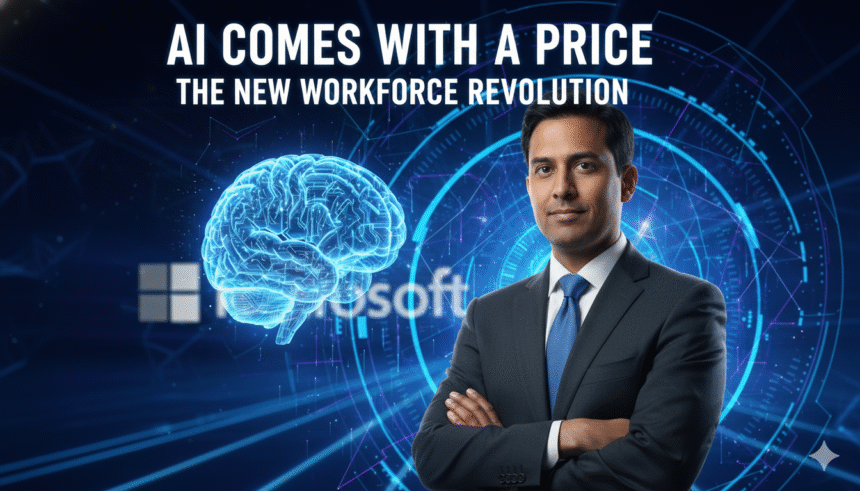
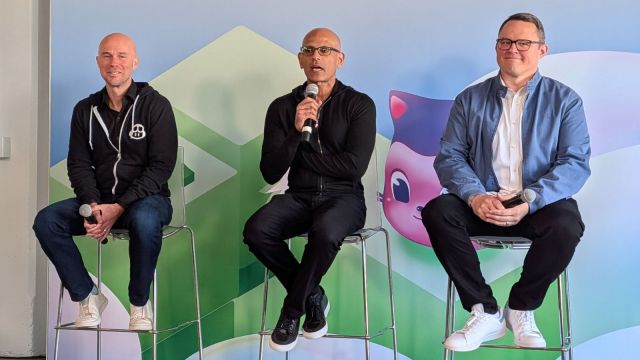
As artificial intelligence reshapes the landscape of modern technology, Microsoft’s CoreAI chief Jay Parikh has offered a crucial insight into what many are calling the most profound organisational transformation since the invention of the internet. Speaking at a closed-door briefing during the GitHub Universe event in San Francisco, Parikh shared how AI is not merely a technological upgrade—it’s a systemic revolution that’s redefining how companies hire, train, and incentivise their employees.
“There are some system changes here in terms of companies going through organisational change whether it be how they have organised things, how they incentivise, hire, and train employees, how they think about product development, or how they may think about should they be growing, staying flat, or shrink,” Parikh explained.
That statement, while simple, captures the tectonic shift happening in boardrooms across Silicon Valley and beyond. Artificial intelligence, once a futuristic concept, is now the engine driving strategic decisions, workforce structures, and even corporate culture.
AI’s Price Tag: Beyond Dollars and Data
When Parikh says “system changes,” he’s referring to something far more valuable than money — the price of adaptation. For every company eager to ride the AI wave, there’s an underlying cost: rethinking how human capital is utilised in an era where machines can generate code, create content, and analyse data faster than ever before.
The AI revolution has created a paradox. On one hand, it promises unprecedented productivity and innovation. On the other, it demands continuous learning and reconfiguration of traditional organisational models. Businesses now face a critical question — what is the true price of progress?
Microsoft’s CoreAI: The Nerve Center of Intelligent Transformation
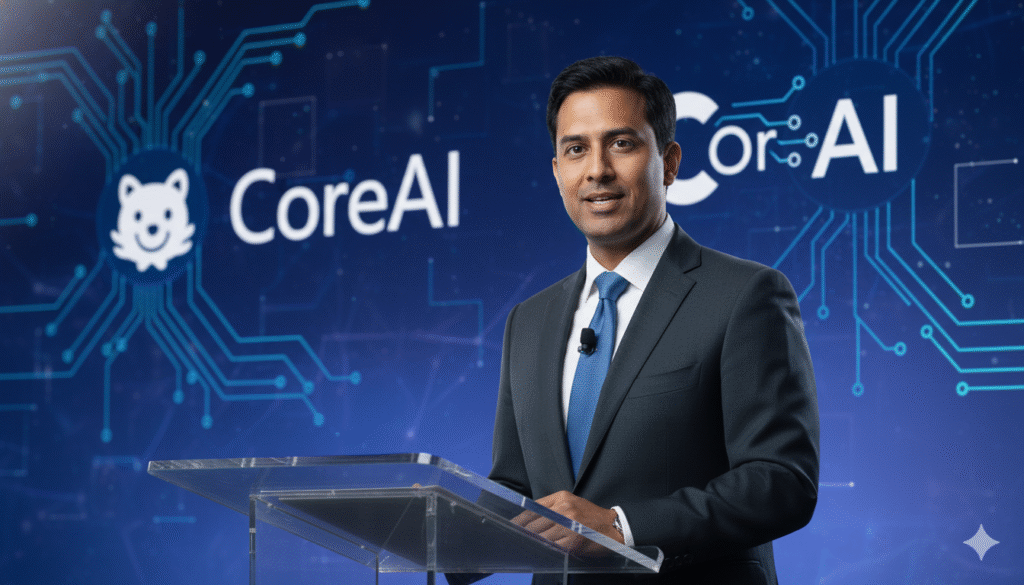
Jay Parikh leads Microsoft’s CoreAI group, established earlier this year, which focuses on building the company’s artificial intelligence platforms and developer tools. This division underpins Microsoft’s broader AI strategy — embedding intelligence into every layer of its ecosystem, from Azure AI services and Copilot integration to GitHub’s AI-assisted coding tools.
Parikh’s leadership marks a strategic consolidation of Microsoft’s AI vision. He not only oversees CoreAI but also supervises GitHub, which plays a critical role in Microsoft’s AI roadmap. Under his guidance, GitHub has evolved from a simple code-sharing platform into a hub of AI-driven software development, enabling millions of developers to build smarter, faster, and more collaboratively.
“Generative AI is not just a tool; it’s a collaborator,” Parikh emphasised. “It changes how developers think, how teams communicate, and how products evolve.”
Hiring in the Age of AI: Skills Over Degrees
Perhaps the most striking transformation Parikh points to is in recruitment. Traditional hiring—based on degrees and years of experience—is being replaced by a skills-first model, driven by AI’s dynamic needs.
Companies like Microsoft are now prioritising problem-solving ability, adaptability, and data literacy over formal education credentials. Recruiters increasingly use AI-driven assessment tools to evaluate candidates’ real-world performance through simulated coding challenges, behavioural pattern analysis, and even AI chat assessments.
This shift signals a larger truth: in the AI era, knowledge is no longer static. Employees must evolve alongside technology, learning continuously to remain relevant. The most in-demand skill of the decade isn’t coding—it’s learning agility.
Training Reimagined: Continuous Learning as a Culture
For decades, training in organisations was a periodic exercise—an annual workshop, a quarterly seminar. But under AI’s influence, learning has become continuous.
At Microsoft, AI tools are now integrated into employee development systems. Personalised learning paths help employees upskill in real time, suggesting new courses based on their current projects or even predicting which future skills they’ll need based on the company’s direction.
This shift is redefining the role of corporate L&D (Learning and Development) departments. Instead of creating rigid training programs, they now design adaptive, AI-curated learning experiences tailored to each individual’s growth path.
“AI is helping employees not just work smarter, but learn smarter,” Parikh observed. “The more data we collect about how people learn, the more we can personalise their development journeys.”
Incentives in the AI Economy: Rewarding Innovation Over Output
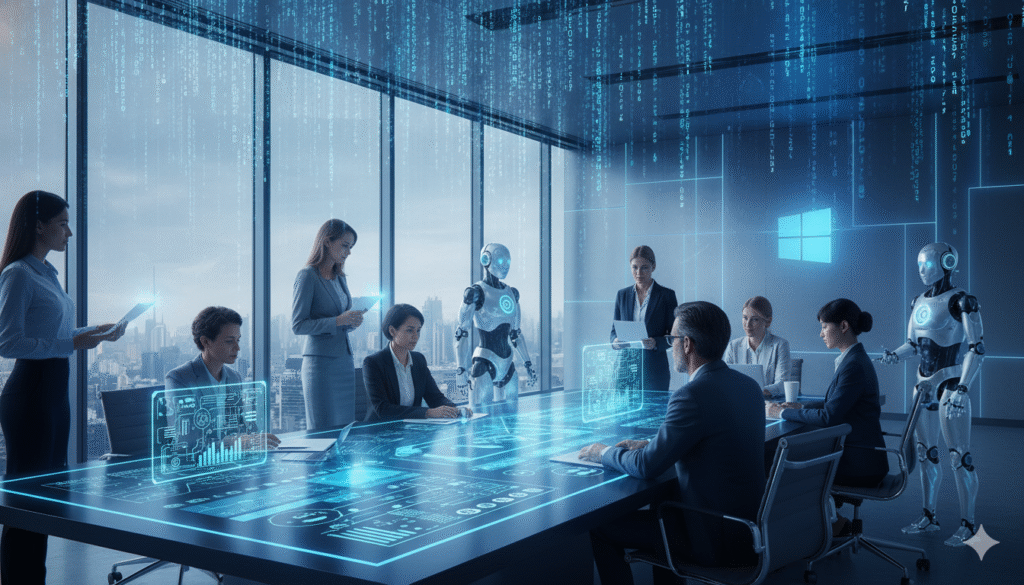
AI is also rewriting the rules of incentivisation. Where companies once rewarded employees for output and efficiency, the new focus is on creativity, innovation, and collaboration with AI systems.
In Microsoft’s AI-driven ecosystem, the question is no longer “how much did you produce?” but “how effectively did you leverage AI to enhance your impact?” Teams that integrate AI tools creatively are being recognised as innovators rather than mere implementers.
This marks a fundamental rethinking of performance metrics. Companies are beginning to design compensation models that reward experimentation—a major cultural shift from risk-averse corporate traditions.
Product Development in the AI Era
AI is also influencing how products are conceived, designed, and launched. In Parikh’s words, AI is forcing teams to rethink “how they think about product development.”
At Microsoft, AI Copilots embedded across products like Office 365, Dynamics, and GitHub are not just add-ons—they represent a philosophy of co-creation between human developers and AI systems. This co-creation model accelerates the development cycle, reduces bugs, and improves design iteration speeds dramatically.
Developers using GitHub Copilot, for example, are reportedly writing code 55% faster, freeing up time for strategic problem-solving and design thinking. “AI gives us a new kind of velocity,” Parikh said. “But it also requires a new kind of discipline.”
The Human–Machine Balance
The acceleration AI brings also raises a human challenge: how do people retain purpose and creativity when machines can do so much?
Parikh believes the answer lies in collaboration, not competition. “AI won’t replace people,” he said. “But people who know how to work with AI will replace those who don’t.”
This view echoes a growing consensus across Silicon Valley that the future of work will be a hybrid partnership — humans providing emotional intelligence, judgment, and empathy, while AI delivers precision, scale, and computational power.
Challenges: The Ethical and Organisational Price
The integration of AI into corporate systems comes with challenges — data privacy, algorithmic bias, and workforce displacement among them.
As companies automate more roles, there’s an increasing need for ethical governance frameworks. Microsoft, under Parikh’s direction, has been proactive in establishing AI responsibility teams that review how AI models are trained, what data is used, and how outcomes are evaluated.
This internal oversight ensures that AI systems do not unintentionally discriminate or create harmful feedback loops. “Responsible AI is not optional—it’s part of our DNA,” Parikh noted.
AI’s Ripple Effect on the Tech Ecosystem
Microsoft’s transformation under Parikh’s CoreAI vision has influenced the broader industry. Competitors like Google, Meta, and Amazon are accelerating their own AI platform strategies, while startups are rapidly emerging to fill gaps in AI infrastructure, ethics, and automation.
The result? A new industrial ecosystem where collaboration, rather than competition, often defines progress. Open-source platforms like GitHub have become shared laboratories where developers collectively build the foundation of the next AI age.
GitHub’s Role: Open Source Meets AI
Under Parikh’s oversight, GitHub has become a testing ground for AI’s impact on development workflows. The introduction of GitHub Copilot, powered by OpenAI’s Codex, has redefined software engineering—enabling developers to translate natural language into functioning code.
GitHub’s community, now over 100 million strong, represents a global experiment in AI-augmented creativity. The platform not only empowers developers but also collects valuable data on how humans and AI collaborate—data that informs the next generation of Microsoft’s AI tools.
AI Governance and Responsible Scaling
While speed is an asset in AI innovation, Parikh is keenly aware of the need for governance and accountability. At Microsoft, every AI product goes through responsibility checkpoints, evaluating fairness, safety, and transparency before public release.
The company’s “Responsible AI Standard,” introduced earlier this year, ensures all systems align with principles of transparency, inclusiveness, and reliability. These standards are shaping not just Microsoft’s products but also setting an example for global best practices.
Reskilling: Education Meets Industry
One of the clearest takeaways from Parikh’s remarks is the urgent need for reskilling. AI is changing job roles faster than traditional education systems can adapt. To bridge this gap, Microsoft has launched partnerships with universities and online learning platforms to deliver AI literacy programs worldwide.
From cloud computing fundamentals to prompt engineering and model fine-tuning, the focus is to create a workforce ready for an AI-augmented economy. “Education systems must evolve in real time,” Parikh emphasised. “The next generation won’t be defined by degrees, but by adaptability.”
The Economic Price Tag
AI’s integration is not cheap. Beyond infrastructure investments in GPUs, data centers, and model training, companies are also spending heavily on change management — the human side of transformation.
According to internal estimates from several tech analysts, companies adopting enterprise-scale AI systems are investing between $50 million to $500 million annually in workforce reskilling, ethical AI audits, and technology upgrades. Parikh acknowledges this as the “price of transformation,” but one that delivers exponential long-term return.
“Every technological revolution has a cost,” he said. “But the organisations willing to pay that price in learning, experimentation, and adaptation will be the ones defining the future.”
A New Era of Collaborative Intelligence
Parikh’s insights suggest a future where AI and humans coexist symbiotically. The technology’s promise lies not in automation alone, but in amplification—enhancing what humans can achieve by freeing them from repetitive, low-value work.
This is the essence of collaborative intelligence—a system where AI handles scale, and humans handle meaning. Companies that embrace this mindset will not only thrive but redefine the global workplace.
Conclusion: The Price of Progress
As Jay Parikh leads Microsoft’s CoreAI division into 2026, his message resonates far beyond the tech sector. AI is not simply another phase of innovation—it is the infrastructure of the next economic age. It is changing how we build, learn, and even think about work itself.
And while every revolution demands a price, Parikh’s vision is clear: this is one worth paying.
“AI’s price,” he says, “is not measured in money, but in mindset — the courage to change, to learn, and to evolve.”