


By Anushka Verma | Updated: 16 November 2025
In the world of mobile computing, very few processors have managed to create an impact so strong that their influence is still discussed more than a decade later. NVIDIA’s Tegra K1, unveiled at the Consumer Electronics Show (CES) in Las Vegas back in 2014, stands tall as one such technological disruptor. At a time when mobile chips were struggling to achieve even modest GPU capabilities, NVIDIA shocked the industry by launching a processor that featured an unprecedented 192 GPU cores, based on the same Kepler architecture that powered some of the most powerful desktop graphics cards of its era.
Today, in 2025, as the chip now sells for around $49–$59 in embedded markets, its legacy remains stronger than ever. It is remembered not merely as a mobile processor, but as a revolutionary idea—one that dragged mobile graphics into the world of PC-grade performance and shaped the evolution of gaming, automotive computing, and AI integration in portable devices.
This report takes a deep look at how the Tegra K1 came to exist, why it startled the tech industry, and how it remains one of the most influential products NVIDIA ever created.
A Chip That Challenged the Industry’s Imagination
When NVIDIA unveiled the Tegra K1 in early 2014, the industry had grown accustomed to mobile chipmakers prioritizing efficiency over brute power. ARM-based processors at the time were optimized for battery life, modest performance, and basic graphical capability. Mobile gaming, although growing, was nowhere near offering console-quality experiences.
NVIDIA, however, had different plans.
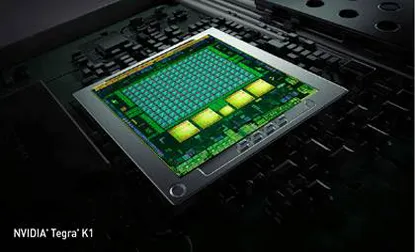
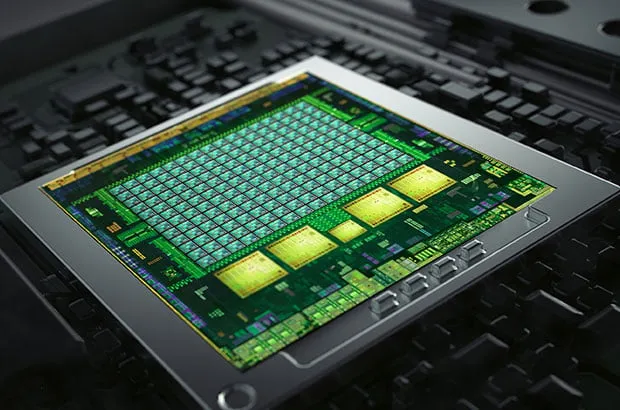
The company announced a chip that featured a 192-core Kepler GPU, directly derived from the same architecture powering the GeForce GTX 780 Ti—at that time considered the world’s fastest graphics card. This move was unprecedented. It marked the first time a mobile chip adopted a fully featured, desktop-class graphics architecture, something no rival chipset had attempted.
Journalists present at CES 2014 described the audience’s reaction as “a mix of disbelief and excitement.” The idea of embedding PC-grade GPU cores into a mobile processor seemed almost impossible then, especially considering the power and thermal constraints of smartphones and tablets.
Yet NVIDIA claimed it had achieved exactly that.
The 192-Core Leap: Mobile Graphics Enters a New Era
To understand how groundbreaking Tegra K1 was, one must consider what the mobile landscape looked like in 2013–2014. Most mobile GPUs topped out at a few dozen cores, with limited shading capabilities and basic support for graphical APIs. High-end phones of that era struggled to render advanced shadows, physics simulations, or high-polygon environments.
The Tegra K1 changed this almost overnight.
Its 192-core Kepler GPU offered features such as:
- Support for OpenGL 4.4, the same API used on desktop PCs
- Tessellation, a technique for enhancing visual detail
- Real-time global illumination
- Hardware-accelerated physics simulations
- Advanced shading models
- Console-grade lighting and particle effects
This was the first time mobile devices were capable of running games with desktop-like rendering fidelity. Developers saw immediate potential. Gaming studios that previously saw mobile hardware as limiting suddenly found themselves capable of porting PC titles to mobile platforms with vastly reduced compromises.
The industry hailed Tegra K1 as the beginning of “next-generation mobile graphics.”
PC-Class Architecture Comes to Mobile
The most remarkable aspect of the Tegra K1 was its architecture. Unlike other mobile processors, which used simplified GPU designs optimized for power efficiency, NVIDIA transplanted its full-blown Kepler architecture into the chip. This move granted Tegra K1 several advantages:
- Massive parallel processing capability
- High floating-point performance
- Support for advanced compute frameworks like CUDA
- Ability to render complex graphics at high frame rates
It effectively blurred the line between mobile and PC gaming hardware. Although constrained by mobile thermal limits, the Kepler GPU in Tegra K1 offered performance far beyond any other mobile GPU of its era.
The fact that a mobile chip could support the same rendering technologies used by PC games was a clear indicator of how far mobile hardware had come—and how much further it could go.
Performance That Surprised Reviewers
When early benchmarks for Tegra K1 arrived, the results were startling.
The chip:
- Outperformed Qualcomm’s Snapdragon 800
- Surpassed Samsung’s Exynos processors
- Outclassed Apple’s A7 GPU performance
- Delivered two to three times the graphical power of competing mobile chipsets
Games such as Trine 2, which previously required a desktop PC, ran smoothly on Tegra K1-powered tablets. Scenes with particle-heavy effects, dynamic shadows, and advanced lighting rendered effortlessly.
Not only was Tegra K1 impressive on paper—it delivered real-world results. Reviewers described the GPU performance as “console-like” and “groundbreaking for mobile devices.”
For the first time, serious gaming on tablets felt genuinely possible.
A Chip That Found Its Home Beyond Smartphones
Interestingly, despite its groundbreaking performance, Tegra K1 did not become mainstream in smartphones. There were two primary reasons:
- Power consumption – Its advanced GPU demanded more energy than typical smartphone SOCs.
- Heat generation – Even with Kepler’s efficiency, the thermal load remained high for slim phones.
However, the chip found massive success in other domains.
NVIDIA Shield Tablet
The Shield Tablet became a cult favorite among gamers, offering unmatched performance for its time. It demonstrated how Tegra K1 could transform a device into a portable gaming console.
Chromebooks
The Acer Chromebook 13 utilized Tegra K1 to deliver exceptional battery life alongside impressive performance. It handled web applications, media consumption, and lightweight computing with ease.
Automotive Systems
Perhaps the biggest impact was in the automotive sector. Tegra K1 became the foundation for the NVIDIA DRIVE platform, powering early autonomous driving prototypes. Its parallel computing capabilities made it ideal for computer vision tasks, real-time object detection, and sensor fusion.
In many ways, Tegra K1 was the first step toward NVIDIA’s modern dominance in automotive AI.
Why Developers Loved Tegra K1
The most enthusiastic supporters of Tegra K1 were game developers and graphics engineers.
For the first time, developers could:
- Use desktop-grade APIs on mobile
- Write high-level shaders similar to PC environments
- Implement advanced physics simulations
- Access CUDA support, enabling compute-heavy workloads
- Port existing PC games to mobile with fewer compromises
This flexibility gave rise to a new wave of mobile gaming experiences that felt far more immersive and realistic. Tegra K1 effectively expanded the imagination of what mobile hardware could achieve.
The Rise of Console-Quality Mobile Gaming
With the arrival of Tegra K1, the line between mobile and console graphics began to blur. Mobile games started experimenting with:
- High-resolution textures
- Dynamic lighting models
- Volumetric fog
- Advanced particle systems
- Real-time reflections
- Physically based rendering
All of these elements were either extremely limited or completely absent in earlier mobile titles.
The chip showed that with the right architecture, mobile devices could handle workloads that were once the exclusive domain of gaming consoles. This shift influenced the direction of future mobile GPUs, encouraging chipmakers to prioritize graphical power alongside efficiency.
Today’s mobile gaming revolution owes much to the groundwork laid by the Tegra K1.
The Legacy: Influencing Future NVIDIA Products
The real importance of Tegra K1 lies not only in what it accomplished in 2014, but in how it shaped NVIDIA’s future hardware lineup.
It served as the technological foundation for:
- Tegra X1, featuring the Maxwell GPU
- Tegra Xavier, a key chip in automotive AI
- NVIDIA Orin, powering cutting-edge autonomous vehicles
- Nintendo Switch’s custom Tegra processor, which revolutionized hybrid gaming
Without the Tegra K1 experiment, NVIDIA might never have ventured as boldly into mobile computing, gaming handhelds, or automotive AI.
The success of K1 acted as a validation that desktop-class GPU architecture could scale downward without losing its identity.
Price Evolution: From Premium to Embedded Favorite
The Tegra K1 launched with development kits priced around $199—a reasonable figure considering its capabilities. Over the years, as newer generations emerged, the price gradually dropped.
By 2025, the chip is widely available in the $49–$59 range in the embedded hardware market. It remains popular among robotics enthusiasts, hobbyists, IoT developers, and experimental engineers who value its powerful GPU capabilities.
Even today, Tegra K1 continues to serve in:
- Robotics systems
- Automation equipment
- AI research kits
- Industrial computing modules
- Education platforms
Its architecture, although dated, still offers adequate performance for many graphics and compute-centric tasks.
Why Tegra K1 Still Matters in 2025
Even after 11 years, Tegra K1 remains influential for several reasons:
- It proved mobile devices could achieve PC-level graphics.
- It introduced advanced APIs to the mobile world.
- It acted as the backbone for future NVIDIA chips.
- It demonstrated the feasibility of console-class mobile gaming.
- It pioneered NVIDIA’s entry into automotive computing.
Every mobile GPU today—whether from Qualcomm, Apple, MediaTek, or Samsung—carries the indirect influence of what Tegra K1 started: the shift toward powerful, graphics-rich mobile experiences.
Industry Reactions: A Mix of Admiration and Surprise
At the time of launch, the chip received widespread acclaim from critics, developers, and industry analysts.
- Reviewers called it “a bold experiment that paid off.”
- Developers hailed it as “the first true mobile GPU revolution.”
- Automotive engineers praised its parallel computing capabilities, making it ideal for real-time image processing.
Although it didn’t dominate smartphone markets due to power constraints, its influence spread across categories in ways few processors have managed.
Final Verdict: A Chip That Rewrote Mobile Graphics History
The NVIDIA Tegra K1 stands as one of the most important technological leaps in mobile computing history. With its groundbreaking 192-core Kepler GPU, it shattered expectations, redefined mobile graphics, and set the stage for a generation of powerful mobile and embedded processors.
Even in 2025, the chip’s contributions remain significant. The rise of console-quality mobile gaming, the growth of automotive AI computing, and the increasing demand for GPU-accelerated mobile applications can all trace their lineage back to this revolutionary processor.
Tegra K1 wasn’t just a chip.
It was a declaration.
A declaration that mobile devices deserve the performance and visual fidelity once reserved only for high-end PCs.
And with that declaration, NVIDIA forever changed the trajectory of mobile and embedded computing.