



Written by: Anushka Verma
Published: November 24, 2025
In a solemn moment that has sent waves of grief across India and beyond, veteran Bollywood icon Dharmendra, the beloved ‘He-Man’ whose career spanned over six decades and more than 300 films, passed away this morning in Mumbai. He was 89. The actor, who had been battling age-related ailments, breathed his last surrounded by his immediate family. His demise marks the end of an era for Hindi cinema, closing the chapter on one of its most charismatic, versatile, and enduring stars.
Police sources at the cremation ground confirmed the news to The Indian Express, stating that the veteran actor had been ailing for a month. His last rites were conducted with poignant simplicity at the Pawan Hans crematorium in Mumbai’s Vile Parle. In accordance with the family’s wishes, it was a quiet, private farewell, a stark contrast to the larger-than-life persona he embodied on screen. Only close friends and immediate family members were present to bid a final adieu to the star, who would have celebrated his 90th birthday on December 8 this year.
A Nation Mourns: The Final Farewell
As the news of his passing spread, a palpable sense of loss descended upon the film industry and his legion of fans. Hundreds gathered outside the crematorium, their faces etched with sorrow, holding up photographs of their favourite hero from across the decades. The emotional outpouring was so intense that the police were eventually compelled to close the crematorium doors to maintain order. The scene was a powerful, unscripted tribute to a man who, for millions, was not just an actor but a cherished part of their lives.
The film fraternity, from contemporaries to the new generation he inspired, took to social media and personal statements to express their condolences. His Sholay co-star and longtime friend, Amitabh Bachchan, along with his son Abhishek Bachchan, led the tributes, their words reflecting a deep personal and professional bond. Superstars Salman Khan, Shah Rukh Khan, Aamir Khan, Ranveer Singh, and his wife Deepika Padukone, as well as colleagues like Govinda and Sunjay Dutt, all shared heartfelt messages, painting a picture of a man who was as gracious off-screen as he was powerful on it.
A Journey from Sahnewal to the Silver Screen: The Making of a Star
Dharmendra’s life story is the quintessential stuff of cinematic dreams. Born Dharmendra Singh Deol on December 8, 1935, in the village of Sahnewal in Punjab’s Ludhiana district, he was the son of a school teacher. The world of films seemed a distant galaxy from his humble beginnings. His ticket to stardom came in the form of a national talent contest organised by a leading film magazine, a win that catapulted the simple Punjabi boy into the glittering, uncertain world of Bombay cinema.
He made his tentative debut in 1960 with Dil Bhi Tera Hum Bhi Tere, a film that faded into obscurity. But persistence was a trait that would define his career. It was the following year’s Shola Aur Shabnam that announced the arrival of a handsome, captivating new presence. He quickly proved his mettle not just as a romantic lead but as a serious actor, delivering nuanced performances in critically acclaimed films like Bimal Roy’s Bandini (1963) and Anpadh (1962). However, it was the 1966 film Phool Aur Patthar that proved to be a watershed moment, unleashing his action-hero avatar and earning him the enduring title of ‘He-Man’ and ‘Garam Dharam’.
The Golden Era: A Titan of the 70s
The 1970s were undoubtedly the decade where Dharmendra’s stardom reached its zenith, demonstrating a range that few of his contemporaries could match. He was the quintessential ‘macho’ hero in films like Jeevan Mrityu and Pratigya, the charming romantic lead in Tum Haseen Main Jawan, and the endearing comic foil in Hrishikesh Mukherjee’s classic Chupke Chupke. His ability to shift gears effortlessly made him a director’s delight.
Yet, two films from this period stand as towering testaments to his versatility. The first is Satyakam (1969), a Hrishikesh Mukherjee masterpiece where Dharmendra, as the principled and tragic Satyapriya Acharya, delivered what many critics consider the most nuanced performance of his career. It was a role that showcased his depth and sensitivity, far removed from the action-packed spectacles he was also known for.
The second, and the one that immortalised him in the annals of cinema history, was Ramesh Sippy’s epic Sholay (1975). As the boisterous, lovable, and irrepressible Veeru, Dharmendra became a national icon. His chemistry with Amitabh Bachchan’s Jai and his iconic romantic pursuit of Basanti, played by Hema Malini, are etched permanently into the cultural memory of the nation. Sholay was not just a film; it was a phenomenon, and Dharmendra was its beating heart.
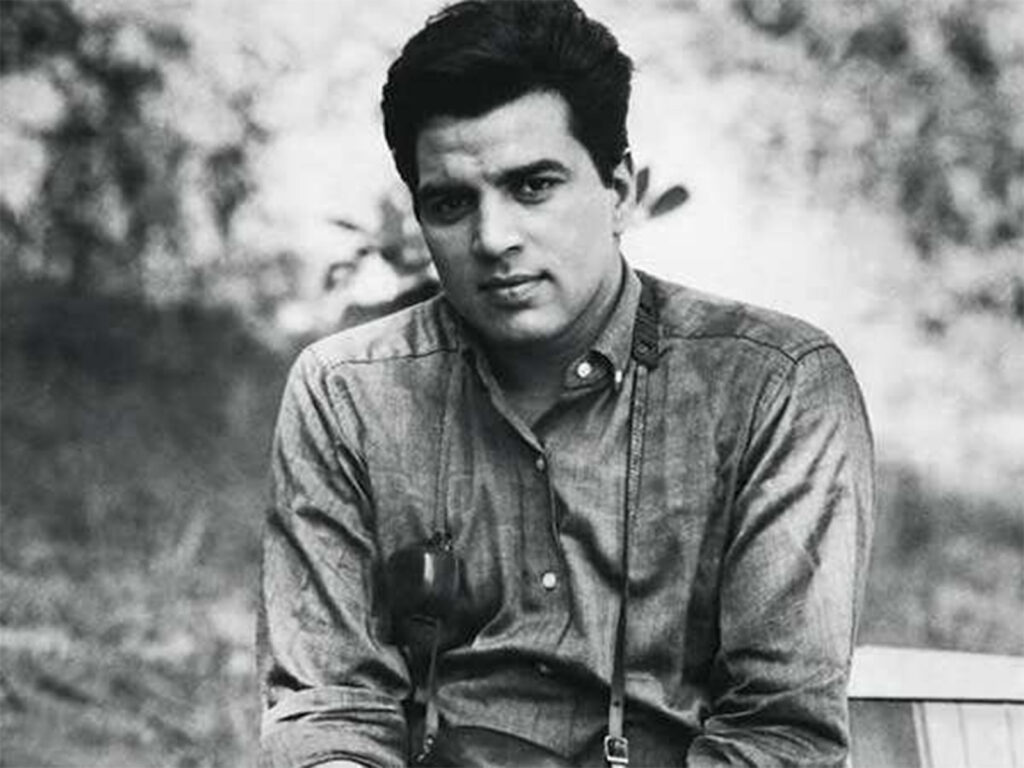
A Personal Life Straight Out of a Screenplay
If his professional life was spectacular, his personal life was no less dramatic. During the peak of his career, while filming Tum Haseen Main Jawan, he fell in love with his co-star, the ethereal “Dream Girl” Hema Malini. The complication was that Dharmendra was already married to Prakash Kaur, his first wife, with whom he had two sons, Sunny and Bobby, and two daughters, Ajeeta and Vijayta.
Their love story captivated the nation, facing immense opposition from Hema Malini’s family and playing out under the relentless glare of the media. In a move that mirrored the rebellious heroes he often portrayed, Dharmendra and Hema Malini stood firm. They eventually married in 1980, and the couple went on to have two daughters, Esha and Ahana. In a unique arrangement that he managed with grace, Dharmendra maintained his relationship with his first wife, Prakash, and their children, while Hema Malini lived nearby, a testament to his complex and deeply personal understanding of family.
A Legacy That Spans Generations
| Aspect of Legacy | Key Details |
|---|---|
| Debut Film | Dil Bhi Tera Hum Bhi Tere (1960) |
| Breakthrough Role | Phool Aur Patthar (1966) – Established the ‘Action Hero’ persona |
| Iconic Roles | Veeru in Sholay (1975), Satyapriya in Satyakam (1969) |
| Notable Pairing | With Hema Malini in films like Sholay, Dream Girl, Pratigya |
| Production House | Vijayta Films (Founded 1983) |
| Key Launches | Launched son Sunny Deol in Betaab (1983); grandson Karan Deol in Pal Pal Dil Ke Paas (2019) |
| National Award | Best Popular Film for Ghayal (1990) as producer |
| Civilian Honour | Padma Bhushan (2012) |
| Political Tenure | Member of Parliament, Lok Sabha (Bikaner, Rajasthan) from 2004-2009 |
As the nature of stardom evolved, Dharmendra gracefully transitioned into character roles, proving his mettle all over again. He delivered memorable performances in films like Life in a… Metro (2007), the neo-noir Johnny Gaddaar (2007), and the family drama Apne (2007) alongside his real-life sons. His recent appearance in Karan Johar’s Rocky Aur Rani Kii Prem Kahaani (2023) and Teri Baaton Mein Aisa Uljha Jiya (2024) showed that his charm remained undiminished, endearing him to a whole new generation. His final film, Ikkis, alongside Agastya Nanda, is slated for a posthumous release.
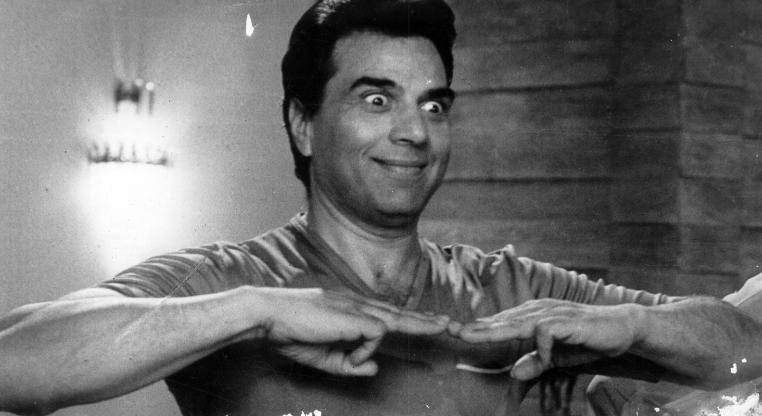
Beyond acting, his legacy is cemented through his production house, Vijayta Films, which launched his son Sunny Deol’s career with the blockbuster Betaab and produced critically and commercially successful films like Ghayal, which won a National Award. He also had a brief foray into politics, serving as a Member of Parliament from 2004 to 2009, though he chose not to continue in the political arena.
Dharmendra is survived by his two wives, Prakash Kaur and Hema Malini; his sons, Sunny and Bobby Deol; his daughters, Ajeeta, Vijayta, Esha, and Ahana Deol; and a nation of fans who will forever remember him as the handsome young man from Punjab who conquered the world of dreams, the ‘He-Man’ with a golden heart, and the actor who gave India both the profound integrity of Satyakam and the joyous abandon of Sholay. His was a life lived in full technicolour, and his light will continue to shine on through the silver screen.