


Written by Anushka Verma
Published: 19 December 2025
Introduction
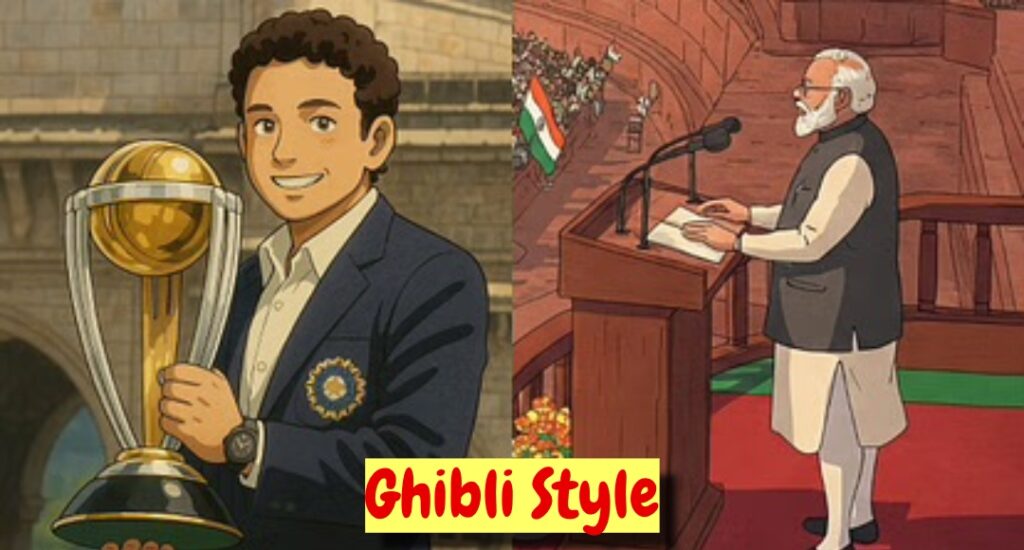
In the ever-evolving landscape of artificial intelligence and digital creativity, a new trend has captured the global imagination, merging the nostalgic charm of hand-drawn animation with the cutting-edge capabilities of generative AI. The Ghibli-Style Image Generator has erupted across social media platforms, transforming ordinary photographs and text descriptions into enchanting, dreamlike visuals reminiscent of Studio Ghibli’s iconic films. From celebrities like cricketing legend Sachin Tendulkar to tech moguls like OpenAI’s CEO Sam Altman, the world is embracing this whimsical digital makeover. What began as a feature within OpenAI’s GPT-4o update has swiftly become a viral sensation, placing “Studio Ghibli” among the top global search trends and demonstrating the profound public appetite for personalised, artistic AI tools. This article delves deep into the phenomenon, exploring its origins, the technology behind it, a step-by-step guide to creation, its cultural impact, and the future of AI-driven artistic expression.
The Viral Wave: How Ghibli Style Took Over the Internet
The trend can be traced directly to the public rollout of OpenAI’s GPT-4o model in mid-2025. This update introduced native, advanced image generation capabilities directly within the ChatGPT interface, making it accessible to both free and paid users. Unlike previous AI image models that required separate platforms or complex prompting, GPT-4o simplified the process. Users quickly discovered that by uploading a portrait or crafting a detailed text prompt, they could request an image “in the style of Studio Ghibli.”
The spark became a wildfire when Sam Altman, OpenAI’s CEO, shared his own Ghibli-style portrait on social media. This act of endorsement from a key figure in AI legitimised the trend and fueled massive curiosity. Within 24 hours, “Studio Ghibli” was trending globally, with searches skyrocketing by over 100,000%. Instagram, Facebook, and X (formerly Twitter) were flooded with transformed profile pictures—friends, family, pets, and even favourite fictional characters reimagined with Ghibli’s signature aesthetic: soft watercolour backgrounds, expressive, large-eyed characters, majestic natural landscapes, and a palpable sense of wonder and warmth.
The appeal is multifaceted. For fans, it’s a chance to step into the magical worlds of Hayao Miyazaki. For the general public, it offers an instantly recognisable, high-quality artistic filter that feels more personal and sophisticated than standard smartphone filters. The trend underscores a broader cultural moment: the democratisation of professional-grade art creation, allowing anyone to generate unique, studio-quality artwork without needing years of training in illustration or animation.
Decoding the Aesthetic: What Defines “Ghibli Style”?
Before understanding the generator, one must appreciate the artistic essence it seeks to replicate. Studio Ghibli’s animation style, pioneered by directors Hayao Miyazaki and Isao Takahata, is not defined by a single technique but by a collection of evocative characteristics:
- Hand-Drawn Texture & Imperfection: A departure from the sterile precision of some CGI, Ghibli art celebrates the visible brushstroke, the gradient of watercolours, and a slightly textured, organic feel.
- Luminous, Natural Lighting: Scenes are bathed in dappled sunlight, warm glows of dusk, or the cool light of a full moon. Light feels alive and contributes deeply to the mood.
- Expressive, Simplified Characters: Characters often have large, expressive eyes that convey deep emotion, and simplified yet highly detailed facial features. Their designs balance realism with a childlike wonder.
- Breathtaking Environmental Detail: From bustling, lived-in kitchens to vast, rolling meadows and intricate fantasy machinery, backgrounds are characters in themselves—incredibly detailed and immersive.
- Dynamic Movement & Flow: Hair, clothing, grass, and clouds are depicted in a state of fluid motion, creating a sense of wind and life in every frame.
- Themes of Nature and Nostalgia: A deep reverence for nature, industrial decay, flying machines, and a bittersweet sense of nostalgia are common thematic backdrops.
The AI’s challenge—and triumph—lies in synthesising these elements from a simple input photo or text description.
The Technology Behind the Magic: GPT-4o and Multimodal Understanding
The Ghibli Style Generator is not a standalone app but a brilliant application of multimodal AI within ChatGPT. GPT-4o (“o” for omni) is designed to process and generate content across multiple formats—text, audio, and image—seamlessly.
How It Works:
- Input Processing: When a user uploads a photo, the AI doesn’t just see shapes and colours; it interprets the subject (a person, a dog, a landscape), their pose, expression, and the context. When given a text prompt, it parses the detailed description to construct a scene from scratch.
- Style Latent Mapping: The model has been trained on a vast dataset of images, including a significant corpus of artwork and animation stills. It identifies key patterns, colour palettes, line work, and compositional elements associated with “Ghibli style” from this training.
- Synthesis and Generation: It then fuses the content from the user’s input (the likeness from the photo or the scene from the text) with the learned stylistic attributes of Ghibli art. This is a complex interpolation within the AI’s latent space, not a simple filter overlay.
- Refinement: Advanced diffusion techniques refine the initial output, adding coherent details like consistent lighting, appropriate textures (the grain of painted canvas, the soft bleed of watercolours), and stylistic hallmarks like the signature “Ghibli sky” with its distinctive clouds.
This process happens in seconds, making advanced style transfer accessible to millions.
Your Step-by-Step Guide to Creating a Ghibli Masterpiece
Creating your own Ghibli-style image is straightforward. Here is a comprehensive guide to both methods using ChatGPT.
Prerequisites:
- A device with internet access.
- A ChatGPT account (Free tier users have access to GPT-4o with some usage limits).
- A clear, well-lit photo of a subject (for the photo method) or a vivid imagination (for the text method).
Method 1: Photo Transformation (The Most Popular Route)
Step 1: Access ChatGPT
Navigate to the OpenAI ChatGPT website or open the mobile app. Ensure you are logged in.
Step 2: Model Selection
At the top of the interface, select “GPT-4o” as your active model. It is available to all users.
Step 3: Upload and Prompt
Click the upload button (paperclip or plus icon) and select your desired photo. Once uploaded, provide a clear instruction in the chat. For best results, be specific.
- Basic Prompt: “Transform this photo into the style of Studio Ghibli animation.”
- Advanced Prompt: “Convert this portrait into a Studio Ghibli character. Please use soft watercolour textures, magical lighting, and a detailed fantasy background suitable for the character. Maintain my likeness but adapt it to the anime style.”
Step 4: Review and Refine
The AI will generate an image. You can now engage in a dialogue to refine it.
- “Can you make the eyes more expressive?”
- “Add a friendly forest spirit in the corner.”
- “Make the background look like the floating islands from Castle in the Sky.”
Step 5: Download and Share
Once satisfied, click on the generated image to expand it, then use the download button. Your Ghibli-fied portrait is ready to share across social media.
Method 2: Text-to-Image Generation (From Imagination to Art)
This method offers unlimited creative freedom. The key is in crafting a detailed, evocative prompt.
Step 1 & 2: Same as above—access ChatGPT and select GPT-4o.
Step 3: Craft a Detailed Narrative Prompt
Describe the character, setting, mood, and style explicitly. Imagine you are briefing a Ghibli animator.
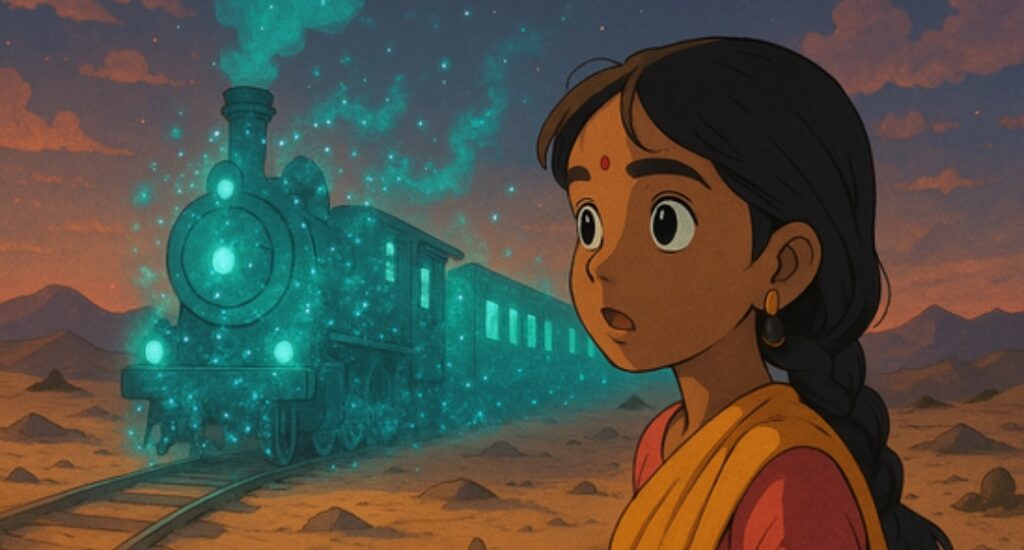
Example Prompt: “Generate an image in the precise style of Studio Ghibli. The scene is a young female explorer with short, messy hair and practical clothing, standing on a sun-drenched grassy hill at dawn. She is looking with wonder at a giant, dormant rusted robot covered in vines and flowers. The sky is early morning with soft pink and orange hues and characteristic fluffy Ghibli clouds. The art style should mimic hand-painted cel animation with soft lines, luminous light, and a sense of peaceful discovery.”
Step 4 & 5: Review, refine via chat, and download your creation.
Comparative Analysis: Top AI Platforms for Artistic Style Transfer
| Platform/Feature | ChatGPT (GPT-4o) | Midjourney | DALL-E 3 | Stable Diffusion (via UI like ComfyUI) |
|---|---|---|---|---|
| Ease of Use | Extremely High (Conversational) | Moderate (Discord commands) | High (Integrated in ChatGPT Plus) | Low (Technical setup required) |
| Ghibli Style Quality | Excellent, highly viral | Superior, highly customizable | Very Good | Excellent (with right model/LoRA) |
| Cost (Starting) | Free (with limits) | Paid subscription ($10/m) | Paid via ChatGPT Plus ($20/m) | Free (self-hosted) / Paid UIs |
| Primary Strength | Integrated chat, photo input, simplicity | Highest artistic quality & control | Safety-first, prompt adherence | Open-source, fully customizable |
| Best For | Beginners, casual users, quick fun | Professional artists, dedicated hobbyists | Users within OpenAI ecosystem | Developers, tinkerers, AI enthusiasts |
The Cultural Impact and Ethical Considerations
This trend is more than a passing fad; it’s a case study in human-AI collaboration.
Positive Impacts:
- Democratising Art: It lowers the barrier to creating beautiful, stylistically coherent art.
- Creative Inspiration: It serves as a brainstorming tool for artists, writers, and creators.
- Digital Nostalgia: It allows people to connect personally with the art of a beloved studio, fostering a new form of fan engagement.
Ethical and Artistic Debates:
- Style and Copyright: Studio Ghibli’s style is iconic but not copyrighted in a way that prevents artistic inspiration. However, the mass generation of derivative works by AI raises questions about the dilution of a unique artistic signature and the economic impact on human artists who specialise in similar styles.
- Authenticity vs. Imitation: Is an AI-generated Ghibli-style image “art”? It is a synthesis of learned patterns, lacking the intentionality and lived experience of Hayao Miyazaki and his animators. It is a powerful form of imitation, not original creation in the human sense.
- Data and Attribution: The models are trained on vast datasets likely containing copyrighted Ghibli film stills. The ongoing legal and ethical conversations about fair use in AI training datasets are central to this trend’s future.
The Future: Where Do We Go From Here?
The Ghibli-style generator is a harbinger of the future:
- Personalised Animation: The next logical step is short, looping animations—imagine your portrait blinking, smiling, or with wind blowing through your hair in Ghibli style.
- Interactive Storytelling: AI could generate consistent Ghibli-style characters and scenes for personalised storybooks or games.
- Evolution of Style: Users will soon be able to mix styles—“Ghibli meets Van Gogh” or “Satoshi Kon style”—with simple prompts.
- Professional Tool Integration: Tools like Photoshop are already integrating generative AI. Expect “Style Transfer” plugins trained on specific studios or artists to become standard for digital artists.
Frequently Asked Questions (FAQs)
Q1: Is the Ghibli Style Image Generator really free?
A: Yes, using ChatGPT’s GPT-4o model to generate images is currently available to free-tier users, subject to hourly usage limits. For high-volume use, a ChatGPT Plus subscription may be required.
Q2: Can I use the generated images commercially?
A: Under OpenAI’s current terms of use, you generally own the images you create with ChatGPT, including for commercial use (like selling prints). However, you must ensure your initial photo or concept doesn’t infringe on others’ rights, and be aware of platform-specific terms that may change.
Q3: Why does my output sometimes look distorted or not like me?
A: AI can struggle with complex poses, intricate details like jewellery, or very low-resolution source photos. For best results, use a clear, front-facing photo with good lighting. Use the chat feature to ask for specific corrections.
Q4: Are there any privacy concerns with uploading my photos?
A: OpenAI states that it does not use data from ChatGPT interactions to train its models by default. You can manage your data settings in your account privacy controls. However, as a general rule, avoid uploading highly sensitive images.
Q5: How can I get results that look exactly like a specific Ghibli film (e.g., Spirited Away vs. My Neighbor Totoro)?
A: Use specific prompt engineering. Instead of “Ghibli style,” try: “In the exact animation style of Spirited Away, with its specific colour palette and spirit character design,” or “Mimic the lush, green, pastoral background art style of My Neighbor Totoro.”
Q6: Will this replace human animators and artists?
A: Unlikely. This tool automates a specific type of style transfer. The original creativity, storytelling, character design, and directorial vision that define Studio Ghibli’s work come from human experience and emotion. AI is a powerful tool and collaborator, not a replacement for human creativity at its highest level.
The Ghibli Style Image Generator phenomenon is a beautiful intersection of technology and art, revealing our collective desire to see ourselves and our world through a lens of wonder. It celebrates a beloved artistic legacy while showcasing the breathtaking—and sometimes unsettling—potential of AI. As we continue to play with these tools, the most important question remains not “Can we?” but “How will we use this capability to create, connect, and tell new stories?” The magic, ultimately, still lies in the hands of the user.