


Written by Anushka Verma
Published: December 27, 2025
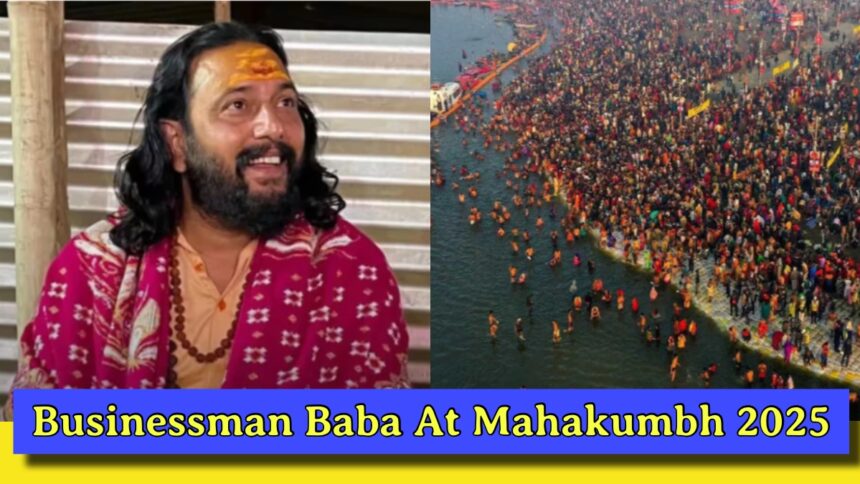
In the swirling, vibrant tapestry of India’s Mahakumbh Mela—the planet’s largest congregation of faith—narratives of devotion, penance, and miracle are the very threads of existence. Yet, amidst the naked naga sadhus, scholarly pandits, and fervent pilgrims at the 2025 Prayagraj Kumbh, a singular, contrasting figure has captured the collective imagination: the “Businessman Baba.” A figure who claims to have walked away from a vast commercial empire worth an estimated ₹3000 crores, he now roams the sandy banks of the Sangam, clad in ochre robes, his body smeared with sacred ash, dispensing not just blessings but tangible acts of charity. This is not merely a story of renunciation; it is a profound modern parable about the elusive quest for peace in an age of material excess, a living dialogue between the worlds of Wall Street and the wisdom of the rishis. His presence challenges our deepest assumptions about success, fulfillment, and the true currency of a meaningful life.
The Viral Phenomenon: A Baba Unlike Any Other
The Mahakumbh has always been a stage for the extraordinary, but the Businessman Baba emerged as its breakout star of 2025. His persona is a study in deliberate contrasts. Where one expects the austere demeanor of a lifelong ascetic, he carries the confident bearing of a boardroom veteran. His interviews, conducted with an articulate, measured tone more suited to a corporate earnings call than a spiritual discourse, reveal a mind sharpened by market wars. He speaks of quarterly profits, high-stakes deals, and the hollowness of luxury with equal fluency.
Videos and images that spread like wildfire across social media platforms show him engaging in acts of startling generosity: wrapping his own shawl around a shivering, destitute man; distributing high-quality blankets to scores of sadhus; and personally ensuring food and aid reach overlooked corners of the mela grounds. This practical, no-nonsense compassion, coupled with his astounding financial backstory, has made him a magnet for pilgrims, journalists, and the curious alike. He is seen not as a remote, mystical figure, but as one of their own—a supremely successful individual who looked into the abyss of his own abundance and found it wanting.
Deconstructing the Persona: Who is the Businessman Baba?
While he guards his former corporate identity and given name—preferring the archetype of “Businessman Baba”—the details he has shared paint a vivid picture. He claims to have been at the helm of a sprawling conglomerate with interests spanning real estate, technology, and commodities. In his own words, he has “conducted business deals worth 200-300 crores in a single day,” a statement that underscores a life lived at the vertiginous peak of India’s economic boom.
His physical transformation is complete. The bespoke suits have been replaced by simple bhagwa (ochre) robes. A string of rudraksha beads rests against his chest, and his forehead is prominently marked with vibhuti (sacred ash). This attire is not a costume but a symbol of a consciously chosen identity. He explains that the luxurious life—the penthouses, the luxury cars, the relentless pursuit of expansion—ultimately led to a profound existential crisis. The wealth provided comfort but delivered no inner peace, a dissonance that grew unbearable.
The Philosophy: Where Capitalism Meets Spirituality
The core of the Businessman Baba’s message is a powerful critique of modern materialism, delivered from the most credible of pulpits: personal experience. His discourse is not one of condemning wealth creation, but of exposing its limitations as an end in itself.
1. The Poverty of Riches: “An affluent person is not happy if there is no peace within,” he stated in an interview. He articulates the silent suffering of the elite: the anxiety of loss, the pressure of maintenance, the isolation of trust, and the endless, cyclical nature of desire where each milestone merely reveals the next.
2. The Wealth of Simplicity: By embracing a life of minimal needs—simple food, basic shelter, and the freedom of non-attachment—he claims to have discovered a “wealth” far greater: mental clarity, emotional equilibrium, and a direct connection to the present moment. The peace he sought in sprawling estates, he found in the spaciousness of his own mind.
3. Compassion as the Highest ROI: For him, the logical extension of his business acumen is now philanthropy in its most immediate form. He approaches charity with strategic intent, seeking maximum impact. Giving a shawl, a blanket, or a meal is a “transaction” where the return is the immediate alleviation of suffering and the cultivation of inner joy—a return on investment he finds infinitely more satisfying than any financial profit.
The Mahakumbh 2025 as a Backdrop: A Microcosm of Humanity
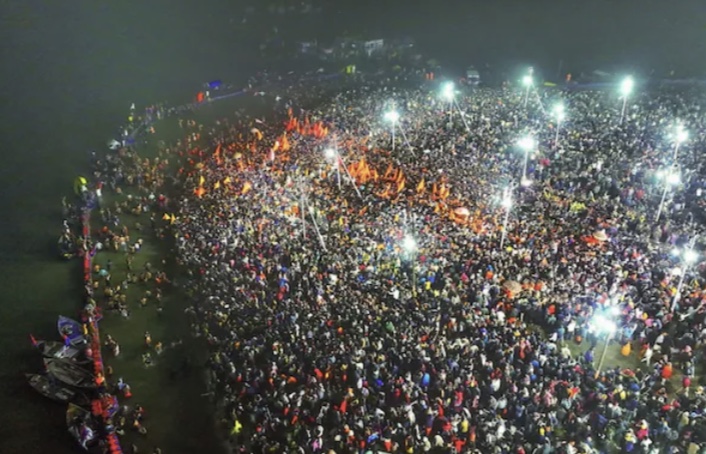
The Businessman Baba’s story gains its resonant power from its setting. The Mahakumbh at Prayagraj is a surreal, temporary city of tens of millions. It is a great equalizer where billionaires and beggars take the same dip in the holy waters. In this context, his journey from one extreme to the other feels both dramatic and perfectly logical.
He is part of a new wave of “celebrity” ascetics at this Kumbh, including the “IIT Baba” and the “Viral Sadhvi,” all representing a modern, questioning, and often highly educated approach to spirituality. They reflect a generation seeking to reconcile ancient wisdom with contemporary realities. The Businessman Baba stands as the most extreme exemplar of this trend, embodying the ultimate crossover.

Acts of Grace: The Currency of Kindness
Witness accounts and videos provide a mosaic of his charitable acts, which have become the cornerstone of his legend:
- Personalized Almsgiving: He is frequently seen stopping not just to give money, but to engage in conversation, assess needs, and provide specific aid—be it medicine, warm clothing, or directions to a free langar (community kitchen).
- Support for Fellow Ascetics: His distribution of blankets and essentials to other sadhus shows a deep respect for the spiritual community he has joined, recognizing the hardships of their chosen path.
- The Gift of Time: In a world where a tycoon’s time is meticulously billed, he now offers it freely—listening to the problems of pilgrims, offering counsel that blends pragmatic advice with spiritual perspective.
A Comparative Lens: The Businessman Baba in a Global Context
The archetype of the wealthy individual renouncing material life is not new. From Prince Siddhartha (Gautama Buddha) in ancient India to modern figures like Silicon Valley entrepreneurs seeking retreats, the theme is timeless. However, the Businessman Baba’s narrative is uniquely 21st-century. His language is not cloaked in obscure metaphor; it is direct, relatable, and framed in the terminology of net worth and asset management. He represents a very contemporary crisis of meaning in a globalized, hyper-capitalist world.
Analyzing the Impact: Inspiration, Skepticism, and Dialogue
His phenomenon has sparked multiple reactions:
- For Devotees: He is a living saint, a proof that divine calling can manifest in any form. His story reinforces the Hindu philosophical ideal of Vairagya (dispassion) and the Vanaprastha (renunciant) stage of life.
- For the Media and Public: He is a fascinating subject of debate. While many are inspired, a natural skepticism exists regarding the verification of his claimed wealth and the possibility of a sophisticated publicity strategy. Yet, even skeptics engage with the philosophical questions he raises.
- For Business and Leadership Coaches: Some analyze his journey as a case study in burnout, leadership evolution, and the search for purpose beyond profit, framing it as an extreme but instructive form of “corporate sabbatical” or purpose-driven reinvention.
A Perspective on the Alleged Wealth: Understanding the ₹3000 Crore Figure
| Aspect | Details & Context |
|---|---|
| Claimed Net Worth | Approximately ₹3000 Crore (≈ $360 Million USD as of 2025). |
| Reported Source | Diverse business empire including real estate, tech, and trading. |
| Nature of Assets | Likely illiquid (property, holdings, business equity) versus liquid (cash). Renunciation suggests distancing from active management or ownership. |
| Philanthropic Potential | The figure highlights the scale of what was reportedly left behind. His current charity, while impactful, operates on a micro, personal scale, symbolizing a shift from macro wealth to micro compassion. |
| Symbolic Value | The number is less an audited statement and more a narrative device representing the zenith of material success, making his renunciation all the more dramatic and his message more potent. |
The Enduring Questions and Final Reflections
The Businessman Baba of Mahakumbh 2025 is more than a viral curiosity. He is a mirror held up to our times. In a world increasingly measured by GDP, market cap, and net worth, he poses a simple, subversive question: What is it all for?
His path suggests that the ultimate luxury is not in possessing, but in letting go; that the greatest power lies not in commanding boardrooms, but in offering a hand to the fallen; that the most sophisticated strategy is the one that leads to inner silence. Whether viewed as a genuine spiritual awakening, a radical mid-life career change, or a profound performance art piece on the banks of the Ganges, his story forces a pause.
As the Mahakumbh of 2025 eventually draws to a close and the temporary city of tents dissolves, the image of the Businessman Baba—the tycoon-turned-ascetic—will remain. He walks as a permanent question mark against the default settings of our ambition, a reminder that in the final ledger of life, the balance between what we accumulate and what we relinquish may define not our net worth, but our worth itself. His journey underscores that the search for peace is the most universal business of all, and its successful closure requires a dividend that no bank can hold.
Frequently Asked Questions (FAQs)
Q1: What is the real name of the Businessman Baba?
A1: He has consciously chosen not to reveal his former identity or legal name, adopting the epithet “Businessman Baba” to emphasize the universality of his journey from materialism to spirituality.
Q2: Has his claimed wealth of ₹3000 crore been independently verified?
A2: No. The figure is based on his own statements during interviews at the Mahakumbh. There has been no independent financial audit or public disclosure of his past assets. The number is widely understood as part of his narrative about the scale of success he left behind.
Q3: What does he do with his wealth now? Has he given it all away?
A3: The specifics of his asset disposition are private. He indicates a disconnection from the management and enjoyment of that wealth. His current focus is on direct, person-to-person charity using seemingly separate resources, suggesting a trust, managed disbursement, or a complete severance from his former finances.
Q4: Is he now a formally initiated Hindu monk (sanyasi)?
A4: While he wears the robes and insignia of a sanyasi, it is unclear if he underwent a formal diksha (initiation ceremony) under a specific monastic order. His appearance and lifestyle align with the sanyasi tradition, but he represents a more personal, self-directed path of renunciation.
Q5: What happens to him after the Mahakumbh ends?
A5: This remains unknown. He may choose to travel to other holy sites, join an ashram, or continue a wandering life. His future actions will determine whether this was a permanent transformation or an extended phase of spiritual exploration.
Q6: What is the core message people should take from his story?
A6: His core message is that material success alone cannot guarantee inner peace or happiness. True fulfillment comes from simplicity, compassion, and a focus on spiritual well-being. He encourages individuals to seek balance and question the ultimate purpose of their striving.
Q7: How has the public and media reception been towards him?
A7: Reception is mixed but largely fascinated. Many are inspired and see him as a genuine spiritual figure. Others are skeptical about his motives and background. The media has covered him extensively, focusing on the dramatic contrast between his past and present life, which has fueled widespread public dialogue.