




In the early hours of 26 May 2013, a tugboat working near an offshore oil platform off the Nigerian coast capsized and sank to the seabed. One crew member, 29-year-old cook Harrison Okene, was trapped inside the overturned vessel at a depth of about 30 metres. The boat, Jascon 4, came to rest upside down. Eleven other men on board died. Okene survived in a small air pocket for nearly 60 hours before being discovered by divers sent to recover bodies. His rescue, later captured on video, drew global attention. Medical specialists and diving experts have since examined how survival underwater for three days was possible in such conditions.
Harrison Okene lived in an air pocket for 3 days underwater after the tugboat sank
The Jascon 4 was stabilising an oil tanker on a Chevron platform roughly 20 miles offshore when a sudden swell struck. The tugboat flipped and sank quickly. Okene was swept through the vessel and ended up in a small toilet compartment attached to an officer’s cabin. As the boat settled on the seabed, an air pocket formed in that space. Doors across the vessel had been locked as a security measure against piracy. That decision limited escape routes for the crew, but it also helped trap air inside sections of the hull.The water was cold. Okene found a mattress and built a small platform to keep part of his body above the surface. In darkness, he held on and waited.
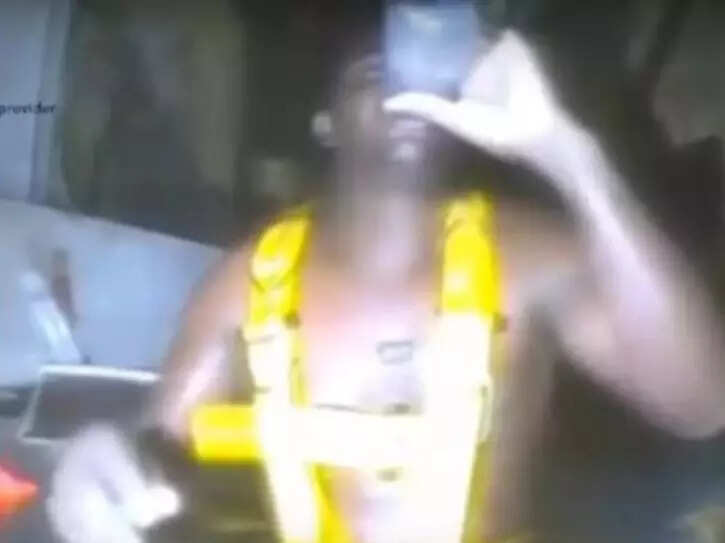
Harrison Okene lived in an air pocket for 3 days underwater after the tugboat sank
Carbon dioxide posed the greater danger
Oxygen depletion was not the most immediate threat. According to Eric Hexdall of the Duke Center for Hyperbaric Medicine, carbon dioxide builds up faster in enclosed spaces and becomes toxic at around five percent concentration. In an air pocket of roughly 13 cubic metres, a person might survive about 56 hours before carbon dioxide levels become critical. Okene remained trapped for close to 60 hours.Carbon dioxide dissolves into water. By moving and splashing in the confined space, he increased contact between air and water. The surrounding seawater likely absorbed some of the gas, delaying toxicity. Experts believe the air pocket may also have connected to another compartment, providing additional volume. By the time divers reached him, he was showing early signs of carbon dioxide exposure. He was found before loss of consciousness.
High pressure created further risk
At 30 metres below the surface, pressure is about three times higher than at sea level. Under such pressure, nitrogen dissolves into the bloodstream in greater quantities. Extended exposure can cause nitrogen narcosis, a condition that affects judgment and awareness.Returning directly to the surface after days underwater would have caused decompression sickness, often fatal. Divers fitted Okene with an oxygen mask and guided him into a diving bell maintained at the same pressure as the seabed.From there he was transferred to a decompression chamber. Pressure was reduced gradually over three days, allowing nitrogen to leave his body safely. Medical checks later showed stable vital signs.