

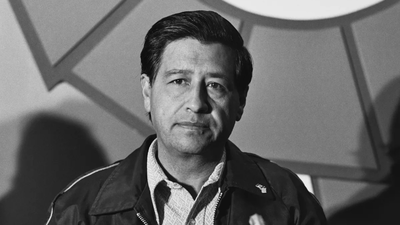
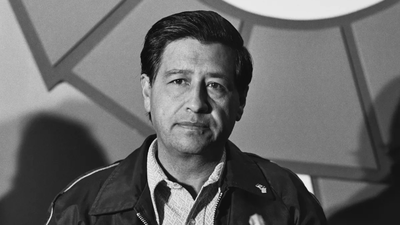
For decades, Cesar Chavez occupied a near-sacred place in the American conscience, a brown-skinned son of migrant labourers who rose, through sheer moral force and extraordinary courage, to become the most powerful labour leader the United States had ever seen. Streets bore his name. Schools were built in his honour. Presidents kept his bust in the Oval Office. He was, by every measure of public adoration, untouchable. Then, in March 2026, the women who had served beside him in silence for sixty years finally spoke and the pedestal began to crack.
From migrant fields to civil rights icon: The rise of Cesar Chavez
To understand the magnitude of what has now been alleged, one must first understand who Cesar Chavez was and what he meant.Born in Yuma, Arizona, in 1927, Chavez grew up in a Mexican American family that followed the harvest across California’s sun-scorched valleys, picking lettuce, grapes and cotton for wages that barely sustained life. That childhood of dust and dignity never left him. In 1962, alongside labour activist Dolores Huerta, he co-founded the National Farm Workers Association, later the United Farm Workers of America, and ignited a movement that would fundamentally reshape American labour history.He led hunger strikes that drew national attention, organised grape boycotts that reached dinner tables across the country and negotiated contracts that secured better wages and humane working conditions for hundreds of thousands of labourers who had previously been invisible to the American establishment. He marched. He fasted. He prayed publicly. He was, in the words of admirers, the Latino Martin Luther King Jr., a moral compass for a community long denied one.California made him the first Latino to have a state holiday in his name. In 2014, President Barack Obama proclaimed March 31 Cesar Chavez Day. President Joe Biden installed a bronze bust of him in the Oval Office upon taking office. He died in 1993 at the age of 66, mourned as a saint.The fall, when it came, was total.
Sixty years of silence
The woman who finally broke that silence was, perhaps fittingly, the one who had stood closest to him.Dolores Huerta, labour legend, civil rights icon and the woman without whom the UFW would arguably never have existed, revealed in a statement released in March 2026 that she had been sexually abused by Chavez while they co-led the movement together. She was in her thirties at the time.Huerta described two distinct encounters. The first, she said, involved being “manipulated and pressured.” The second was more unambiguous. She was “forced against my will.” Both encounters, she revealed, resulted in pregnancies. She kept them entirely secret, arranging for the children to be raised by other families. For sixty years, she carried that secret alone, terrified that speaking out would damage the very movement to which she had devoted her life.“I did not know he had hurt other women,” she said.But he had.The New York Times, in a report that sent shockwaves across America, revealed that Chavez had systematically groomed and sexually abused young girls who worked within the farmworker movement. These were girls who had come to the cause full of idealism and who had looked up to him with something approaching reverence.For many, the parallel was devastating. The man who had dedicated his public life to protecting the exploited had, in private, been exploiting the most vulnerable people around him.
“Like a monster”: A community in mourning
The response from the Latino community was immediate, visceral and, in many cases, deeply personal.Mary Rose Wilcox, a former Phoenix City Council member who had marched and fasted alongside Chavez in the 1970s, had spent decades honouring his memory in tangible ways. She helped him establish a radio station in Phoenix, covered the walls of her family’s Mexican restaurant with his photographs and commissioned a mural in his likeness.When her daughter called with the news, Wilcox said it felt like “a punch to the gut.” By the following morning, the photographs had come down. Plans were made to cover the mural.“We love Cesar Chavez,” she said, her voice carrying equal measures of grief and resolve. “But we cannot honour him and we cannot even love him anymore. There’s two things. Chavez the man, and Chavez the man we didn’t know. The one we did not know is like a monster.”Her words captured, with painful precision, the impossible grief of an entire community. It was not merely mourning a fallen hero but grappling with the realisation that the hero and the monster had always shared the same face.
The reckoning begins
The institutional consequences arrived swiftly and without precedent.The California Museum announced it would remove Chavez from the state’s Hall of Fame, a step it had never taken in its history. Celebrations marking his birthday on March 31 were cancelled across California, Texas and Arizona, at the request of the Cesar Chavez Foundation itself. Local and state leaders on both sides of the political aisle called for streets, schools and public buildings bearing his name to be renamed.California Governor Gavin Newsom said he was still “processing” the revelations. Former presidents Obama and Biden, both of whom had publicly and prominently venerated Chavez, had not commented as of publication.Some Democratic leaders in Texas went a step further, calling for Huerta’s name to replace Chavez’s wherever it appeared. It was a gesture of both justice and symbolism.
The contradictions were always there
For those who had studied Chavez closely, the allegations were shattering but not entirely without context.Miriam Pawel, a California journalist and Chavez’s biographer, noted that the labour leader had always been a figure of deep contradictions. Abusive dynamics had existed within the union for years, she said, but the movement’s believers had chosen silence over disruption, convinced that the cause was larger than any individual failing.“For many, many years, even when they saw things that they found disturbing, they did not want to talk about it,” Pawel said. “They believed the union was the best way to protect farmworkers.”It is the oldest and most corrosive bargain in the history of social movements. It is the deliberate overlooking of a leader’s private sins in defence of a public good. History has repeatedly proven it ruinous, especially for the victims.
The legacy, fractured but not erased
Chavez’s family, in a statement that struck a careful balance between grief and accountability, said they were devastated by the allegations. “We wish peace and healing to the survivors and commend their courage to come forward,” the family said. “As a family steeped in the values of equity and justice, we honour the voices of those who feel unheard.”The United Farm Workers union distanced itself from its founder’s celebrations, describing the allegations as deeply troubling while affirming the movement’s enduring mission.Latino leaders across the country were at pains to stress one central point. The farmworker movement was never the property of a single man. The struggle for fair wages, humane conditions and racial dignity in the fields of America predated Chavez and will outlast the wreckage of his reputation.But for the girls who were groomed in the shadow of a cause they believed in, for Dolores Huerta who carried two secret pregnancies across six decades of silence, and for the countless admirers who plastered his face on their walls in good faith, the reckoning is not merely institutional. It is intimate, it is agonising, and it has only just begun.The bronze bust has not yet been removed from the Oval Office. It is unclear whether it will be.