

Saudi Arabia has stepped onto the global space stage with a landmark mission that places it at the heart of NASA’s Artemis programme. The successful launch and early communication with its “Shams” satellite signals both scientific ambition and growing technological capability, with implications that extend far beyond orbit.
A historic first in the Artemis programme
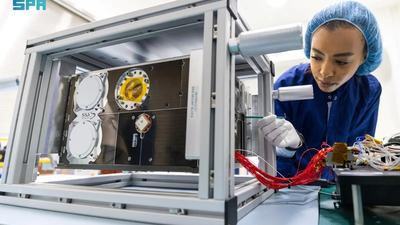
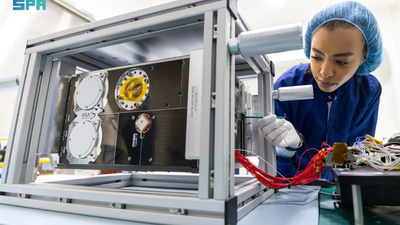
The Saudi Space Agency has confirmed the successful launch and initial communication with its satellite “Shams,” deployed aboard the Space Launch System as part of the Artemis II mission. This achievement makes Saudi Arabia the first Arab nation to participate in a mission under the Artemis programme.Led by the National Aeronautics and Space Administration (NASA), Artemis is designed to accelerate scientific innovation and build strong international partnerships. Artemis II marks the programme’s second phase and represents a critical step towards returning humans to the vicinity of the Moon for the first time in more than five decades.The mission carries four astronauts aboard the Orion spacecraft in what is described as the first crewed lunar orbit or flyby mission of its kind. It is powered by the Space Launch System, widely recognised as the most powerful launch vehicle ever developed and operated. Among its scientific payloads is the Saudi satellite “Shams,” positioned as a key contributor to the mission’s research objectives.
What ‘Shams’ will do in orbit
The “Shams” satellite will operate in a highly elliptical orbit ranging from approximately 500 kilometres to 70,000 kilometres above Earth. This wide orbital range allows extensive coverage, enabling continuous monitoring of solar and radiation activity.Its scientific focus is centred on space weather, with four primary areas of study:
- Space radiation
- Solar X-rays
- Earth’s magnetic field
- High-energy solar particles
This positioning creates an advanced scientific environment for observing how solar activity interacts with Earth’s systems. The data collected will directly support space weather research while also feeding into practical, real-world applications.
Why the mission matters beyond space
The insights generated by “Shams” are expected to strengthen the reliability and resilience of critical sectors. These include communications, aviation, and navigation systems that depend heavily on stable space-based infrastructure.By improving understanding of solar radiation and magnetic disturbances, the mission will help enhance operational readiness and safeguard technical systems that underpin everyday global activities.This is not just a scientific exercise. It is a strategic investment in infrastructure security and long-term technological capability.
A national milestone backed by vision 2030
“Shams” represents multiple firsts for Saudi Arabia. It is both the first Arab mission within the Artemis programme and the Kingdom’s first dedicated mission focused on space weather monitoring.The satellite was developed domestically by Saudi talent, supported through initiatives under the National Industrial Development and Logistics Program, a key pillar of Vision 2030. The programme aims to localise advanced technologies and build competitive national industries.Acting CEO of the Saudi Space Agency, Dr Mohammed bin Saud Al-Tamimi, said the achievement reflects the Kingdom’s rapid progress in science and technology, driven by the leadership of King Salman and Crown Prince Mohammed bin Salman. He noted that sustained support has enabled national talent to participate in leading global space missions and contribute to shaping the future of space exploration.NIDLP CEO Eng Jameel bin Ahmed Al-Ghamdi highlighted that the local development of “Shams” demonstrates the programme’s success in building national capabilities and strengthening local content. He pointed to the integration of national efforts in empowering talent and advancing industrial competitiveness.
Strengthening global collaboration in space
The Saudi Space Agency said the mission underlines the Kingdom’s commitment to innovation, capacity building, and international collaboration. By joining a mission of this scale, Saudi Arabia positions itself as an active participant in shaping the future of space exploration.With Artemis II laying the groundwork for future lunar missions and eventual journeys to Mars, the inclusion of “Shams” ensures that Saudi Arabia is not just observing progress, but contributing to it in measurable, scientific terms.