


One would think Rowling-bashing had become a redundant activity, one that would make Caesar say ad nauseam, like Marvel sequels, but we still keep getting them every other day. The latest brave Hollywood kid to jump on the anti-Rowling bandwagon is Andrew Garfield, a Spider-Man so amazing he didn’t warrant a trilogy, who finally watched the Harry Potter movies. While praising lead actor Daniel Radcliffe, Garfield, channelling his inner grumpy Garfield, opined that watching Harry Potter is “controversial” because it lines the pockets of “she that shall remain nameless”, whose views supposedly back “inhumane legislation.” That Voldemort-style refusal to say Rowling’s name was pure performative theatre.
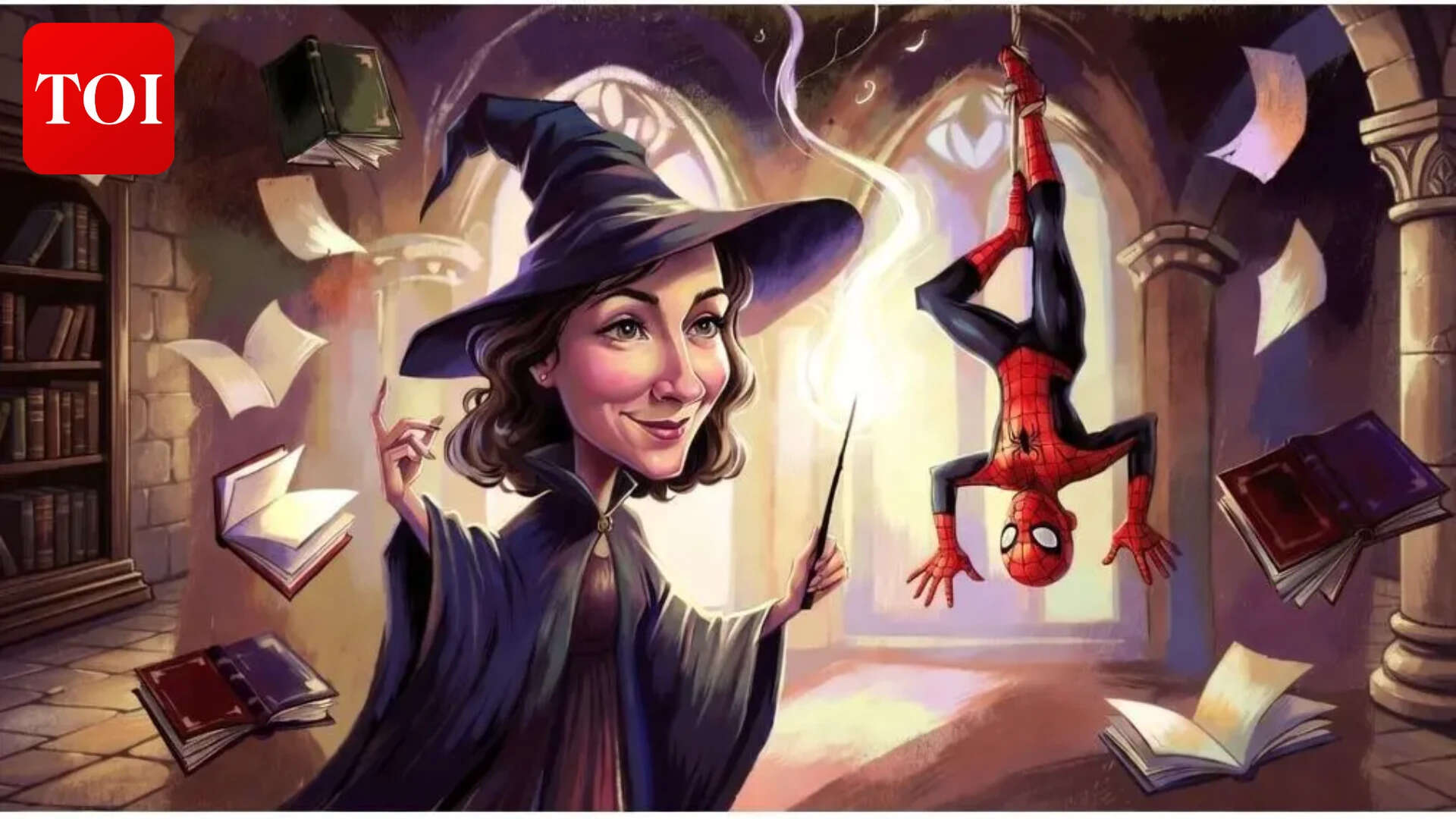
Grumpy Andrew Garfield opined that watching Harry Potter is controversial because it lines the pockets of She That Shall Remain Nameless
Garfield wasn’t offering a serious policy critique of the gender discourse that has become so controversial that no one can speak on the topic without being abused, famous or not. But when one is as famous as Rowling, who started the discourse about saving biological women’s public spaces back in 2020, there was no walking back. And she didn’t. In fact, she doubled down. And the backlash has turned vitriolic over the years.Coming back to Garfield, when he called Rowling “she that shall remain nameless”, he was just ticking a box that’s become standard in parts of Hollywood: praise the art, damn the artist, signal your virtue, and move on. He’s hardly the first. Daniel Radcliffe’s 2020 open letter declared “trans women are women.” He even went on to say in an interview that he likens Rowling to an auntie. “I don’t necessarily agree with everything my auntie says, but she’s still my auntie. It’s a tricky one,” he had said. The comment is unforgettable because it’s insidious. Another way of saying: who cares what a crazy old woman says about “who is a woman?” Emma Watson (who played Hermione), who backed Radcliffe, said, “Trans people are who they say they are.” The irony is Rowling never said trans identity is not real. Her point was to not let spaces like women’s sport, women’s toilets, and women’s prisons be accessible to people who identify as women.
Whichever side of the debate one is on, a conversation on the topic is valid. What’s not is villainising and attacking a person day in and day out, and earning social capital out of it. Rupert Grint, who played the beloved Ron in the Harry Potter movies, also voiced solidarity with Radcliffe and Watson back in 2020. British actor Eddie Redmayne publicly disagreed with Rowling. More recently, we’ve heard from Bridgerton actor Nicola Coughlan, American comedian Bowen Yang, and now Garfield. The problem isn’t with having a contrary opinion. It is rather the fact that none of them weighed in on the actual topic to explain how they came to the conclusion that Rowling’s POV was wrong or to give arguments in favour of their “right” opinion. Late American comedian George Carlin had famously said: “Political correctness is America’s newest form of intolerance, and it is especially pernicious because it comes disguised as tolerance. It presents itself as fairness, yet attempts to restrict and control people’s language with strict codes and rigid rules.” He was on point, though he did not live to see the relevance of his statement in the age of social media.British author and journalist Lynne Truss, who wrote the book Talk to the Hand: The Utter Bloody Rudeness of the World Today, had said in an interview: “In place of manners, we now have doctrines of political correctness, against which one offends at one’s peril: by means of a considerable circular logic, such offences mark you as reactionary and therefore a bad person.” And when all one has to do is ‘like’ or ‘retweet’ or, like Garfield, just pivot to a narrative of Rowling being “declared” a villain, there is hardly any room left for either logic or reason, or a space for a healthy conversation without making Voldemorts out of people one disagrees with.For some actors, especially those chasing relevance or staying in the good graces of activist corners, Rowling-bashing has thus turned into reliable political clout. In fact, it’s become so regular that it’s not even a pattern anymore; it’s more par for the course. The same story repeats itself: a lesser-known name drops a carefully worded dig, the outrage algorithms kick in, likes and coverage follow. Even established stars like Garfield feel the pull, happily consuming the franchise’s magic while distancing themselves from its creator.Garfield’s stance on Rowling is especially noteworthy because, in a 2024 interview, he defended working with “compassionate” Mel Gibson, who was boycotted by Hollywood for his antisemitic and homophobic remarks for almost a decade. But here, Garfield had a stake. Hacksaw Ridge (2016), where Garfield played the lead role, was a smart PR tool for the defamed filmmaker to come back into the “good books” of Hollywood biggies. And to top it all, the premise of this biographical drama was the lead character’s conscientious objection to war and his refusal to carry a weapon despite joining the armed forces. So, a moral victory on screen eventually paved the way for redemption for Gibson. We all know how this PR machinery works. The movie did not just give Gibson a clean slate; it received an Oscar nomination for Best Director. And Garfield even went on to talk about “second chances” and “compassion” when it came to Gibson. The hypocrisy here is too glaring. This ritual is lazy, disingenuous, and reductive.In the case of Rowling, the daily abuses or plain villainy presented as sarcasm (read Garfield’s comment) collapse a complex and evidence-driven debate into a cartoon villain script. A villain of one’s choosing when it has suited this particular actor. On a larger scale, it’s lazy because it demands no engagement with counter-evidence or nuance. And it fails, time and again, because reality, law, medicine, and shifting public opinion keep moving toward Rowling’s core points, not the celebrity consensus.Since 2020, this trend has extended beyond Hollywood too. In literary circles and activist academia on social media, bashing Rowling has become a sort of loyalty test. Sign the open letter, share the condemnation, earn your progressive merit badge, and move on to the next cause. But times are changing, and these badges are starting to look cheap.
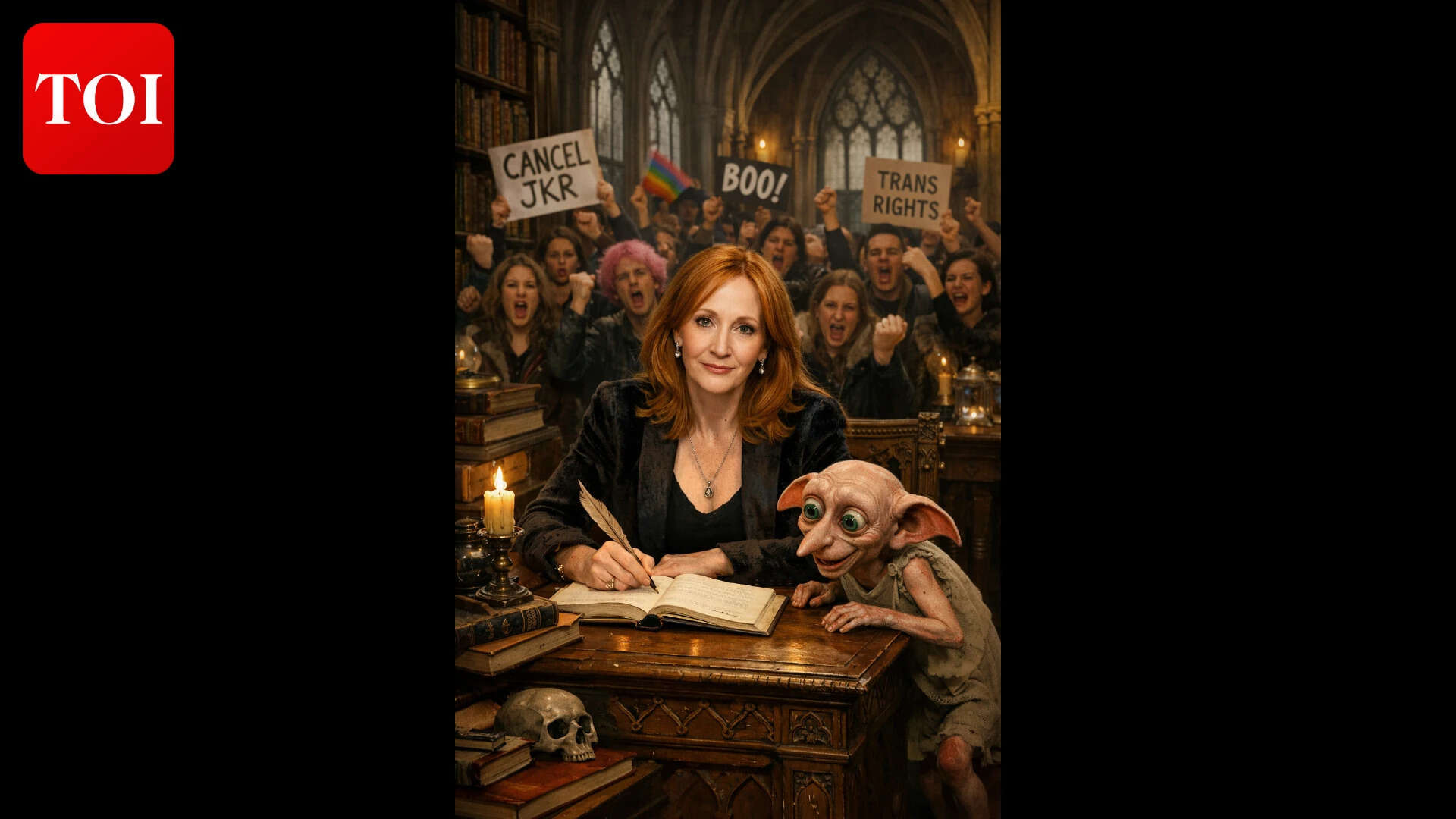
Rowling’s crime isn’t hatred; it’s consistency
Era of performative activism
What’s striking about the repeated Rowling-bashing game isn’t the substance of the disagreement, though. Plenty of people hold strong views on either side of the debate. The problem is the way Rowling-bashing has evolved into a fashionable Hollywood sacrament. It is far away from any genuine conviction and is more about the currency of moral aggrandisement. But its appeal is quite high in an industry where being seen “on the right side of history” can fast-track relevance, secure invites to the right parties, and insulate stars from the next cancellation wave.So, in this era of performative activism, bashing Rowling has become the celebrity equivalent of wearing a statement tee in the last decade, like: “Smash the patriarchy” or “There is no Planet B”. It’s effortless and low-risk for those already inside the bubble. It also guarantees applause from the “right corners” of social media and legacy media alike. You don’t need hard work, like actually engaging with the Cass Review*, or grappling with biological realities or women’s safety data. You just need to drop the right phrase: “she that shall remain nameless”, “heinous loser behaviour,” or a simple middle-finger emoji, and watch social media pat your back to raise your star merit to a badge of honour.Coughlan, riding high from her success in Bridgerton, took to Instagram Stories in April 2025 after a UK Supreme Court ruling on sex-based rights to declare, “You’re not fighting for women’s rights. You don’t speak for me. Bigotry is bigotry,” while pledging cash to a trans charity and announcing she wouldn’t touch the new Harry Potter reboot “with a ten foot pole.” Bowen Yang, of Saturday Night Live, kept it even punchier with a succinct “absolute f*ck u to jk rowling” alongside a trans flag. Pedro Pascal, whose own family includes a transgender sibling, jumped into an Instagram comments section to label Rowling’s celebration of the ruling “Awful, disgusting SH–” and “Heinous LOSER behaviour.”These aren’t deep dives into policy or evidence; they are vibe-based declarations designed to broadcast moral clarity without the mess of research. As one commentator noted in a 2025 analysis of the pattern, it’s the perfect low-effort flex in an industry where “staying silent is violence” but actual intellectual labour is optional.
Rowling’s crime isn’t hatred; it’s consistency
What makes the trend so revealing is the selective hypocrisy. These same stars routinely preach “believe women” and “my body, my choice” until it collides with the one woman whose platform and persistence refuse to bend. Rowling’s crime isn’t hatred; it’s consistency. She articulated the same evidence-based concerns for years—single-sex spaces, sports fairness, child protection, medical caution—while weathering death threats, doxxing, and professional blacklisting attempts.But the tide is slowly turning. Watson’s later, softer comments about still “treasuring” Rowling despite political differences last year reeked of calculated retreat from her earlier stance. Watson, now nearer 35 than her 2020 self, seems to have noticed the tide turning—public opinion polls in the UK and US show growing scepticism toward youth medical transitions, and Rowling’s positions have been vindicated by multiple high-level reviews. But the earlier pile-on? That was pure social positioning.
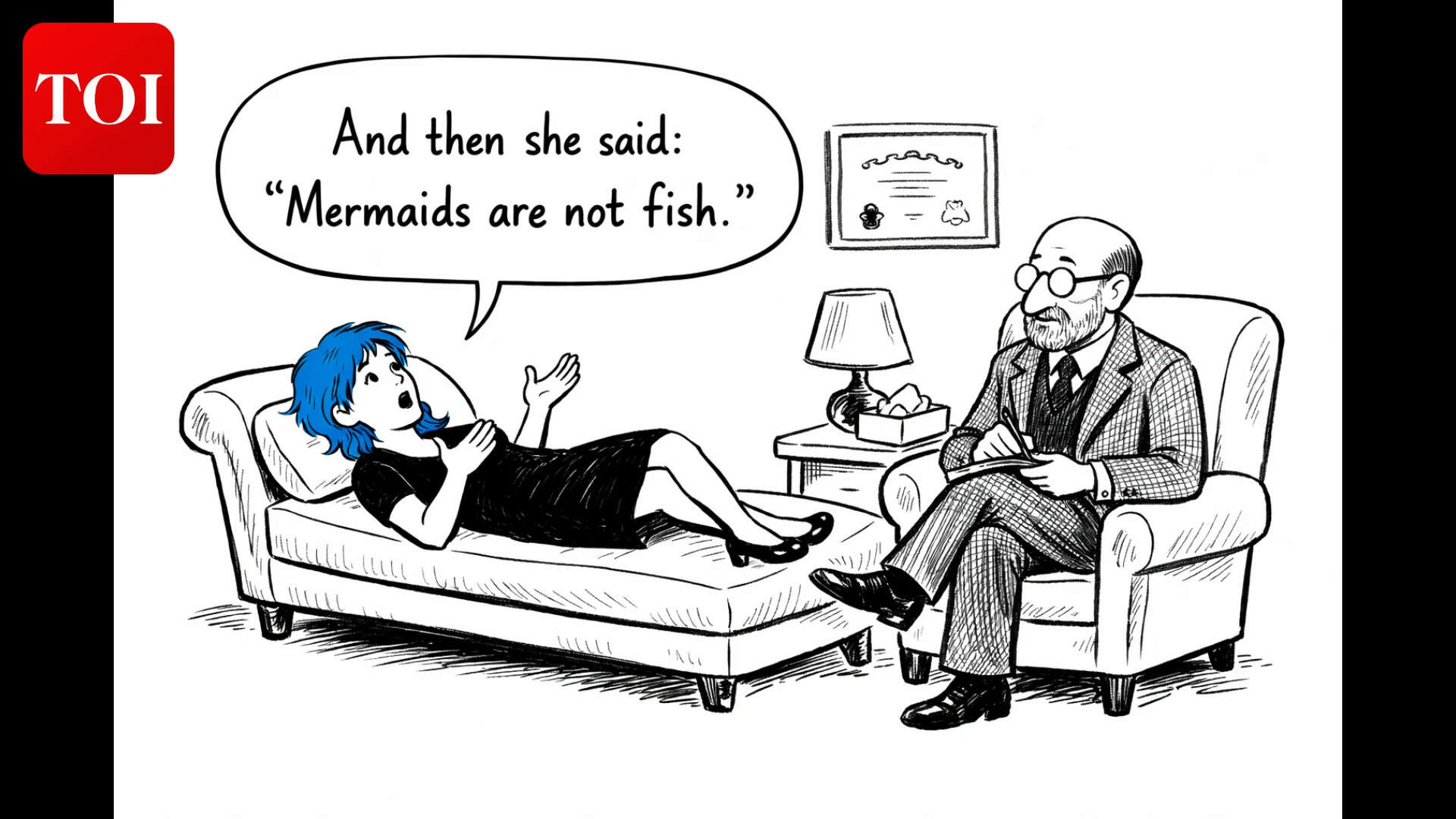
And then she said…
The tides are turning
The incentives are crystal clear in Hollywood’s closed ecosystem. Social media has turned every actor into a brand ambassador for their own righteousness. As a 2024 Forbes analysis of “The J.K. Rowling Effect” observed, even as controversy swirls, her books keep selling millions and the franchise expands. Yet the celebrities keep performing the ritual because the short-term dopamine hit of likes and “brave” headlines outweighs any long-term risk. Public figures outside the Potter orbit have called this out repeatedly. In 2023, the New York Times ran a lengthy op-ed, “In Defense of J.K. Rowling,” which calmly dismantled the caricature and noted how the attacks revealed more about the attackers’ intolerance for dissent than any bigotry on Rowling’s part. Ralph Fiennes, who played Voldemort himself, defended her in 2021: “I can’t understand the vitriol directed at her… I find the level of hatred that people express about views that differ from theirs, and the violence of language towards others, disturbing.” Robbie Coltrane, the late Hagrid, told Radio Times the outrage machine was absurd: “There’s a whole Twitter generation of people who hang around waiting to be offended… get over yourself.”Even comedian Eddie Izzard, who identifies as gender-fluid, pushed back: “I don’t think J.K. Rowling is transphobic… Women have been through such hell over history. Trans people have been invisible too. I hate the idea we are fighting between ourselves.” It’s tragic, but that’s how we roll these days.So Garfield’s purposeful evasion of taking Rowling’s name and calling her “she that shall remain nameless” is significant. Because it’s nasty on purpose. It’s nasty for nastiness’ sake. And it’s horrendous because it’s done to play up to a gallery.Rowling supporters, however, have cut through the noise. Author and feminist Julie Bindel shared a 2020 Sunday Times letter signed by dozens of writers and thinkers: “WE STAND WITH JK AGAINST HATE. JK Rowling has been subjected to an onslaught of abuse that highlights an insidious, authoritarian, and misogynistic trend in social media.” Spiked magazine cheered Tom Felton (Draco Malfoy) for breaking ranks and supporting Rowling.These voices highlight the ritual’s emptiness. Celebrities rarely cite studies, legal rulings, or the growing roster of detransitioners and whistleblowers from gender clinics. They don’t engage with the fact that multiple European countries have restricted puberty blockers for minors following systematic reviews. They just know the same old script…(a) Rowling is very bad(b) Let’s perform some performative empathy on social media(c) Clout securedIt’s the same dynamic that fuelled other fleeting causes—remember the 2020 rush to post black squares or the endless celebrity climate lectures from private-jet lifestyles? Rowling-bashing offers the same frictionless virtue: public piety.However, if we go by recent UK polls, they show majorities favouring biological sex definitions in sports and spaces, and even some former critics quietly softening their stance. Because the ritual is starting to look dated. Watson’s recent podcast remarks about still treasuring Rowling feel like a hedge against irrelevance. Garfield’s “controversial” caveat while gushing over the films reads like the same hedging.This ritual is doomed. In the end, this isn’t really about Rowling. It’s about a celebrity culture that rewards symbolic gestures over substance, moral posturing over intellectual honesty. In the age of social media, stars will keep chasing the next cause that flatters their image. But history, data, and shifting sentiment are already proving what the pile-on never could: Rowling was never the villain they needed her to be. She was simply unwilling to play the game. And in an industry built on scripts, that refusal is the most radical plot twist of all.