


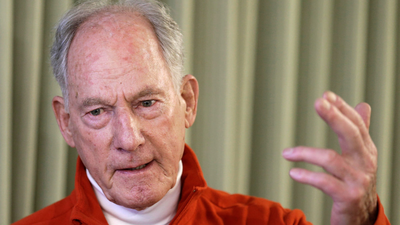
Jim Whittaker, the first American to reach the summit of Mount Everest and a central figure in popularising modern mountaineering, has died at the age of 97. His life combined high-risk exploration with business leadership and environmental advocacy, leaving a lasting impact on outdoor culture.
The Everest climb that made history
On May 1, 1963, Whittaker became the first American to stand on the summit of Mount Everest, climbing alongside Sherpa guide Nawang Gombu as part of an expedition led by Norman Dyhrenfurth. The achievement came just a decade after Edmund Hillary and Tenzing Norgay made the first confirmed ascent.Conditions were far from ideal, with strong winds and limited oxygen, yet Whittaker pushed forward. Reflecting on that decision years later, he told The Seattle Times in 2013, “You always start up, because you can always turn around.”At the time, fewer than a dozen climbers had reached the summit, making the feat a major moment in global mountaineering. He returned to the United States as a national figure and was awarded the Hubbard Medal by President John F. Kennedy.
Building REI and shaping outdoor culture
Whittaker’s influence extended beyond climbing. In 1955, he joined Recreational Equipment Inc. (REI) as its first full-time employee. He later became chief executive and president, helping transform the small co-operative into a growing outdoor retail business.
By 1964, the company’s revenue had crossed $1 million, driven in part by the visibility of his Everest success. During his leadership through the 1960s and 1970s, REI expanded significantly, helping bring outdoor recreation into the mainstream. He remained with the company until 1979 and later served as chairman of Magellan Navigation.
Expeditions, leadership and global impact
Whittaker continued to take on major expeditions after Everest. In 1965, he guided Robert F.
Kennedy to the summit of Mount Kennedy in Canada. In 1978, he led an expedition that resulted in the first American ascent of K2, the world’s second-highest mountain.He also used climbing as a platform for broader causes. In 1990, he directed the Earth Day Peace Climb, bringing together teams from the United States, the Soviet Union and China. The expedition not only symbolised cooperation during a tense political period but also focused on removing waste from the mountain, promoting environmental responsibility.His personal achievements were equally extensive. He summited Mount Rainier more than 100 times and, in 1981, helped guide climbers with disabilities to the peak, widening access to the sport.
Life beyond the mountains
Outside climbing, Whittaker remained active as a writer and speaker. His autobiography, A Life on the Edge: Memoirs of Everest and Beyond, was published in 1999, offering insight into decades of exploration and leadership.He was married to Dianne Roberts, and together they raised their sons, Joss and Leif. The family also undertook a 20,000-mile sailing journey across the Pacific aboard their boat, Impossible, reflecting his continued pursuit of adventure beyond the mountains.
A legacy that extends beyond one summit
Whittaker’s career was marked not just by a single historic climb but by sustained contributions to exploration, business and environmental awareness.
Honours such as the Hubbard Medal recognised his role in advancing discovery and outdoor culture, while trails and peaks named after him reflect his lasting influence.Looking back on his life, Whittaker often spoke about what the outdoors had taught him. “I think nature is a great teacher,” he told The Seattle Times. “Being in nature that way is a good way to find out who you are.”His legacy remains tied not only to Everest, but to the generations he inspired to explore, endure and respect the natural world.