




Body-heat-powered flashlights seem to be straight out of science fiction stories. However, this is exactly what made Ann Makosinski’s invention so intriguing. Being a teenager, the young Canadian inventor created a flashlight that worked without batteries since it used the heat emitted from the human hand as a power source. The idea caught worldwide attention since it brought together scientific knowledge and made people realize that the use of a flashlight meant that their own body contributed to powering the light.The reason why the invention gained credibility was the fact that the science behind it had already been discovered. This invention utilised thermoelectric generation, a technology that allows converting thermal energy into electric energy.According to a review published through PubMed Central (PMC), thermoelectric devices can harvest body heat and turn it into usable electrical energy through small temperature gradients between the human body and the surrounding environment.The challenge, however, is scale.Why the flashlight attracted attentionScientists have also observed that body-heat energy harvesting devices tend to generate minuscule amounts of electricity, which are typically measured in microwatts. This implies that the effectiveness of body-heat energy harvesting devices relies on low-power electronics.The success of Makosinski’s flashlight was based on this very principle. Rather than striving to surpass it, the flashlight used this limitation by focusing its efforts on lighting an LED source instead of competing with regular batteries. Wearable thermoelectric generators can be very effective if combined with low energy requirements and efficient electronics.This became a key factor in the success of the invention. While the flashlight did not intend to power any high-powered devices, it managed to harness enough body heat to complete a simple yet important task.Turning an engineering concept into something visibleAnother factor that made this invention spread so much as a story was its ability to provide a clear output. When the device worked, the effect could be easily observed, for example, by seeing the light switch on.A review available through PubMed Central (PMC) explains that wearable thermoelectric generators face significant engineering challenges linked to maintaining a useful heat flow between the body and the surrounding environment. If the temperature difference becomes too small, the device produces less power. If the electronics consume too much energy, the system fails.The design of Makosinski’s flashlight seemed to perfectly suit these criteria. The device wasn’t supposed to solve all energy issues with one blow. It was meant to demonstrate how effective a thermoelectric system could be in combination with a small device. This distinction set the invention apart from many other inventions created by students. The idea was easy to understand even without special knowledge, and the effect was practical as well.
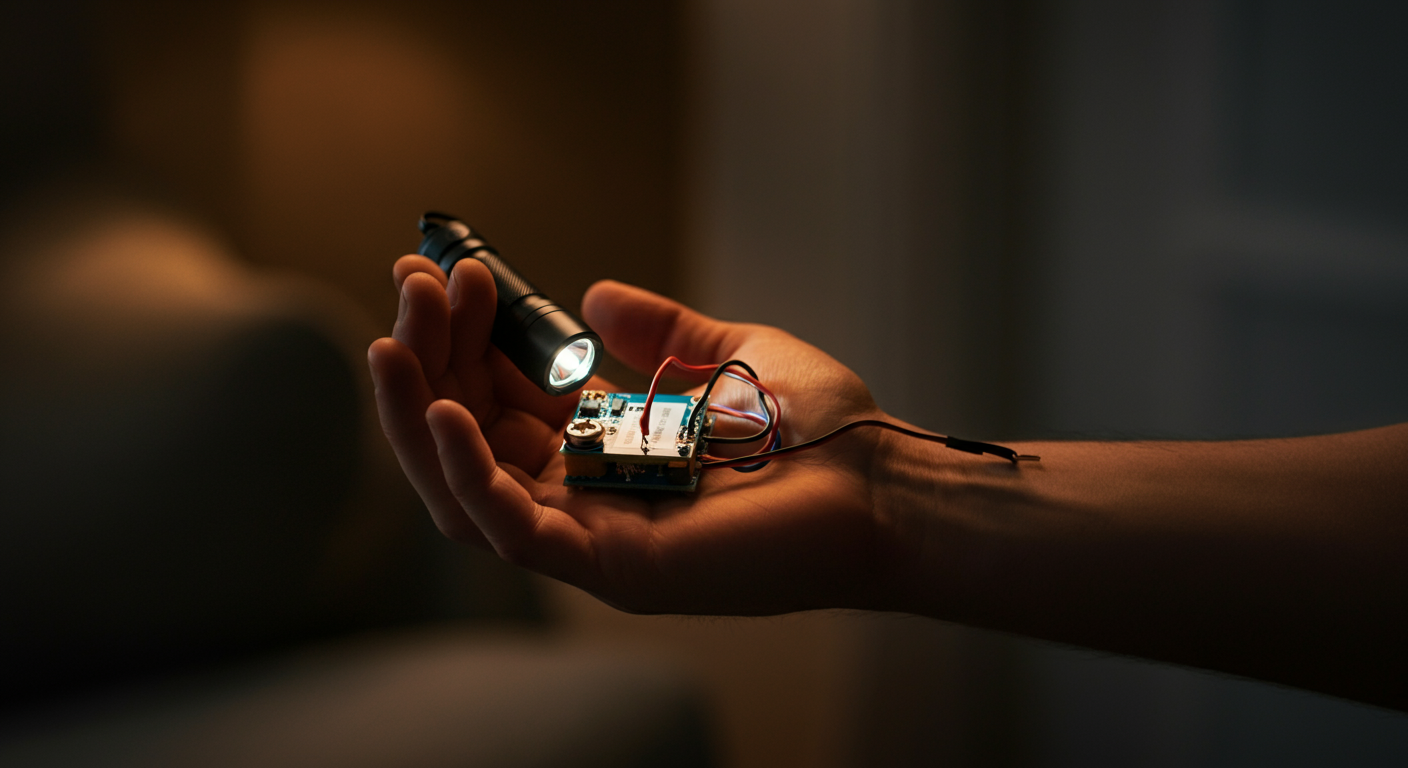
A hand gently holds a TEG powering a warm LED flashlight, showcasing quiet innovation in a home setting| Image Credit: TIL Creatives
Why body heat remains an active research fieldThe scientific discipline that makes up the background of the flashlight has undergone further development long after the initial invention caught the world’s attention. Scientists have managed to create flexible thermoelectric generators able to supply power to sensors and Bluetooth systems using body heat, together with electronic energy management systems. According to the paper, these technologies work with relatively low temperature differences.It would be incorrect to say that the technology used in Makosinski’s flashlight was similar to the current technology of wearable systems. Her invention was significantly simpler. Nevertheless, the ongoing scientific research into body heat energy proves that her technology was based on solid engineering research.A science project that respected its limitsOne of the reasons why the flashlight was memorable was its modesty. The project did not try to make people believe that thermoelectric energy harvesting can do more than it actually can. The project took into account all the limitations of the technology. The energy production by the human body is limited and greatly dependent on the thermal design of the device and environmental conditions. This is the reason why many wearable devices have been designed to operate using thermoelectric energy harvesting for low-power applications like sensors.Makosinski’s flashlight used the same idea. Combining a tiny power source with a small yet practical task makes the flashlight both scientific and creative.It is this kind of balance that often distinguishes science fair projects from short-term phenomena.Why the story still resonatesMore than ten years later, the invention remains popular since it took an engineering idea and turned it into something people could recognize. What does a flashlight do? Everyone knows. Body heat? People know this, too. Combining the two concepts brought the science closer to everyone.There was also another aspect of this invention that was important from the perspective of innovation. A number of technological breakthroughs happen not because there is an opportunity to solve a big problem, but because there is a certain niche in which the amount of energy matches the needs of its use. Indeed, this is exactly what Makosinski managed to demonstrate. Even a tiny amount of energy could be useful as long as the design was efficient and the goal realistic.This is probably the reason why the invention remains relevant. In addition to being just another interesting invention, it also provided a good illustration of a certain principle of engineering.