



Image of Jack Andraka| Image Credit: Wikimedia Commons
Jack Andraka’s presentation of his pancreatic cancer detection project at a science fair seemed to promise something too good to be true, an affordable paper sensor capable of detecting one of the most difficult types of cancer.Nevertheless, the story went viral almost instantly due to its inclusion of multiple factors that made it particularly interesting: a young man, a lethal disease, and a low-cost device that could be used by any person. However, it is important to note that the story had an underlying scientific truth that could not go unnoticed.Namely, the project was based on the use of mesothelin, a protein currently being investigated for its role in the development of pancreatic cancer.
At the same time, medical professionals have repeatedly emphasised that the discovery of a potential biomarker does not automatically translate into a reliable clinical screening test for cancer. And honestly, this gap that still exists makes the story so intriguing even ten years later.Why the project drew attention so quicklyAccording to a review published in PubMed Central (PMC), pancreatic cancer is particularly difficult to detect early, and many patients are diagnosed only after the disease has significantly progressed.
The review also notes that existing blood-based markers have important limitations.This medical background is what made it so clear why the idea by Andraka gained immediate attention. There was a great need for a cheap test that could detect cancer early. The science fair setting also played its role here. It turned the complex medical issue into something everyone could comprehend: a teenager searching for signs of cancer using paper.Yet researchers caution that appealing concepts do not automatically translate into dependable medical tools. A review indexed by PubMed explains that biomarker-based detection methods must perform consistently across varied patient populations before they can be trusted clinically. That process often requires years of validation and testing.Why mesothelin became central to the projectThe focus of Andraka’s research was on mesothelin, which is a protein that had already been connected to different types of cancers, such as pancreatic ductal adenocarcinoma.
Mesothelin is overexpressed in a number of cancers and has been studied as both a treatment target and a diagnostic one. That is why there was no need to come up with a hypothetical biomarker, it already existed in an accepted field of study.This scientific background gave Andrika’s test more credibility than a typical science fair project. The challenge was not in proving the presence of any connection between mesothelin and pancreatic cancer because scientists had already proven that.In another meta-analysis, the use of mesothelin as a biomarker in the diagnosis of pancreatic cancer was considered, and it became clear that researchers had been actively working on the potential role of mesothelin in a number of studies.
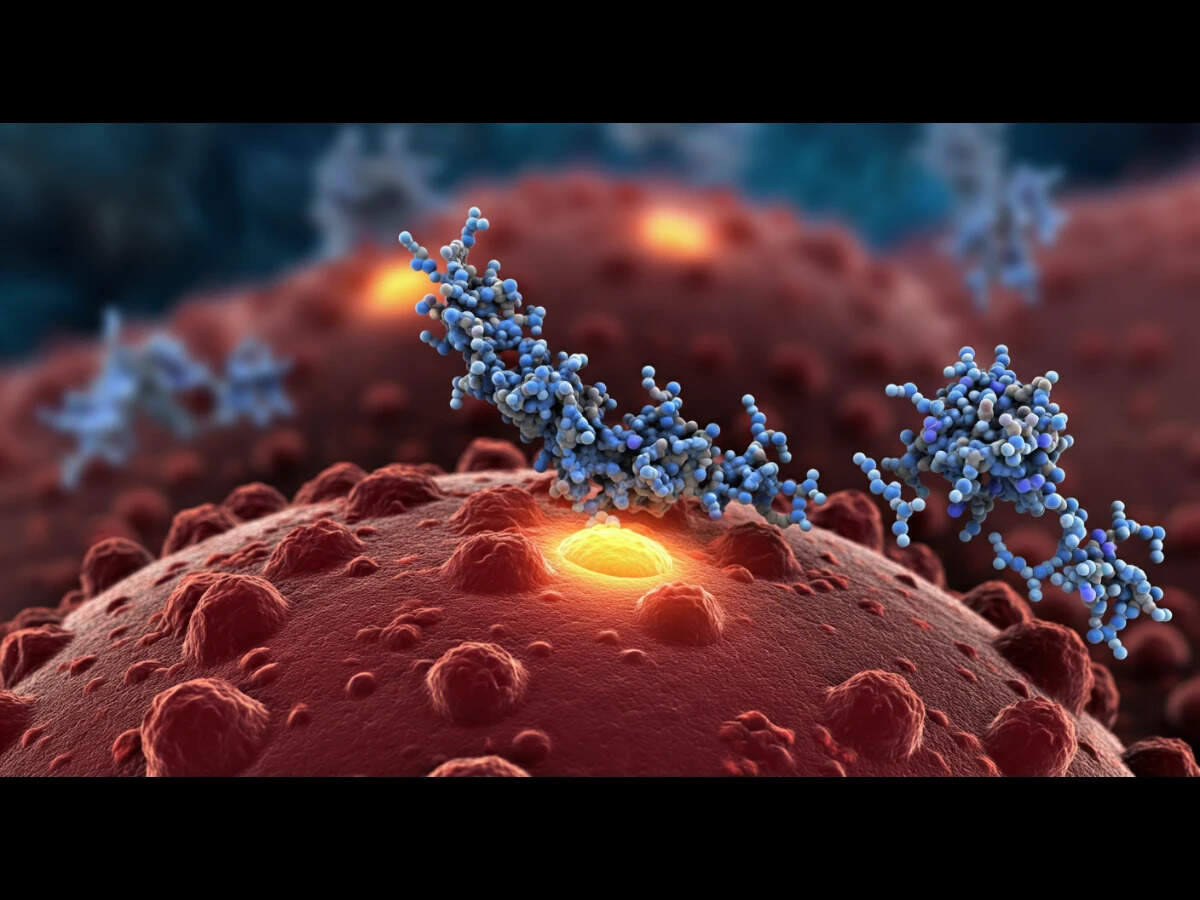
Image illustrating mesothelin’s precise binding to pancreatic cancer cells, highlighting molecular interaction in a research setting| Image Credit: TIL Creatives
The science behind paper-based sensorsUsing paper for diagnosing diseases might seem strange at first, but in reality, it is an aspect of an emerging field that is scientifically valid.
The research paper outlines low-cost paper-based immunosensing technology for the diagnosis of pancreatic cancer. It shows that paper microfluidics and electrochemistry-based devices are currently being investigated due to their potential to be low-cost, portable, and relatively easy to use.This information becomes relevant since it proves that the invention of Andraka was a product of the engineering and biomedical trends rather than an innovation that fell outside the scope of mainstream science.
Low-cost diagnostic platforms that can be made of paper are particularly promising in underdeveloped areas where laboratory equipment is hard to come by.Nevertheless, researchers also emphasize that having a working system does not equate to having a proven clinical instrument. Diagnostic devices need to be able to deal with false positives, false negatives, and biological variance among patients. The demands of these aspects make the transition very challenging.A story shaped by both hope and cautionThis public reaction towards Andraka’s work could be seen in the context of the desire for more user-friendly methods of cancer detection. The fact that pancreatic cancer is linked to poor survival rates is, first and foremost, due to its diagnosis at advanced stages. Naturally, any proposal aimed at detecting this type of cancer sooner will attract attention.However, as the research shows, there is still no way to solve the problem of early cancer detection using a breakthrough idea.
It seems like scientists have been encountering significant obstacles in developing reliable markers. And this is why Andraka’s device should be viewed not as a fully-fledged medical product, but rather as a scientific idea emphasizing a critical need in medicine.But success was achieved nonetheless in at least one regard. The experiment showed that a simple question posed by a teenager had the power to put one of the most daunting diagnostic problems of modern medicine into the international spotlight. And the true legacy of the story is neither its assertion of a miracle cure nor anything else.