


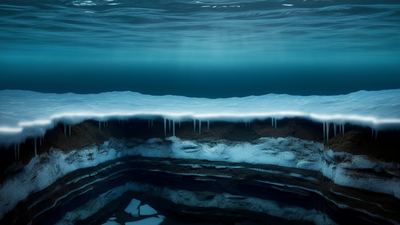
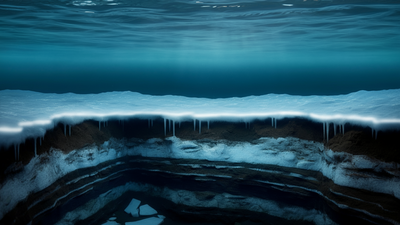
Unbelievable discoveries aren’t new in the world of Science. According to a team of scientists analysing the seafloor along the Labrador coast of Canada, they made an unbelievable discovery. Frozen layers of soil were found in the seafloor. Although this may be unbelievable at first, scientists have provided strong evidence proving that this discovery will change our perception of permafrost areas.According to a 2024 study published in Nature Geoscience, researchers identified discontinuous subsea permafrost near Nain in Nunatsiavut along the Labrador coast. Unlike earlier assessments that relied heavily on models, the study used direct seabed evidence, including bathymetric mapping and ice-rich sediment samples.Ice-rich sediments beneath the seaThis research, carried out by Normandeau et al., was focused on bathymetry, as well as sediments and pore water chemistry sampling. The scientists obtained a core sample containing ice at 27 m depth in the summer of 2022. As mentioned, the floor of the Arctic seafloor consists of collapse structures, which usually indicate the melting of ice-rich permafrost. The very existence of such structures confirms the hypothesis that there is subsea permafrost underneath the seabed.According to the scientists who conducted the experiment, several signs confirm that the hypothesis of the existence of subsea permafrost is correct. All the signs coincide and point in the same direction.Why the frozen ground survived underwaterUnder normal circumstances, seawater should facilitate the thawing of the frozen sediments after some time. However, there may be unique features of the Labrador coast area that make it possible to maintain the presence of subsea permafrost for a long time. Studies also highlight the significance of submarine groundwater discharge, which is freshened. In contrast to seawater, freshwater starts freezing at a higher temperature – at 0 degrees Celsius instead of minus 1.8 degrees for seawater. Scientists observed that porewater under the seafloor was less salty, hence facilitating the existence of stable permafrost.In addition, the cold water regime of the ocean is also important. The study emphasizes the significant impact of the Labrador coastal current that maintains the sub-zero temperatures in bottom waters throughout most of the year. This helps to slow down the process of subsea permafrost thawing.
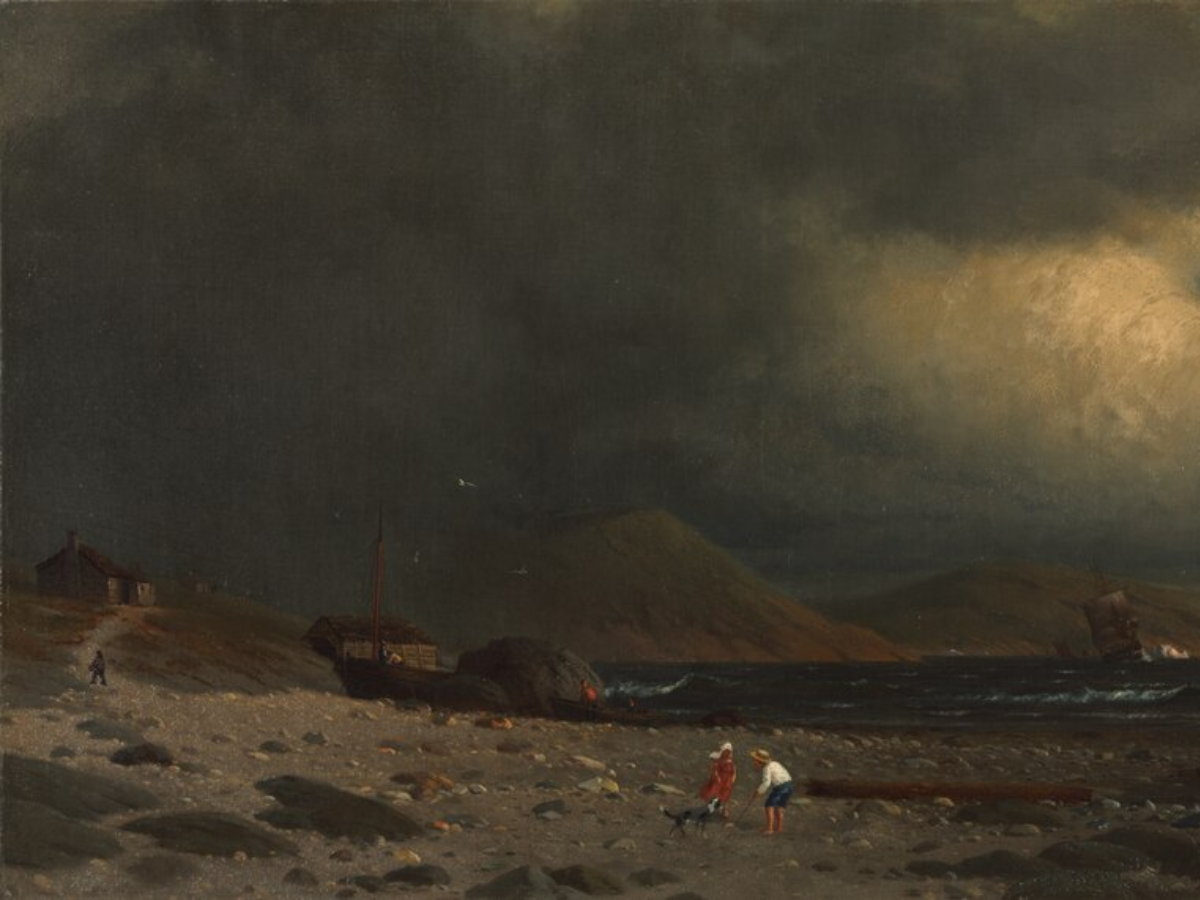
Image of Labrador Coast| Image Credit: Wikimedia Commons
The seabed itself carried cluesOne of the main discoveries was made possible thanks to the precise analysis of seafloor topography. Thermokarst topography on the seafloor near Webb’s Bay was found by researchers based on bathymetric data. Why is it so crucial? It allows geologists to obtain clues about freezing and melting processes in the geological past, as such formations indicate a history of these processes. For example, according to scientists, this seabed area looked like the area affected by permafrost degradation on Earth.Furthermore, it is mentioned in the research that current maps of the world may not show the whole scope of subsea permafrost, as some areas have not been analysed yet.A wider rethink of Arctic coastlinesIt has been believed for many years now that subsea permafrost is primarily confined to the shelves of the Arctic regions such as the Beaufort, Laptev, and Siberian seas. The discovery in Labrador challenges this idea since the area in question is located significantly south of these regions, being around 56°N latitude.Based on the findings of the scientists, it appears that subsea permafrost may thrive in specific marine environments provided that certain favorable thermal and hydraulic factors occur in them. Another point made is that the interaction between the groundwater flow, ocean temperature, and coastal geology occurs below the surface of the sea, and it may not always be visible from above.The significance of the discovery goes far beyond the Bay of Exploits in Labrador since there may be many other hidden subsea permafrost areas existing in other cold coastal settings under similar environmental conditions. Nonetheless, it should not be concluded that the whole coast of Labrador is frozen below the water level.A frozen reminder beneath the wavesThe significance of the Labrador discovery is not only the existence of ice below water but the numerous pieces of evidence that corroborate the inference. For instance, the presence of ice-bearing sediment core, thermokarst seabed landforms, freshened porewaters, and the perennially cold surface waters all indicate that the permafrost under the sea floor remains intact.From the perspective of earth science experts, such findings bring to attention the possibility of preserving geological information along coastlines. The geological record in Labrador seems to be preserved in its frozen form.