



Written by Anushka Verma
Published: December 10, 2025
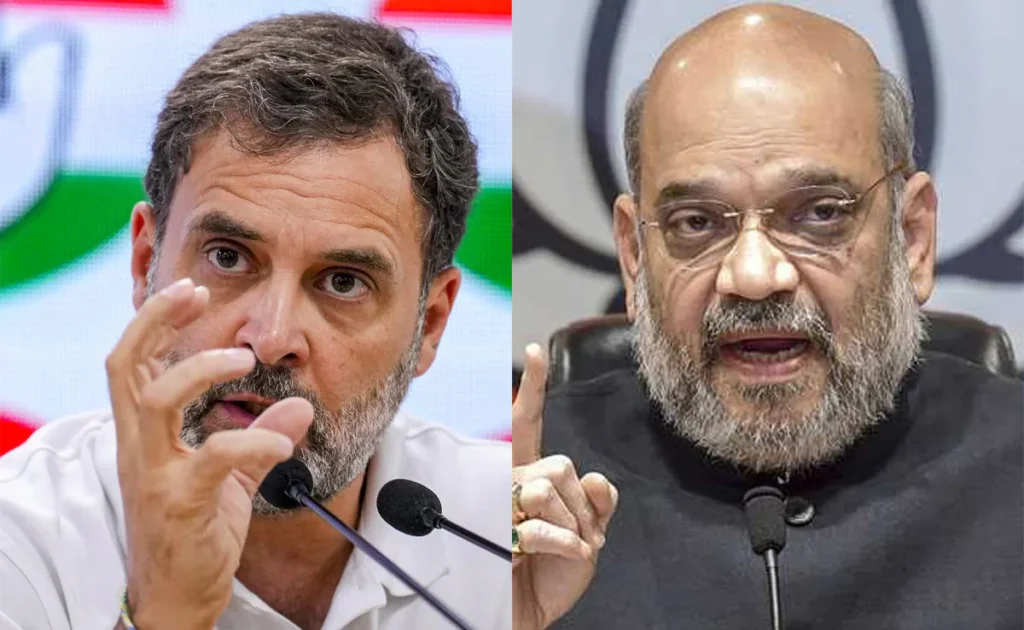
The Lok Sabha, the sanctum sanctorum of Indian democracy, transformed into a theatre of high political drama this Wednesday. What began as a scheduled debate on electoral reforms swiftly escalated into a raw, personal, and deeply symbolic confrontation between the two poles of India’s political spectrum: Leader of Opposition Rahul Gandhi and Union Home Minister Amit Shah. The air crackled with accusations of “vote chori” (vote theft), charges of evasion, and a fundamental debate over the integrity of the nation’s electoral machinery. This was not merely a parliamentary debate; it was a battle of narratives, where every interruption, every retort, and every historical reference was a carefully aimed projectile in the larger war for public trust. The session laid bare not just the deepening fissures between the Treasury and Opposition benches but also the profound anxieties surrounding the very process that legitimizes power in the world’s largest democracy.
The flashpoint was immediate and electric. Seizing the floor, Rahul Gandhi launched a direct assault, challenging the Home Minister to step out from behind prepared statements and bureaucratic explanations. He accused the government of deploying a “scared and practised response” to evade the serious allegations he had levelled days prior at his now-infamous ‘vote chori’ press conference. In that conference, Gandhi had painted a picture of systematic electoral manipulation, suggesting a deliberate strategy to disenfranchise voters through irregularities in the electoral rolls. His demand in the House was simple yet potent: a direct, unscripted engagement with his claims. This set the tone for what was to follow—a duel where patience was thin and protocol was constantly tested.
The Clash of Titans: Who Controls the Narrative?
Amit Shah’s response was characteristically combative and strategically deployed. Refusing to be dictated to, he asserted his authority over his own speech. “The LoP won’t decide the order of what I say. He should have the patience to hear me out,” Shah retorted, a statement that was as much about parliamentary etiquette as it was a metaphor for the current political equation. He positioned himself as the patient, reasoned authority, facing an impatient and interruptive Opposition. This dynamic peaked when, amid continued heckling from Opposition benches, Shah delivered a cutting remark that sparked instant protests: “Do bade bolte hai tab beech me nahi bolte (When two seniors are speaking, you should not interrupt).” The comment, laced with condescension, reinforced the BJP’s long-standing narrative of the Congress as an entitled, chaotic force, while simultaneously framing the exchange as a private duel between two principal adversaries, sidelining the broader Opposition.
The Home Minister then systematically dismantled the Opposition’s core charge. Addressing the allegations of tampered electoral rolls, Shah pivoted to a technical defence, presenting the Special Intensive Revision (SIR) as a neutral, accuracy-driven exercise by the Election Commission. “Leader of Opposition flagged irregularities in electoral rolls; SIR is an exercise to have pure electoral rolls,” he stated, reframing the critique as the very problem the process sought to solve. His masterstroke, however, was in highlighting what he termed the Congress’s “double standards.” He pointed to states like Rajasthan, Chhattisgarh, and Tamil Nadu, where the BJP had lost elections. “Then poll rolls were good,” he noted pointedly, “but when we win elections everything is bad. When you win elections, the EC is great; when you lose, the EC is incompetent.” This argument sought to reduce the grave allegations to mere sour grapes, a tactical ploy by a party unable to stomach electoral defeat.
Dissecting the ‘Nuclear Bomb’: A Battle of Details
Shah did not shy away from the specifics, directly referencing Rahul Gandhi’s November 5 press conference and the alleged “nuclear bomb” of evidence. He meticulously addressed the example of 501 households in Haryana, citing the Election Commission’s clarification. He explained that a single house number could encompass a large, joint family residing on a one-acre plot, where individual units had not been assigned separate numbers. “Multiple generations of a single family could be living under House Number 501,” he stated, aiming to convert a headline-grabbing accusation into a mundane issue of administrative record-keeping. This was a classic Shah strategy: meet a broad, emotional charge with a narrow, factual counter, thereby draining it of its dramatic potency and painting the accuser as either misinformed or deliberately misleading.
The Constitutional Impasse: To Discuss or Not to Discuss SIR
Perhaps the most revealing part of the confrontation was Shah’s justification for the government’s initial refusal to allow a discussion—a move that had precipitated the two-day logjam in Parliament. He drew a sharp constitutional line. The Opposition, he claimed, had insisted on discussing the SIR—a process under the exclusive domain of the independent Election Commission. “I am very clear that there cannot be a discussion on SIR in this House,” Shah asserted. “India’s EC and CEC do not work under the Government. If a discussion is held and questions are raised, who will answer them?” This stance framed the government as a guardian of institutional autonomy, protecting the EC from political interference. He positioned the BJP-NDA as never shying away from debate (“the biggest panchayat”), but only on the correct subject. Once the Opposition agreed to broaden the topic to “electoral reforms,” Shah said, the government immediately consented. This narrative painted the logjam as a consequence of the Opposition’s obstinacy on an unconstitutional demand, deftly shifting the blame for parliamentary paralysis.
The Unspoken Subtext: A Democracy on Trial
Beneath the theatrical exchanges and pointed barbs lay a struggle over foundational truths. Rahul Gandhi’s interventions, including his earlier stark warning that “we will come looking for you” and that laws would be changed retrospectively, spoke to a deep-seated fear of institutional capture. His rhetoric is no longer just about policy disagreement; it frames the upcoming electoral battle as a last stand to save democratic norms. The ‘vote chori’ narrative is potent because it strikes at the heart of democratic legitimacy—the belief that every vote is counted and counts.
Amit Shah’s counter-narrative, in contrast, was one of institutional order and procedural purity. By focusing on the technicalities of the SIR and hiding behind the shield of the EC’s independence, he aimed to project stability, rationality, and respect for due process. The debate, therefore, transcended the immediate issue of voter rolls. It became a proxy war between an Opposition crying “democratic emergency” and a government claiming “administrative sanctity.”
The Road Ahead: More Than Just Words
This Lok Sabha clash is not an isolated event but a symptom of a deepening crisis of trust. The bitterness ensures that the debate on actual, substantive electoral reforms—public funding of elections, transparency in political funding, or the regulation of digital campaigning—will remain hostage to this atmosphere of mutual suspicion. The government’s technical defences, while legally sound, do little to assuage the widespread apprehensions that Gandhi sought to vocalize. Conversely, the Opposition’s broad-brush allegations risk being dismissed as political theatrics unless backed by incontrovertible evidence presented through appropriate legal and institutional channels.
The table below encapsulates the core of this diametrically opposed positioning:
| Aspect of the Debate | The Opposition’s Charge (Led by Rahul Gandhi) | The Government’s Defence (Led by Amit Shah) |
|---|---|---|
| Core Allegation | Systematic “vote chori” through manipulated electoral rolls to disenfranchise voters. | Opposition is opposing a routine, technical exercise (SIR) meant to purify the electoral rolls. |
| Narrative Frame | Democratic backsliding; institutional capture; a fight to save fundamental rights. | Maintaining institutional autonomy (EC) and due process; opposing politicization of administration. |
| Response to Evidence | Cites specific examples (e.g., Haryana households) as proof of a larger, sinister pattern. | Dismisses examples as misunderstandings of administrative ground realities (joint families, numbering). |
| View of Election Commission | Compromised, acting under pressure, and its processes (SIR) are suspect. | An independent, credible institution whose technical work should be beyond parliamentary debate. |
| Reason for Parliament Logjam | Government’s refusal to address a critical national issue transparently. | Opposition’s insistence on discussing an operational EC matter outside Parliament’s purview. |
| Ultimate Goal | To force a political accountability for perceived electoral manipulation. | To insulate administrative processes from political discourse and label allegations as sour grapes. |
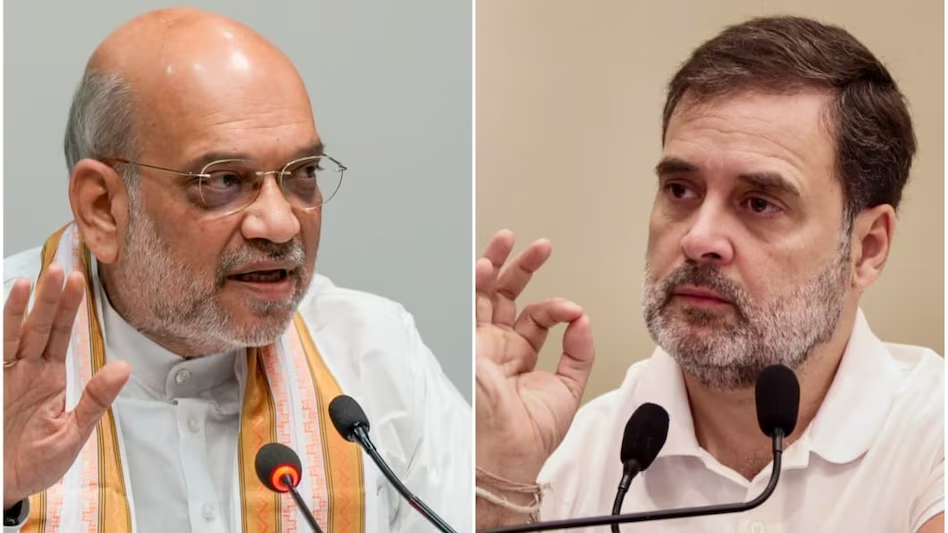
As the dust settles in the Lok Sabha, the reverberations will be felt across the political landscape. The battle has moved from the voter list to the public mind. Rahul Gandhi has thrown down the gauntlet, framing 2024 not just as an election but as a moral crusade. Amit Shah has accepted the challenge, not on emotional terms, but on the battleground of procedure, detail, and institutional prerogative. This clash was a prelude. The real verdict will be delivered not by the Speaker, but by the silent millions in the voting booths, who will ultimately decide which narrative—fear of a stolen franchise or faith in a robust system—resonates more deeply with their lived experience of Indian democracy. The words exchanged in the House have set the stage, but the final act of this high-stakes drama is yet to be written.

