


By Anushka Verma
Date: November 13, 2025
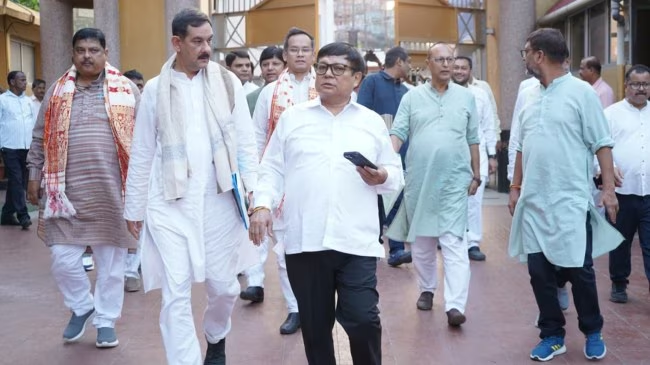
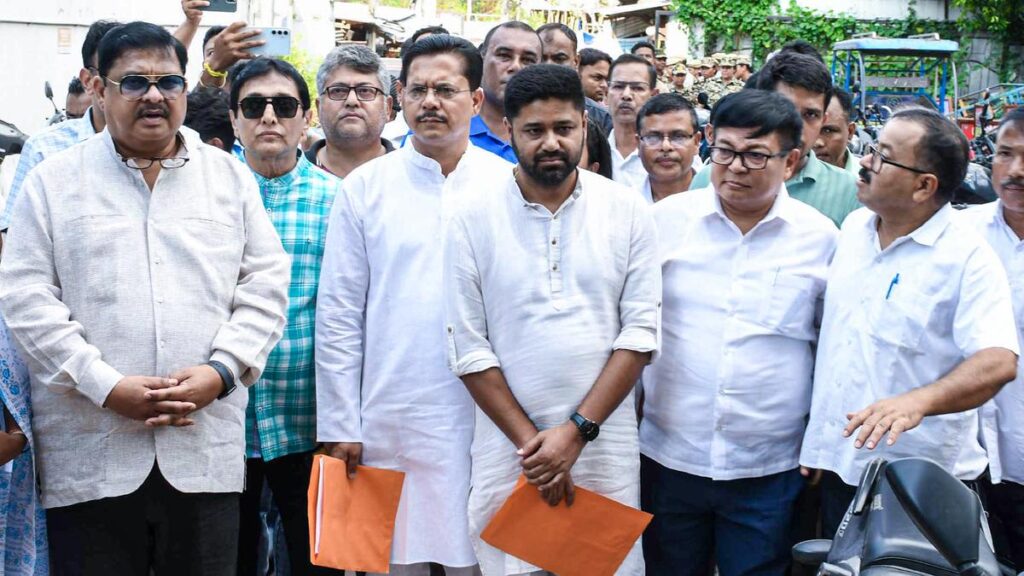
In a fresh and determined attempt to reconfigure Assam’s political equation ahead of the 2026 Assembly elections, the Opposition parties on Wednesday reignited conversations around an anti-BJP front. The meeting, held soon after the Congress’s Political Affairs Committee (PAC) discussion, was led by the party’s state in-charge Jitendra Singh Alwar, who met leaders of Raijor Dal, Assam Jatiya Parishad (AJP), CPI(M), CPI (M-L), and Independent Rajya Sabha MP Ajit Bhuyan.
Coming after months of silence and internal disagreements, this gathering has reintroduced the possibility of a revived multi-party alliance—one that fought the 2024 Lok Sabha elections together but collapsed during the bypolls the following year. With Assembly elections less than a year away, the momentum to reorganise the Opposition is visible, but so are the political dilemmas that surround it.
A Renewed Bid for Opposition Unity
The political mood at the meeting suggested a sense of urgency. With the BJP preparing an aggressive campaign in Assam, the Opposition parties understand that fragmentation would again hand electoral advantage to the ruling side. The Congress, taking the first step, reached out to all regional and left-aligned parties who were once part of a broader 2024 Lok Sabha alliance.
The presence of Akhil Gogoi, a mass leader and Raijor Dal MLA known for championing regional issues, added weight to the meeting. Likewise, Lurinjyoti Gogoi, the AJP chief, brought in the voice of young Assamese nationalism. CPI(M) MLA Manoranjan Talukdar and CPI (M-L) representatives, along with veteran parliamentarian Ajit Bhuyan, completed the Opposition tableau—each representing a different ideological corner but united by electoral necessity.
Congress Positions Itself as the Anchor Party
After the meeting, Congress in-charge Jitendra Singh Alwar asserted that the party is ready to “take the lead” in any alliance ahead of 2026. This statement signals Congress’s intention to reclaim its role as the primary Opposition force in Assam—a position that has weakened over the past decade.
However, for Congress to be accepted as the anchor, it will need to address internal organisational issues, unify its cadre, and win back regional trust. The party faces the dual challenge of repairing strained relationships with Raijor Dal and AJP while simultaneously projecting itself as a credible alternative to the BJP.
From 2024 Unity to 2025 Fragmentation — What Changed?
The 2024 Lok Sabha elections saw these Opposition parties working together with surprising coordination. The alliance’s performance, though not victorious in most seats, had consolidated anti-BJP votes in significant belts.
But in 2025, during the state bypolls, fissures began to surface.
- AJP accused Congress of last-minute unilateral decisions.
- Raijor Dal expressed displeasure over seat-sharing negotiations.
- The Left parties felt ignored in critical constituencies.
These rifts resulted in each party choosing a separate path, thereby splitting the Opposition vote and giving BJP a comfortable win in the bypolls.
The current meeting attempts to repair those fractures.
Why Opposition Unity Matters in Assam
The 2026 elections will be shaped by several demographic and political realities:
1. Minority Vote Consolidation
Minority groups in Lower Assam and certain pockets of Central Assam can swing results, but only if the Opposition avoids fragmentation.
2. Regional Sentiments
Issues like:
- protection of Assamese identity
- land rights
- unemployment
- inflation
- citizenship and immigration
will play a central role.
Parties like AJP and Raijor Dal have strong grassroots influence on these topics, making their presence valuable.
3. Tea Tribe Constituencies
These remain one of BJP’s strongest bases, but Opposition unity can challenge that dominance if mobilised strategically.
4. Youth Dissatisfaction
High unemployment, slow job creation, and rising price inflation have created restlessness among young voters—a demographic ripe for Opposition outreach.
The Stakeholders and Their Strengths
Each party brings something unique to the table:
Raijor Dal (Akhil Gogoi)
- Strong mass movement background
- Appeal among rural communities and intellectual sections
- Focus on farmers’ issues
Assam Jatiya Parishad (AJP)
- Youth-driven nationalist sentiment
- Support among students and emerging professionals
- Clean-image regional party
Left Parties (CPI(M), CPI (M-L))
- Organised cadre
- Issues-based campaigns
- Influence in labour and peasant pockets
Ajit Bhuyan
- Veteran journalist-turned-politician
- High credibility among civil society
- Significant voice in human rights and democracy debates
Congress
- Largest organisational network
- Minority vote base
- Legacy influence across districts
- Financial and campaign machinery capability
Challenges in the Path of Unity
While the idea of unity seems attractive, multiple challenges persist:
1. Seat Sharing
Seat-sharing negotiations remain the biggest hurdle. Assam’s political geography is complex, and parties often compete for the same vote banks. No one wants to compromise.
2. Trust Deficit
The collapse of coordination during 2025 bypolls has created scepticism among leaders.
3. Leadership Conflict
Will the alliance be led by Congress or will it adopt a collective leadership model?
4. Campaign Narrative
Parties must agree on a common minimum programme that does not dilute their independent ideological identities.
5. BJP’s Organised Machinery
BJP’s booth-level strength, combined with the organisational capacity of the RSS and its affiliates, gives it a significant advantage that cannot be ignored.
What BJP Stands to Lose if Opposition Unites
If unity is achieved, BJP may face:
- Loss of swing votes in marginal constituencies
- Consolidation of minority votes against it
- Break in the tea tribe support base
- Reduction in regional vote fragmentation
- Increased pressure on governance and local issues
This is precisely why the BJP has always benefitted from Opposition disunity—and why a united alliance could be a real threat.
What the Meeting Symbolises
The gathering hosted by Congress is more than a courtesy meeting. It signals:
- Congress’s willingness to share space
- Regional parties’ acceptance that 2026 cannot be fought alone
- The Left’s readiness for issue-oriented collaboration
- A growing realisation that Assam’s political future may depend on coalition stability
How the Alliance Could Shape the Narrative
If the alliance solidifies, the 2026 campaign will likely revolve around:
- economic distress
- unemployment crisis
- regional identity
- farmer issues
- price inflation
- CAA-related concerns
- decentralised development
- corruption allegations
- governance performance
A joint campaign could amplify these issues effectively.
Public Sentiment and Ground Reaction
Initial feedback from citizens and local observers indicates:
- dissatisfaction with price rise
- desire for stable, credible Opposition
- fatigue from polarisation
- strong desire for local leadership focus
However, whether this translates into votes depends heavily on sustained unity.
The Road Ahead
If the Opposition wants to present a serious alternative, the next steps are crucial:
- Finalising seat-sharing before January
- Creating a unified campaign narrative
- Mobilising youth and student groups
- Strengthening digital outreach
- Conducting joint rallies
- Assigning district-level coordinators
Without these measures, unity discussions may again fade away.
Expert-Style AISA Analysis
AISA-style political observers believe that Assam is at a critical juncture. For the first time in a decade, the Opposition has both the motivation and the pressure to come together. With the BJP facing increasing scrutiny over job creation and rising cost of living, a united Opposition can strike a chord with diverse voter categories.
However, emotional unity alone is insufficient. Structural unity—seat-sharing, joint messaging, coordinated campaigning—will decide whether the Opposition can truly challenge BJP’s stronghold.
Conclusion
The meeting led by Jitendra Singh Alwar on November 13 marks the most significant Opposition development in Assam in recent months. With Akhil Gogoi, Lurinjyoti Gogoi, the Left parties, and Ajit Bhuyan participating, the first signal of collective intent has emerged.
As the 2026 Assembly elections approach, the real question is not whether the Opposition wants unity, but whether it can sustain it.
Only time will tell if this early spark can evolve into a formidable political front capable of reshaping Assam’s electoral destiny.
FAQs
1. Why is this meeting important?
It marks the first serious attempt in months to rebuild the anti-BJP Opposition alliance in Assam.
2. Who led the meeting?
The meeting was led by Jitendra Singh Alwar from Congress.
3. Which parties attended?
Congress, Raijor Dal, AJP, CPI(M), CPI (M-L) and Independent MP Ajit Bhuyan.
4. What caused the alliance breakdown earlier?
Differences in seat-sharing and internal trust deficit during the 2025 bypolls.
5. Can the alliance challenge BJP?
Yes — but only if they succeed in unity, seat-sharing, and coordinated campaigning.