


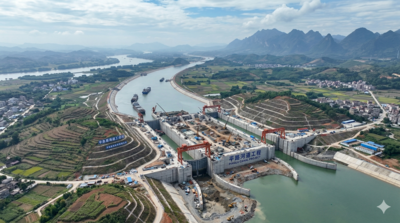
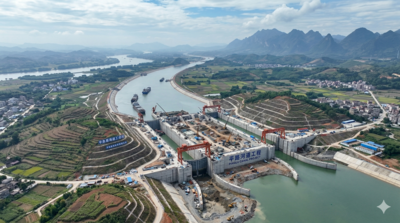
China is currently undertaking a massive infrastructural project, which involves the construction of an 83-mile (approximately 134-kilometre) canal that will enable the direct connection of the interior of the country to the sea. This massive infrastructural project, which has been likened to the Pinglu Canal, is part of the long-term strategy of the Chinese government to enhance the internal logistics of the country as well as the international trade routes. The infrastructural project has attracted the attention of the international community, with experts observing the implications of the project on the economics of the region in the near future.
China Canal Project : What is the 134-kilometre waterway
The canal of interest has been associated with the Pinglu Canal, which is still under construction in southern China, specifically in the Guangxi province. The canal is expected to link the Xijiang River and the Beibu Gulf once it is completed. This will ensure a direct route for shipping.As Government officials of Guangxi Zhuang Autonomous Region told China Daily, the canal is expected to be approximately 134 km long. This will enhance its capacity to allow large vessels to pass through the inland waterways.This is part of China’s plan to upgrade its transport infrastructure.
Why China’s massive canal matters for global trade
The importance of this canal is that it has the potential to reduce transport costs and time. At present, most of this region’s water-borne cargo is shipped out via longer routes passing through Guangdong Province, a classic gateway to global markets. The Pinglu Canal will reduce the distance by about 561 kms and save over 5.2 billion yuan annually in logistics costs. This figure translates to about $750 million if we assume an exchange rate of about 6.9 yuan to a dollar.According to research published in the Taylor and Francis Journal, inland water transport is critical in that it has the potential of reducing costs involved in logistics, especially in developing countries.By offering a shorter and more efficient route, the canal could:
- Reduce the costs of shipping for exporters
- Enhance regional economic growth
- Make China competitive in the international market
Engineering scale and environmental considerations
It is not an easy task building a canal that is 83 miles (approximately 134 kilometres) long. It requires expertise in engineering, considering the scale of the canal, water, and cargo. It will also need to accommodate cargo vessels without impeding the flow of water.According to the Food and Agriculture Organisation (FAO), large canal systems require careful planning to consider the economic and environmental effects, particularly on water use and the environment.Environmental experts have raised several issues concerning the canal, including:
- Changes in the ecosystem
- Impacts of water diversion
- Long-term sustainability
China has claimed that they are using modern engineering techniques that will not disrupt the ecosystem.
Strategic importance of China’s inland-to-sea canal
Besides the economic advantages, the canal also has strategic importance. The canal will assist China in improving its internal supply chain. This is because its current supply chain relies on congested routes along its coast. It will also assist in meeting other development targets. These targets include regional development and the development of infrastructure.The canal could also be used as a tool for improving connectivity in the context of a larger economic group, which could help the nation’s inland regions become more competitive in the global market. In addition, its proximity to Southeast Asia makes the canal significant from a geopolitical perspective.
A project the world is watching
It is not the size of this canal that has captured the world’s attention, but the potential impact that it may have.If this canal is a success, it may be the blueprint that many countries follow to improve the level of connectivity that they have.However, it does bring into question the sustainability of the environment. As the construction of this canal continues, the world will continue to watch because this is not just any canal; this is the future of trade.