



By Anushka Verma | November 11, 2025
📰 Introduction: The Night Delhi Lost Its Calm
For thirteen long years, Delhi had slept in peace. Its bustling streets, crowded bazaars, and timeless monuments stood as testaments to a capital city that had, finally, outgrown the era of fear. But on Sunday evening, November 10, 2025, that peace was shattered by an explosion that echoed across the Red Fort complex — the same symbol of India’s independence and unity where the tricolor rises every 15th of August.
The Red Fort blast, though limited in physical damage, has caused a massive emotional and psychological tremor. It has forced the city, and indeed the nation, to once again confront the uneasy truth — that safety is fragile, and complacency can be deadly.
📊 Table: Key Details of the Red Fort Blast
| Aspect | Details |
|---|---|
| Date of Incident | November 10, 2025 |
| Time of Explosion | 7:15 PM |
| Location | Near Gate No. 3, Red Fort, Delhi |
| Type of Device | Improvised Explosive Device (IED) |
| Casualties | 3 Dead, 14 Injured |
| Suspected Group | Unidentified (under investigation) |
| Investigating Agencies | NIA, Delhi Police Special Cell |
| Government Compensation | ₹10 lakh (families of deceased) |
| Security Revamp Budget | ₹15 crore proposed |
| Last Major Blast in Delhi | 2012 (Delhi High Court bombing) |
🧩 A Thirteen-Year Silence Broken
For over a decade, Delhi had been a symbol of resilience and modernization. The last major terror incident in the capital — the 2012 High Court bombing — had left the city shaken but determined. In the years since, improvements in surveillance, counterterror operations, and public awareness had made Delhi one of the safest metros in South Asia.
This blast, therefore, does not just represent an act of terror. It represents a symbolic rupture in the story of Delhi’s progress. Experts are calling it a psychological assault more than a physical one — a deliberate attempt to reawaken old fears and test India’s response mechanisms.
🔍 The Sequence of Events: What Happened That Evening
At approximately 6:50 PM, the evening crowd around Red Fort began to thin. Vendors were packing up, tourists were leaving, and the usual sounds of traffic filled the air. Then, a food vendor noticed an unattended black backpack near his cart by Gate No. 3. Before security could arrive, a sudden explosion tore through the calm.
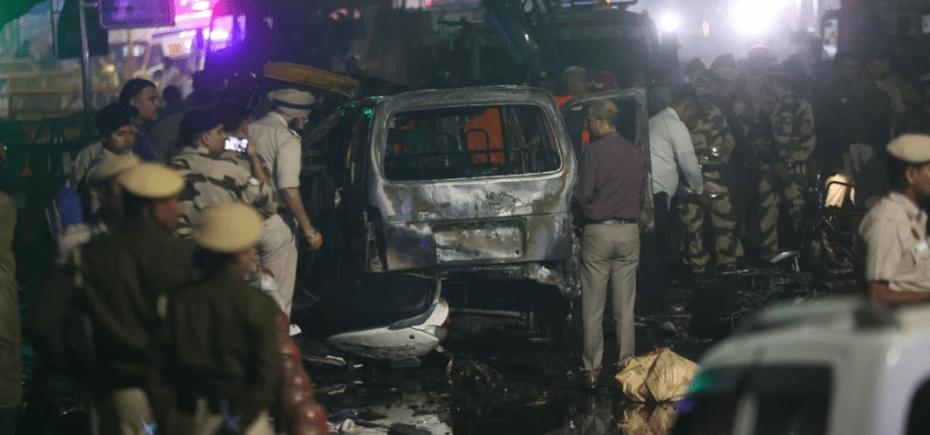
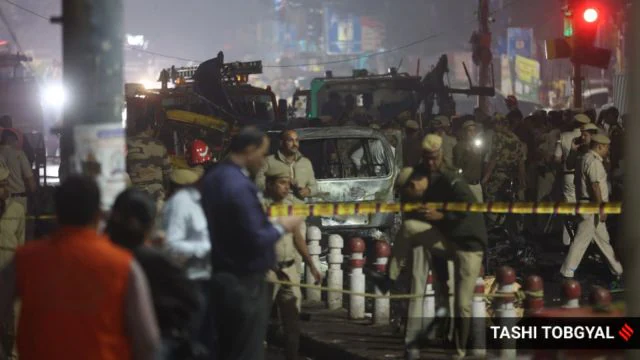
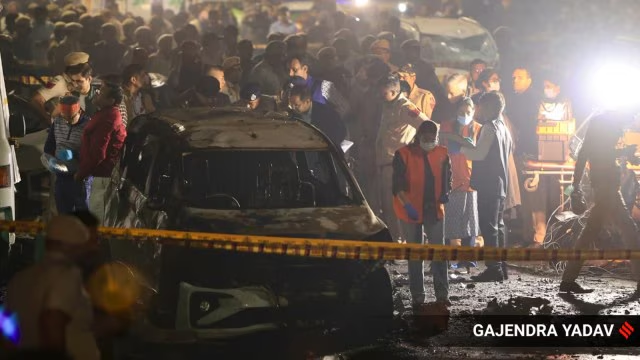
The blast’s intensity was enough to shatter nearby glass panels and injure bystanders within a 50-meter radius. Panic spread immediately — screams, smoke, and the blare of sirens filled the scene. Within 20 minutes, Delhi Police and NDRF teams had cordoned off the area, while the Bomb Disposal Squad began searching for secondary devices.
A second, smaller device was indeed found — and successfully defused at 8:10 PM, preventing a potentially larger tragedy.
⏱️ Timeline: From Calm to Chaos
| Time | Event |
|---|---|
| 6:50 PM | Vendors begin winding up for the day. |
| 7:05 PM | Unattended bag noticed near Gate No. 3. |
| 7:15 PM | Explosion heard across a 500-meter radius. |
| 7:20 PM | Emergency response teams arrive. |
| 7:30 PM | Area sealed off; traffic diverted from Lal Qila Road. |
| 8:10 PM | Secondary IED found and defused. |
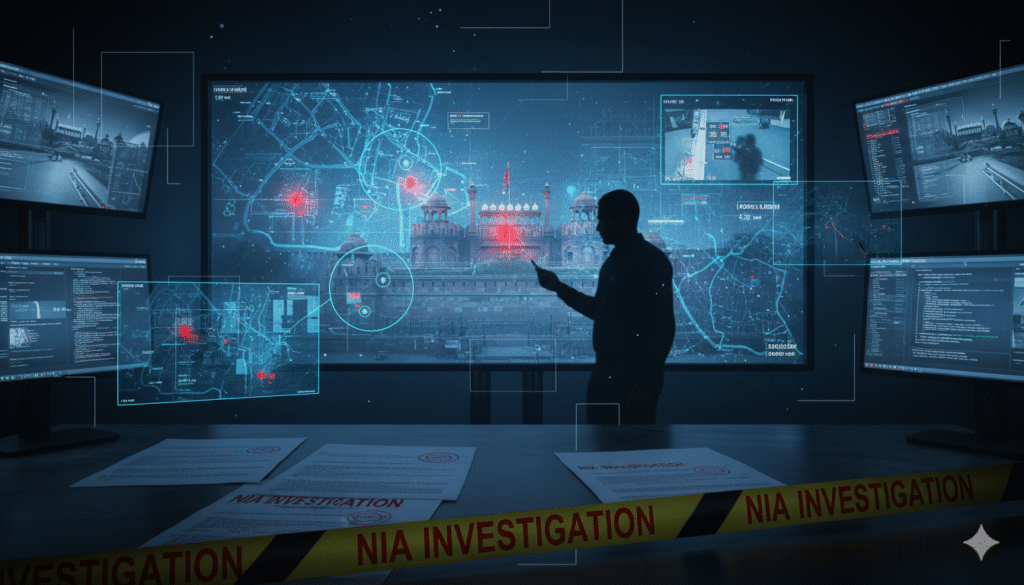
| 9:00 PM | NIA and Special Cell begin joint investigation. |
🧠 Investigators Speak: Inside the Probe
Sources within the National Investigation Agency (NIA) indicate that the explosive device was a crudely assembled IED, likely made using ammonium nitrate and metallic fragments — materials that can be easily sourced from local hardware markets.
Officials suspect that the blast may have been the work of a newly radicalized local cell, operating independently but ideologically linked to cross-border terror groups.
“This attack bears the hallmark of a tactical experiment — a low-budget, high-impact act designed for media visibility,” said a senior NIA official.
Investigators have detained four suspects from East Delhi, one of whom reportedly had connections to an encrypted Telegram channel known for sharing extremist propaganda.
🏛️ The Symbolism: Why the Red Fort Matters
The Red Fort isn’t just a monument — it’s a statement of India’s continuity, strength, and sovereignty. It’s where India celebrates freedom every year. To attack it is to attack the soul of Indian democracy.
Historically, the Red Fort has been a site of both triumph and tragedy. In 2000, it witnessed a terrorist shootout that left two soldiers dead. That incident shook the nation, leading to the first wave of India’s counter-terror reforms.
Now, 25 years later, it is once again a stage for terror’s dark theatre.
| Dimension | Meaning |
|---|---|
| Political | Symbol of India’s sovereignty — PM’s Independence Day address site |
| Cultural | UNESCO World Heritage monument |
| Tourist Footfall | 1.2 million visitors annually |
| Security Zone | Protected by CISF, SPG monitoring |
| Psychological Impact | Fear in a symbol of national pride |
⚠️ The Blast and Its Broader Message
Security experts believe that the attack is not aimed merely at casualties, but at creating psychological uncertainty in the capital.
It’s a reminder that even with CCTV networks, digital policing, and AI-based monitoring, no system is immune to human error.
Moreover, the Red Fort’s location — in the heart of Old Delhi, surrounded by dense residential areas and chaotic streets — makes it a challenging security zone. One lapse in vigilance can become catastrophic.
🛡️ Government Response: The ₹15 Crore Revamp
Within 24 hours of the blast, the Home Ministry announced an emergency ₹15 crore security modernization plan for heritage sites in Delhi, with Red Fort as the primary focus.
The plan involves:
- AI-powered surveillance with 360° thermal imaging cameras
- Drone patrol units for real-time sky monitoring
- Integrated command center linked to the Delhi Police control room
- Aadhaar-linked visitor tracking for better profiling
- CISF rapid response units stationed at key monuments
Home Minister Rajnath Sharma stated:
“India’s monuments are our pride. We will protect them not just with bricks and barriers, but with innovation and intelligence.”
💔 Human Cost: Lives Lost, Families Shattered
Among the victims were:
- Rafiq Khan (42), a street vendor and father of three
- Kiran Patel (29), a tourist from Gujarat
- Imran Qureshi (20), a college student from Seelampur
For their families, compensation and condolences offer little solace.
Local NGOs have stepped in to provide trauma counseling and financial aid to survivors.
An elderly eyewitness, Sharda Devi, said with trembling voice:
“I heard a loud thud, then saw smoke and people running. For a moment, it felt like war.”
📉 Economic Impact: The Invisible Fallout
The Red Fort isn’t just a monument — it’s an economic hub. Vendors, rickshaw pullers, tour guides, and local businesses depend on the daily flow of tourists. Within 48 hours of the blast, the tourism industry in Old Delhi took a massive hit.
| Area | Impact |
|---|---|
| Ticket Sales | ↓ 45% in 2 days |
| Vendor Revenue | ↓ 70% |
| Tour Bookings | ↓ 50% cancellations |
| Hotel Occupancy | ↓ 35% |
| Street Food Economy | ↓ 60% in nearby Chandni Chowk |
This blow comes at a time when Delhi was preparing for peak winter tourism, expected to bring ₹200 crore in seasonal revenue.
🧩 Why This Attack Is Different
Unlike the serial blasts of 2008 or the 2011 High Court bombing, this explosion was isolated yet deeply symbolic. There was no chain of attacks across the city. This suggests a shift in strategy — from large-scale carnage to psychological, location-based impact.
Security analyst Dr. Arvind Menon notes:
“The attacker’s goal was not mass casualties. It was fear — targeted, symbolic, and media-driven. That’s the new age of terrorism.”
This “micro-attack” approach mirrors global patterns seen in Europe and Southeast Asia, where extremists increasingly rely on low-cost explosives and digital radicalization.
🔒 Intelligence and Security Lapses
Delhi, with over 3 lakh CCTV cameras, prides itself on being one of the most monitored capitals in the world. Yet, this attack happened within sight of multiple surveillance points.
Potential gaps include:
- Camera malfunctions near Gate No. 3
- Understaffed checkpoints during shift change
- Ignored citizen alerts regarding the suspicious bag
- Slow data relay between local police and intelligence units
A special review committee has now been formed to audit Delhi’s Integrated Security Command Network (ISCN) and plug data-sharing loopholes.
🌍 Global Reaction: The World Watches Delhi
World leaders have expressed solidarity with India.
- US Secretary of State called the incident “an attack on democracy and heritage.”
- UK PM offered support in intelligence sharing.
- UNESCO condemned the act as “a violation of cultural peace.”
International media coverage highlighted India’s dual challenge — maintaining openness as a democracy while combating modern hybrid terror.
🧭 Lessons for the Future
The Red Fort blast exposes three core truths:
- Terrorism evolves faster than bureaucracy.
Security systems must constantly adapt to new tactics and technologies. - Public vigilance is crucial.
One report from a citizen could prevent countless tragedies. - Heritage security needs modernization.
India must move beyond static guards and CCTV cameras to predictive AI monitoring.
💬 Public Sentiment: Fear, Anger, and Defiance
Social media platforms erupted in both grief and outrage. The hashtag #RedFortBlast trended globally within hours. Citizens demanded accountability, stronger border control, and reforms in urban policing.
Popular tweets read:
“We visit Red Fort for history, not horror.”
“If they can reach Lal Qila, where are we safe?”
Yet, amid anger, there was unity too. Candlelight vigils near India Gate and Connaught Place drew thousands. Delhi stood together — not broken, but bruised.
🕯️ Healing Through Resilience
Delhi’s story has always been one of survival — from the Mughal invasions to the 1984 riots, from terror to triumph.
Each time the city bleeds, it heals with resilience. The Red Fort, now scarred again, will continue to stand tall — as it has for centuries — as the backdrop to India’s struggle and strength.
🏗️ Moving Forward: From Reaction to Prevention
India’s challenge now is not to react emotionally but to respond intelligently. The upcoming months will see:
- The formation of a Monument Security Task Force (MSTF)
- Deployment of Smart Fencing Systems around high-value sites
- Collaboration with private cybersecurity firms for predictive analysis
- Implementation of AI-based crowd behavior monitoring
If implemented sincerely, these measures could make India’s capital a global model of adaptive urban security.
🧱 Red Fort — Beyond the Blast
It’s important to remember what the Red Fort stands for. Built by Shah Jahan in 1639, it has witnessed emperors, colonizers, freedom fighters, and prime ministers.
It has survived wars, revolutions, and now — yet another blast.
Perhaps its bricks are telling us something — that no explosion, however loud, can silence the spirit of a nation.
🧾 Conclusion: A Wake-Up Call, Not Just a Warning
The Red Fort blast is not the end of Delhi’s peace; it’s a warning bell — a reminder that peace without preparedness is an illusion.
It calls for a new era of proactive security, blending technology, intelligence, and citizen awareness.
India must now guard not just its borders but its symbols, its stories, and its spirit.
Because when an attack strikes the Red Fort, it doesn’t just wound a monument — it tests the idea of India itself.
❓ FAQs: Understanding the Red Fort Blast
Q1. When did the Red Fort blast take place?
The blast occurred on November 10, 2025, around 7:15 PM, near Gate No. 3 of the Red Fort complex in Delhi.
Q2. How many people were affected?
The explosion resulted in 3 deaths and 14 injuries. One additional device was defused before detonation.
Q3. Who is suspected behind the attack?
Investigations are ongoing, but early intelligence suggests a locally radicalized group possibly influenced by external extremist networks.
Q4. What is the government doing in response?
The Home Ministry has announced a ₹15 crore monument security revamp plan involving AI surveillance, drones, and visitor profiling systems.
Q5. Is it safe to visit the Red Fort now?
Yes. Authorities have reopened the monument after a 48-hour security clearance, with new restrictions and scanning protocols.
Q6. How does this blast compare to past incidents?
This marks the first major blast in Delhi in 13 years, following the 2012 High Court bombing, and the second at Red Fort after the 2000 shootout.
Q7. What long-term changes can we expect?
Enhanced inter-agency coordination, upgraded tech-driven monitoring, and nationwide security audits of heritage sites are expected in the coming months.