


By Anushka Verma
Published on: October 22, 2025
Introduction
Bollywood has always flirted with the concept of obsessive love — from Darr and Anjaam in the ’90s to Tere Naam in the early 2000s — but 2025’s Ek Deewane Ki Deewaniyat seems to drag that same outdated narrative kicking and screaming into an era that’s long moved on.
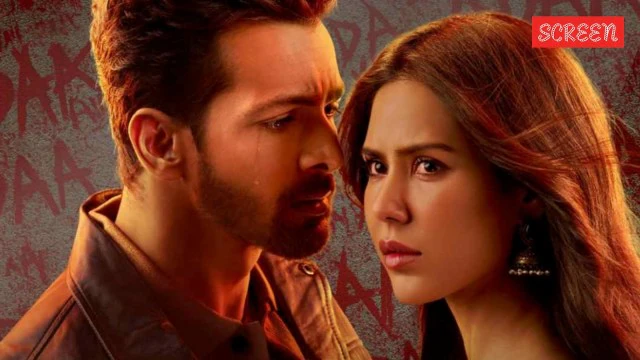
Directed by Milap Zaveri, starring Harshvardhan Rane and Sonam Bajwa, this film promises intensity but ends up glorifying obsession, confusing harassment for romance, and mistaking toxicity for passion. The result? A film that leaves you wondering whether Bollywood has learned anything from decades of evolution, conversation, and consent.
Yes, this movie tries hard to speak the language of love — but what it ends up shouting is something deeply uncomfortable, wrapped in flashy songs and melodramatic tears.
Movie Details
| Title | Ek Deewane Ki Deewaniyat |
|---|---|
| Language | Hindi |
| Genre | Romantic Drama / Psychological Thriller |
| Director | Milap Zaveri |
| Cast | Harshvardhan Rane, Sonam Bajwa, Shaad Randhawa, Sachin Khedekar, Ananth Mahadevan |
| Release Date | October 22, 2025 |
| Running Time | 2 hours 18 minutes |
| Ticket Price | ₹250 (average across multiplexes) |
| Music | Mithoon |
| Cinematography | Aseem Mishra |
| Written By | Milap Zaveri |
| Produced By | T-Series Films |
| Rating | ★☆☆☆☆ (1/5) |
Plot Summary
Ek Deewane Ki Deewaniyat opens with Vikramaditya Bhonsle (Harshvardhan Rane), the son of a powerful politician, attending a red-carpet event where he sees Adaa (Sonam Bajwa), a successful actress. In a classic slow-motion Bollywood moment, their eyes meet, hands touch, and Vikram decides she’s “the one.”
But from that very moment, the story spirals into a suffocating loop of obsession. Vikram follows Adaa everywhere — on film sets, to her events, and even to her home — turning every “no” she utters into fuel for his determination.
His friend, played by Shaad Randhawa, offers the occasional voice of reason, but Vikram’s “love” is shown as unstoppable and all-consuming. Adaa, initially terrified, eventually becomes trapped in a web of emotional blackmail and societal pressure — a narrative that feels disturbingly outdated in a world where “No means No” is supposed to be a cultural cornerstone.
By the time the film reaches its midpoint, it’s already exhausting. The dialogues echo the same dramatic lines heard for decades: “Pyaar sirf ek baar hota hai,” “Main tere bina jee nahi sakta,” “Mohabbat mein deewanapan hi sachcha hota hai.”
And instead of exploring the psychological depth of obsession or consent, Milap Zaveri doubles down on melodrama — turning the movie into an over-the-top, cringe-inducing parade of outdated tropes.
Performances
Harshvardhan Rane as Vikramaditya Bhonsle
Rane brings intensity to the role — perhaps too much of it. His rugged looks and brooding presence could have worked in a more layered character. But the script gives him no room to explore anything beyond manic obsession.
From teary-eyed confessions to violent outbursts, Rane’s performance borders on theatrical excess. He sheds tears, punches walls, and speaks in poetic monologues that sound like rejected drafts from a 2003 romantic thriller.
One can’t help but feel that Rane deserved a better-written character — someone flawed but real, not a caricature of “passionate love gone wrong.”
Sonam Bajwa as Adaa
Sonam Bajwa looks stunning as always, but her role is painfully underwritten. As Adaa, a celebrated actress being relentlessly pursued by a man she clearly dislikes, Bajwa’s expressions capture fear, confusion, and fatigue far better than the dialogue allows.
She tries to inject strength into her character, especially in moments where she stands up to Vikramaditya, but the script keeps undermining her agency. Her eventual “softening” toward the man who stalks her feels forced, scripted, and painfully tone-deaf.
Supporting Cast
- Shaad Randhawa as Vikram’s friend plays the bystander with a conscience, but he’s limited to being a narrative device rather than a real character.
- Sachin Khedekar, as the politician father, adds a layer of patriarchal menace, embodying the entitlement that drives his son’s behavior.
- Ananth Mahadevan, in a brief but dignified role as Adaa’s father, offers the only moments of genuine emotional grounding in this otherwise hollow tale.
Direction and Writing
Director Milap Zaveri has always had a flair for commercial masala storytelling — high on emotion, low on logic — but here, he seems trapped in the nostalgia of old-school “deewangi.”
Instead of subverting the problematic hero archetype, he romanticizes it. Instead of exploring the dangers of toxic obsession, he glorifies it with background violins and rain-drenched monologues.
The writing is inconsistent, oscillating between Shakespearean declarations and soap-opera melodrama. The narrative could have been a psychological study of a disturbed lover; instead, it becomes a justification for harassment, disguised as “intense love.”
At a time when cinema is celebrating strong, self-aware female leads, this film seems determined to drag the conversation backward.
Music and Cinematography
The music by Mithoon is predictably soulful but forgettable. There’s the usual heartbreak ballad, the passionate rain song, and the “she left me” anthem — all beautifully composed but misused in context.
The standout number, “Tujhse Bhi Zyada,” is melodically rich, but the visuals — showing a crying Harshvardhan Rane chasing Sonam Bajwa through Mumbai streets — strip it of emotional impact.
Aseem Mishra’s cinematography captures the film in slick, saturated frames — golden hues, rain reflections, and slow-motion close-ups that could have belonged in a much better movie.
Unfortunately, the glossy visuals cannot hide the narrative’s ugliness.
Themes and Message (or Lack Thereof)
If Ek Deewane Ki Deewaniyat aims to explore love’s dark side, it fails to draw any moral or emotional boundaries. It confuses obsession with devotion, possession with passion, and aggression with romance.
The film’s central message seems to suggest that if you love someone enough, you can eventually “win” them over — no matter how uncomfortable, frightened, or unwilling they are. This is not just regressive — it’s dangerous.
Cinema shapes culture, and when movies like this normalize the idea that persistence equals love, they undermine decades of progress made by conversations about consent, respect, and equality.
Comparisons: Darr, Anjaam, and Tere Naam
The comparisons to Darr, Anjaam, and Tere Naam are inevitable — all films that showcased obsession, but with a critical lens.
In Darr, Shah Rukh Khan’s psychotic lover was portrayed as the villain — his obsession clearly condemned.
In Anjaam, Madhuri Dixit’s vengeance was the moral center.
In Tere Naam, Salman Khan’s madness led to tragedy, not triumph.
But Ek Deewane Ki Deewaniyat breaks that unwritten cinematic rule — it treats obsession as romance, making the aggressor look like a hero, and the victim look like the problem.
It’s as if the film wants you to root for the wrong person and still call it love.

Screenplay and Dialogues
Milap Zaveri’s dialogues are drenched in poetic intensity but hollow in meaning. Lines like “Mohabbat mein had paar karna gunaah nahi, ibadat hai” sound impressive in a trailer but collapse under the weight of their absurdity.
The screenplay drags — especially in the second half — filled with repetitive confrontations, emotional breakdowns, and songs that add no narrative value.
Every scene feels stretched to extract artificial drama rather than organic emotion. There’s no subtlety, no restraint, and no sense of realism.
Technical Aspects
- Editing: The pacing feels inconsistent. At 138 minutes, the film feels at least half an hour too long.
- Background Score: Overpowering and manipulative, the BGM often tells you what to feel instead of letting you feel it.
- Costume Design: Sonam Bajwa’s styling is glamorous, fitting her superstar image, while Harshvardhan’s rugged look emphasizes his chaotic personality.
These production choices are strong individually but disconnected collectively — a symptom of a film unsure of what it wants to be.
Public Response and Box Office Buzz
Despite negative critical reception, Ek Deewane Ki Deewaniyat has managed to attract initial curiosity, primarily due to Harshvardhan Rane’s loyal fan base and Sonam Bajwa’s glamour quotient.
Social media reactions, however, have been brutal. Viewers have called the film “tone-deaf,” “creepy,” and “regressive.” The hashtag #NoMeansNo has been trending alongside the film’s title — an irony not lost on audiences.
Early box office reports suggest decent opening numbers (around ₹2.3 crore on Day 1), but sustained growth looks unlikely given the overwhelmingly poor word-of-mouth.
The Larger Question: Why Are We Still Making Films Like This?
It’s 2025 — a time when Indian cinema has produced feminist gems like Thappad, Queen, Gangubai Kathiawadi, and Rocky Aur Rani Ki Prem Kahani.
Audiences have matured. Conversations around consent, mental health, and gender respect are stronger than ever. Yet, movies like Ek Deewane Ki Deewaniyat pull us back to a cinematic Stone Age.
It’s not just about bad storytelling — it’s about irresponsible storytelling. When mainstream cinema equates harassment with heroism, it sends a message that’s far more damaging than any flop could justify.
Critical Analysis: The Missed Opportunities
If one digs beneath the melodrama, there was potential here.
The psychological depth of obsession could have been explored — showing how entitlement, privilege, and loneliness breed possessiveness. The love story could have been reframed as a cautionary tale.
But instead, the film takes the easy route — sensationalizing pain, beautifying control, and reducing love to madness.
Even technically, moments that could have been poignant — like Vikramaditya’s silent breakdowns or Adaa’s emotional resistance — are drowned in loud music and overwrought dialogue.

The Final Verdict
Ek Deewane Ki Deewaniyat is a film that mistakes intensity for intelligence and obsession for emotion.
Despite decent performances and slick visuals, it collapses under the weight of its own outdated worldview. It is a frustrating reminder that Bollywood still struggles to let go of its toxic romance fantasies.
No matter how glossy the packaging, misogyny cannot be romanticized. Not anymore.
⭐ Rating: 1 Star out of 5
What Works:
- Visuals and cinematography
- Sonam Bajwa’s screen presence
- Mithoon’s soulful compositions
What Doesn’t Work:
- Problematic premise
- Outdated storytelling
- Weak character development
- Overlong runtime and melodrama
- Romanticizing harassment
Closing Thoughts
Ek Deewane Ki Deewaniyat could have been a bold re-examination of obsession in modern love. Instead, it ends up being a tone-deaf reminder of Bollywood’s worst romantic instincts.
It’s hard to watch a film that insists on calling harassment love — especially in 2025, when audiences deserve better, and cinema is supposed to move forward, not backward.
In the end, what remains is not love, not heartbreak, but exhaustion.
Verdict: Skip it. Your sanity — and your respect for love — will thank you.