



By Anushka Verma | November 13, 2025
Introduction
As Uttarakhand prepares itself for a new political chapter ahead of the 2027 Assembly Elections, the Indian National Congress has executed one of its most important organisational overhauls in recent years. The reinstatement of former MLA Ganesh Godiyal as the Uttarakhand Pradesh Congress Committee (PCC) Chief marks a significant departure from old patterns of power distribution within the party—especially the diminishing influence of veteran leader Harish Rawat, who for over a decade had shaped the Congress’s decision-making architecture in the hill state.
The Congress leadership, keen to avoid repeating the mistakes that cost them dearly in the 2022 Assembly polls, has sought to restructure its internal setup with careful consideration of caste dynamics, regional balance, and factional harmony. Godiyal’s appointment, coupled with the induction of Pritam Singh as the Campaign Committee head and the surprising elevation of Harak Singh Rawat—a former BJP minister—as the Election Management Committee Chairman, is more than a reshuffle. It is a statement. A declaration that the party aims to rebuild itself from the ground up, while navigating the complex political terrain of Uttarakhand with precision and caution.
This extensive analysis unpacks the politics, the symbolism, the internal churn, the strategic calculations, and the possible impacts of this leadership reset. It reflects how the Congress intends to gear up for 2027, and what lies ahead in a state defined by identity, geography, faction battles, and personality-driven politics.
Key Appointments at a Glance
| Position | Leader Appointed | Background | Strategic Purpose |
|---|---|---|---|
| Uttarakhand PCC Chief | Ganesh Godiyal (59) | Former MLA; Ex-PCC Chief (2021-22) | Reorganise party, neutralise factional friction, reconnect with cadre |
| Campaign Committee Head | Pritam Singh | MLA; Ex-PCC Chief (2017-21) | Electrify voter outreach, consolidate Rajput support base |
| Election Management Committee Chairman | Harak Singh Rawat | Ex-BJP Minister, political heavyweight | Strengthen booth strategy, target Garhwal region, counter BJP machinery |
| Notable Political Development | Harish Rawat’s role limited | Former CM and central strategist | End personality-centric politics; create unified leadership |
Ganesh Godiyal’s Return: More Than a Comeback
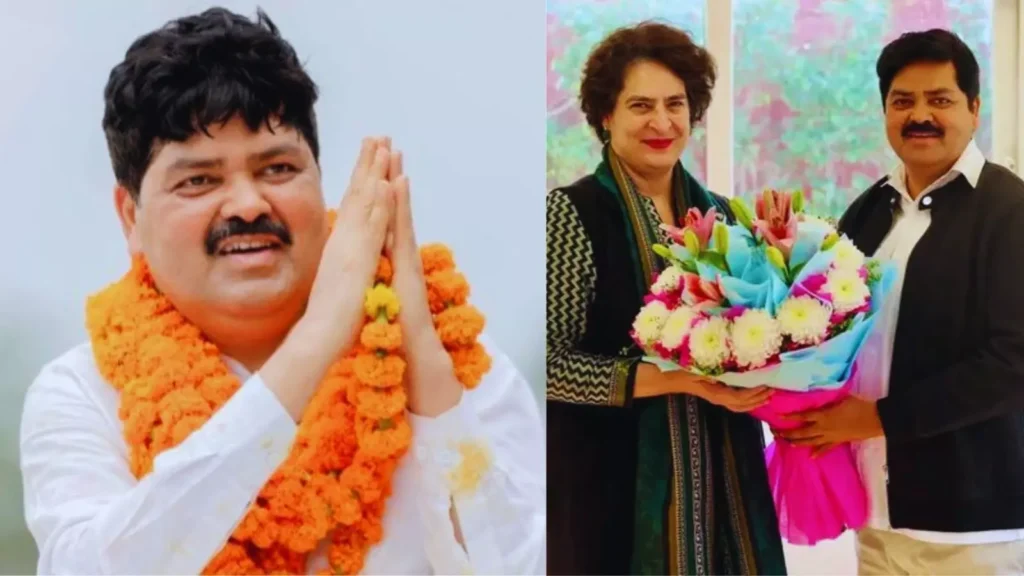
Ganesh Godiyal’s reinstatement as the PCC Chief is not a routine exercise. His earlier tenure had coincided with a politically turbulent phase when Congress was battling internal factionalism and external pressure from the BJP. Although Godiyal lacked a dramatic electoral breakthrough during his leadership, he earned a reputation for being calm, composed, and non-controversial—the kind of leader the Congress desperately needs in a state where internal rifts have repeatedly cost the party dearly.
A Symbol of Neutrality and Discipline
Unlike many Congress leaders who align with strong factions, Godiyal has operated as a neutral force. His political conduct has rarely reflected bitterness or one-upmanship, which makes him acceptable across internal groups divided between the Harish Rawat camp, the Pritam Singh bloc, and the newer entrants.
His reappointment signifies three things:
- The Congress no longer wants PCC Chiefs who intensify factional wars.
- A neutral figure is required to rebuild organisational confidence.
- The party wants a face who can communicate calmly with workers, leaders, and voters.
Organisational Strength Over Mass Appeal
Though not considered a mass mobiliser equivalent to Harish Rawat or Harak Singh Rawat, Godiyal is recognised for his organisational acumen. His keen understanding of district-level dynamics and grassroots networks allows him to contribute meaningfully to rebuilding booth-level teams—something the Congress lacked heavily in 2022.
A Quiet Leader in a Noisy Political Field
In a political space dominated by fiery rhetoric, Godiyal’s soft-spoken style might appear understated. Yet, within the Congress ecosystem of Uttarakhand, this very softness is interpreted as maturity—a rare quality in a landscape fractured by competing ambitions.
Harish Rawat’s Declining Influence: End of an Era?
For over a decade, Harish Rawat towered over Uttarakhand Congress politics like a permanent fixture—whether he held official positions or not. From candidate selection to strategic positioning to organisational appointments, his influence permeated every layer. That era, however, appears to be closing.
While the party has not explicitly sidelined him, the symbolism is unmistakable: the new structure does not orbit around Rawat. His loyalists no longer dominate key committees; his voice no longer dictates decision-making. The reappointment of Godiyal—a former loyalist who has now been elevated independently—signals a redistribution of influence.
Reasons Behind the Shift
Several factors explain why the Congress high command has chosen to reduce Rawat’s role:
1. The 2022 Election Debacle
The Congress’s poor performance, despite Rawat’s central involvement, raised serious questions.
2. Growing Public Fatigue
Voters, especially youth and first-time voters, want newer faces and fresh narratives.
3. Internal Pushback
Multiple senior leaders had expressed discomfort with Rawat’s dominance and its impact on the party’s expansion.
4. High Command Strategy
The Congress wants a more institutional leadership model instead of personality-driven politics.
Rawat Still Matters — But Differently
Harish Rawat still carries emotional weight among certain Congress workers and old-time voters. His connection with the grassroots remains intact. However, the Congress appears to be transitioning him into an elder-statesman role rather than an operational authority figure.
Pritam Singh: A Return to Stability
The return of Pritam Singh as the head of the Campaign Committee reflects the Congress’s desire for stability. A four-time MLA with deep roots in Uttarakhand’s political landscape, Pritam Singh stands as one of the few leaders who can command respect across regions and communities.
Why Pritam Singh Matters
- Long legislative experience
- Strong Thakur community support
- Enjoys goodwill across Garhwal
- Has a collaborative reputation
- Past PCC Chief experience
- Skillful crisis manager
By placing him at the heart of the election campaign, the Congress aims to strike a chord with rural and semi-urban voters—an area where Singh’s influence is particularly strong.
A Trusted Bridge Builder
Singh’s non-confrontational approach makes him an ideal coordinator between different internal factions. His presence is expected to restore confidence among cadres who felt sidelined in earlier organisational arrangements.
Harak Singh Rawat: The Game-Changing Factor
The appointment of Harak Singh Rawat, a former BJP minister with significant hold in Garhwal politics, is perhaps the boldest and most strategic move. Known for his fiery personality and grassroots network, Harak Singh brings both experience and electoral aggression—two qualities Congress struggled to harness in recent years.
Why His Entry Is Critical
- Deep familiarity with BJP’s electoral machinery
- Strong mobilisation ability
- Influence over specific caste blocs
- Ability to challenge BJP in its strongholds
- Extensive booth-level experience
- Visibility among rural voters
By handing him control over election management, Congress is clearly preparing for an aggressive contest—not a passive one.
A Leader with Dual Political Understanding
Having spent years in both the BJP and Congress, Harak Singh understands the psychology, strategies, and strengths of both sides. This gives Congress a rare edge in planning counter-strategies for 2027.
Caste and Regional Balancing: The Hidden Strategy
Uttarakhand’s politics is deeply intertwined with caste identities and the Garhwal–Kumaon divide. The new Congress leadership structure is designed with extreme precision.
Caste Balancing
- Brahmin: Ganesh Godiyal
- Thakur: Pritam Singh, Harak Singh Rawat
- OBC: Expected in upcoming expansions
- SC/ST: Likely to get district-level prominence
Regional Balancing
- Garhwal has strong representation now
- Kumaon will witness significant appointments next
- The party aims to avoid the perception of “Garhwal dominance”
This balance is essential for electoral mobilisation, especially in hill constituencies where local identity plays a decisive role.
The Road to 2027: Congress’s New Strategy
The leadership reshuffle provides clues about how the Congress plans to win Uttarakhand in 2027.
Key Strategic Directions
- Strengthening grassroots committees
- Reforming booth-level management
- Enhancing youth outreach
- Bridging factional gaps
- Focusing on issue-based politics
- Rebuilding lost vote banks
- Targeting BJP strongholds in Garhwal
- Positioning fresh faces in Kumaon
- Attracting women and urban voters
A Shift from Personalities to Structure
For the first time in many years, the Congress’s Uttarakhand strategy is not centered around one leader but on a structured system—something the BJP has mastered and Congress is now attempting to emulate.
Public Sentiment and Ground Realities
The changes have sparked mixed yet hopeful reactions among the public and workers.
Positive Feedback
- Godiyal’s image of honesty resonates
- Pritam Singh brings stability
- Harak Singh adds aggression and strategy
- Internal frictions appear to be managed
- Grassroots workers feel recognised again
Concerns
- Will factions cooperate genuinely?
- Can Godiyal energise the organisation?
- Will Harak Singh face resistance from old guard leaders?
- Can Congress match BJP’s campaign scale?
These concerns reflect the real-world complexities the party must address.
Challenges Ahead
The Congress cannot ignore its challenges despite the promising changes.
Major Obstacles
- Internal discipline
- Limited financial resources
- Weak media narrative
- BJP’s strong CM face
- Need for youth leadership
- Limited social media infrastructure
Winning Uttarakhand requires more than organisational change—it demands consistent political messaging, unity, and robust social engagement.
Conclusion
The Congress’s decision to reinstate Ganesh Godiyal, empower Pritam Singh, and strategically position Harak Singh Rawat, while subtly reducing Harish Rawat’s overarching influence, marks a powerful organisational transformation. This reset, crafted with caste, region, and strategy in mind, reflects the party’s intention to contest 2027 with renewed strength, discipline, and unity.
Whether the Congress can convert these structural changes into electoral gains will depend on teamwork, narrative building, and the ability to energise the party base. However, for the first time in years, the Congress in Uttarakhand appears synchronised, purposeful, and future-focused—a crucial shift as the state inches toward the high-stakes political showdown of 2027.