



Published on: November 10, 2025
By Anushka Verma
🚘 Introduction: The Beginning of Hyundai’s Next Big Chapter
Hyundai Motor India, one of the country’s leading automakers, is preparing for what could be the most exciting and transformative decade in its history.
By 2030, the Korean car giant plans to introduce 26 brand-new models in India — spanning hybrids, EVs, and next-generation petrol and diesel cars.
With this lineup, Hyundai aims to completely reimagine its position in India’s evolving automotive ecosystem — from the affordable compact segment to the premium luxury space.
The next-gen Creta, Bayon crossover, and an Inster-based compact EV are just the beginning of Hyundai’s journey towards an electrified and smarter future.
Let’s dive into this complete roadmap and explore how Hyundai plans to revolutionize Indian roads by the end of this decade.
🌏 Hyundai’s Vision 2030: A Bold Roadmap for India
Hyundai’s 2030 strategy for India is simple yet powerful — “Innovation for All.”
It reflects a commitment to sustainable technology, localized manufacturing, and a model lineup tailored for Indian buyers.
Core Focus Areas
- Enhancing ICE Models: Upgrading popular petrol and diesel cars for performance, emissions, and comfort.
- Expanding Hybrid Options: Introducing mid and strong hybrid SUVs for better efficiency.
- Accelerating Electrification: Localizing battery systems and developing affordable electric cars.
Here’s a snapshot of what Hyundai’s decade-long roadmap looks like:
| Category | Models Planned | Highlights | Timeline |
|---|---|---|---|
| ICE (Petrol & Diesel) | 12 | Updated Venue, Creta, Alcazar, Tucson facelift | 2025–2027 |
| Hybrid | 8 | Creta Hybrid, Bayon Hybrid, new 7-seater SUV | 2026–2028 |
| Electric | 6 | Compact EV, Kona update, Ioniq 6 sedan | 2027–2030 |
🏁 Hyundai’s Petrol & Diesel Power: Still the Backbone
Even as the world moves toward electrification, Hyundai recognizes that traditional fuel cars will remain crucial in India — especially for long-distance users and rural buyers.
Hence, the company will continue to refine its ICE lineup with cleaner, more efficient engines and advanced technology.
Key Upcoming Models
| Model | Type | Engine Options | Expected Launch | Price (₹, Est.) |
|---|---|---|---|---|
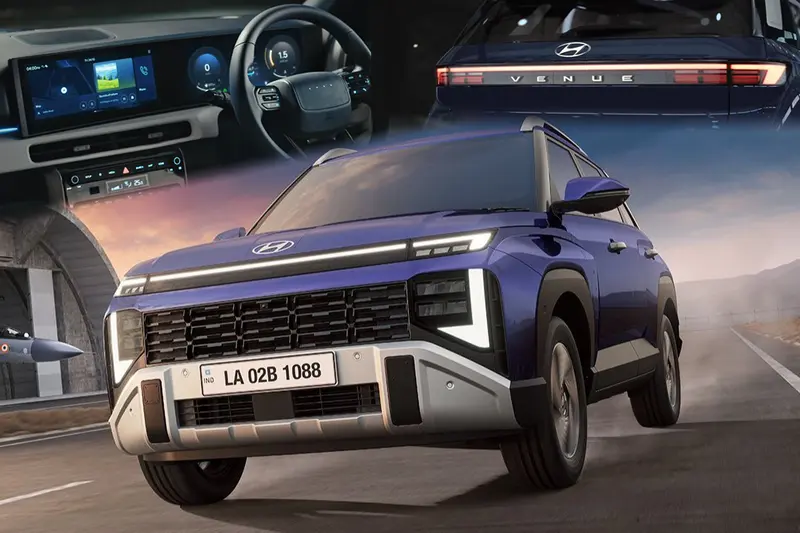
| Venue Facelift | Compact SUV | 1.2L Petrol / 1.5L Diesel | 2025 | 7.5–12.5 Lakh |
| Creta Next-Gen (SX3) | Mid SUV | 1.5L Turbo Petrol / 1.5L Diesel | 2027 | 12–19 Lakh |
| Bayon Crossover | Compact SUV | 1.2L Turbo Petrol | 2026 | 10–14 Lakh |
| Tucson Facelift | Premium SUV | 2.0L Petrol / 2.0L Diesel | 2026 | 28–33 Lakh |
| Alcazar Update | 7-Seater | 1.5L Turbo Petrol / 1.5L Diesel | 2027 | 16–22 Lakh |
Highlights
- Fresh design language featuring parametric grilles and aerodynamic headlamps.
- Level 2 ADAS, digital instrument cluster, and wireless connectivity.
- Engine upgrades for BS7 compliance and improved mileage.
The Creta (code SX3) will be the centerpiece of this lineup — expected to debut in 2027 as a completely new generation with refined interiors and stronger dynamics.
⚡ The Electric Leap: Hyundai’s EV Future
Hyundai’s EV roadmap for India is ambitious.
After the success of the Ioniq 5, Hyundai now aims to democratize electric mobility, offering options across price points — from ₹8 lakh to ₹60 lakh.
Upcoming Electric Line-Up
| Model | Segment | Range (km) | Launch | Price (₹) |
|---|---|---|---|---|
| Compact EV (Inster EV-based) | Sub-4m SUV | 350–450 | 2027 | 10–14 Lakh |
| Kona EV (Next-Gen) | Compact SUV | 520 | 2026 | 23–26 Lakh |
| Ioniq 5 (Update) | Premium SUV | 600 | 2025 | 46–52 Lakh |
| Ioniq 6 | Luxury Sedan | 610 | 2028 | 55–60 Lakh |
| EV MPV (New Model) | Family MPV | 500 | 2029 | 35–40 Lakh |
| Affordable City EV | Small Hatch | 300 | 2028 | 8–10 Lakh |
EV Highlights
- Based on the E–GMP (K) modular platform for faster production and local integration.
- Dual-battery packs: standard and long-range variants.
- Advanced BlueLink AI integration, OTA updates, and ADAS.
- Fast charging: 10–80% in just 30 minutes using Hyundai’s 800V architecture.
Hyundai’s new compact EV will be its most affordable electric SUV yet — designed exclusively for Indian consumers, taking direct aim at Tata Punch EV and Citroën ëC3.

🌿 Hybrids: Hyundai’s Smart Middle Path
While full EV adoption in India will take time, hybrid technology offers an immediate bridge between performance and sustainability.
Hyundai’s hybrid push focuses on SUVs and family-oriented cars, providing better mileage and lower CO₂ emissions without range anxiety.
Upcoming Hybrid Models
| Model | Powertrain | Power Output | Expected Launch | Price (₹) |
|---|---|---|---|---|
| Bayon Hybrid | 1.2L Turbo Petrol + Hybrid | 120 hp | 2026 | 13–16 Lakh |
| Creta Hybrid | 1.5L Turbo + Strong Hybrid | 160 hp | 2027 | 18–22 Lakh |
| 7-Seater SUV (Ni1i) | 1.6L Turbo + Hybrid | 200 hp | 2028 | 25–30 Lakh |
| Palisade Hybrid | 2.5L Turbo + Hybrid | 334 hp | 2028 | 40–50 Lakh |
Key Highlights
- First hybrid (Bayon) to launch in 2026.
- Creta Hybrid to challenge Toyota Hyryder and Honda Elevate Hybrid.
- New 7-seater hybrid (code Ni1i) positioned between Creta and Palisade.
- Hybrid systems to be locally produced in India to keep prices competitive.
Hyundai’s strong-hybrid systems will blend electric torque assist with regenerative braking — delivering impressive efficiency without compromising power.
🧠 Technology: The Core of Hyundai’s Transformation
Hyundai’s 2030 models will go far beyond just design and performance — they’ll be smart, connected, and AI-driven.
Tech Upgrades Expected Across Line-Up
| Feature | Description | Models |
|---|---|---|
| Hyundai SmartSense 2.0 | Advanced ADAS suite with automatic braking, lane assist | Creta, Tucson, Ioniq models |
| BlueLink AI Assistant | Voice-controlled navigation, remote commands, and car diagnostics | All EV & Hybrid models |
| OTA Updates | Real-time software & firmware upgrades | EV & Hybrid series |
| V2X Connectivity | Vehicle-to-vehicle communication for traffic safety | 2028 onward |
| AI Battery Monitoring | Smart system to extend EV battery life | Ioniq & Compact EV |
Hyundai also plans AI-based predictive maintenance, ensuring owners receive alerts before mechanical issues arise.

🏭 Made in India: Hyundai’s Local Manufacturing Strategy
Hyundai is investing heavily in India to make its new lineup affordable and export-ready.
- Chennai Plant Revamp: Dedicated production line for hybrid and electric platforms.
- Battery Localization: Collaboration with Indian suppliers for localized lithium-ion cell production.
- R&D Expansion in Bengaluru: Focus on AI, ADAS, and EV software development.
- Export Hub: India to serve as a base for global export of compact SUVs and EVs.
These moves will help Hyundai cut costs, meet Make in India targets, and keep its vehicles price-competitive against Tata and Toyota.
💬 What Hyundai Says
An internal source from Hyundai India shared with Taaza Times Auto:
“Our focus is to offer the full spectrum of mobility — ICE, hybrid, and electric — all developed with Indian consumers in mind.
India is not just a market for Hyundai anymore; it’s our innovation hub for the future.”
📊 Hyundai vs The Competition: Changing the Game
Hyundai’s upcoming line-up will directly challenge every major automaker in India — from Tata and Mahindra in the EV space to Toyota and Honda in the hybrid race.
| Segment | Current Leader | Hyundai Challenger | Expected Impact |
|---|---|---|---|
| Compact SUV | Tata Nexon | Bayon / Venue Facelift | Boost urban share |
| Mid SUV | Grand Vitara / Seltos | Creta Hybrid | Hybrid dominance |
| Compact EV | Tata Punch EV | Inster-based EV | Affordable EV war |
| Premium EV | BYD Seal | Ioniq 6 | Strengthens luxury EV image |
| 7-Seater SUV | XUV700 | Ni1i Hybrid SUV | Family SUV expansion |
Hyundai’s hybrid SUVs are expected to outperform competitors in fuel efficiency, while its EVs will offer better tech-to-price ratio.
💰 Price Overview: Hyundai’s Upcoming Portfolio
| Model | Type | Expected Price (₹, Ex-Showroom) |
|---|---|---|
| Venue Facelift | Petrol/Diesel | 7.5–12.5 Lakh |
| Bayon | Petrol/Hybrid | 10–16 Lakh |
| Creta Next-Gen | Petrol/Hybrid | 12–22 Lakh |
| Tucson Facelift | Petrol/Diesel | 28–33 Lakh |
| Ni1i 7-Seater SUV | Hybrid | 25–30 Lakh |
| Compact EV | Electric | 10–14 Lakh |
| Kona EV (Next-Gen) | Electric | 23–26 Lakh |
| Ioniq 5 (Update) | Electric | 46–52 Lakh |
| Ioniq 6 | Electric | 55–60 Lakh |
| Palisade Hybrid | Hybrid | 40–50 Lakh |
🗓️ Launch Timeline: 2025 to 2030
| Year | Models Expected | Type |
|---|---|---|
| 2025 | Venue Facelift, Ioniq 5 Update | ICE + EV |
| 2026 | Bayon, Kona EV | Hybrid + EV |
| 2027 | Creta Next-Gen, Compact EV | Hybrid + EV |
| 2028 | Ni1i 7-Seater, Ioniq 6 | Hybrid + EV |
| 2029 | EV MPV, Affordable City EV | EV |
| 2030 | Tucson Facelift, Palisade Hybrid | Hybrid |
🔮 Beyond 2030: Hyundai’s Long-Term Goal
Hyundai’s roadmap doesn’t stop at 2030.
The company’s Vision 2040 includes fully autonomous driving, 100% EV production, and hydrogen-powered vehicles for global markets.
By 2030:
- 80% of Hyundai’s lineup in India will be hybrid or electric.
- R&D investment in India will exceed $1 billion.
- India will become one of Hyundai’s top 3 global markets.
This strategy aligns with India’s green mobility goals and will help reduce overall vehicular emissions.

🧩 Conclusion: A New Era for Indian Roads
Hyundai’s 2030 plan is not just a business strategy — it’s a blueprint for the future of Indian mobility.
With 26 new models spanning every segment, Hyundai is positioning itself as a complete mobility brand — from affordable daily drives to luxury EVs.
Whether it’s the next-gen Creta, the stylish Bayon Hybrid, or the futuristic Ioniq 6, Hyundai’s upcoming lineup promises to blend design, technology, and sustainability like never before.
The next five years will be crucial — and if Hyundai executes this plan right, it could redefine not just its own legacy, but India’s entire automotive landscape.


