


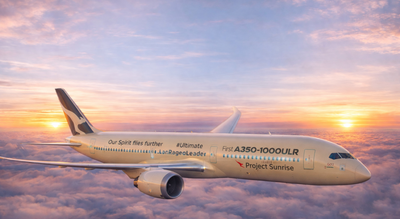
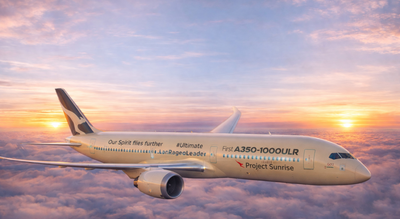
Passengers flying between Sydney and London or Sydney and New York will soon be able to cross more than 10,000 miles without a single stop, as Australia’s national carrier Qantas prepares to launch what are set to become the longest direct commercial flights ever operated.The routes, part of the airline’s Project Sunrise, are expected to begin in the first half of 2027 using specially configured Airbus A350-1000ULR (Ultra Long Range) aircraft. Each journey is expected to last around 22 hours, allowing travellers to watch the sunrise twice during a single flight as the aircraft effectively chases daylight across the globe.The project represents one of the most ambitious attempts yet to reshape long-haul aviation by eliminating traditional refuelling stopovers.
A 22-hour journey designed to change long-haul travel
The new non-stop flights will link Sydney to London (10,573 miles) and Sydney to New York (10,100 miles), distances that currently require at least one refuelling stop.According to Qantas, removing these stopovers could cut up to four hours from existing travel times, fundamentally changing how passengers travel between Australia, Europe, and North America.Qantas launched Project Sunrise in 2017, aiming to operate direct flights from the East Coast of Australia to London and New York.Qantas Group Chief Executive Officer Vanessa Hudson said the project, announced at a Qantas event in a Los Angeles International Airport (LAX) hangar in September 2024, aims to overcome the historic “tyranny of distance” that has long shaped travel to and from Australia, “fundamentally change the way our customers travel the world”.Hudson added:“These flights will cut up to four hours off the journey and transform how people experience ultra long-haul travel, through science backed design to minimise jetlag and maximise wellbeing.”The aircraft chosen for the project, the Airbus A350-1000ULR, was selected after Qantas placed an order for 12 of the specially modified planes in May 2022.Powered by Rolls-Royce Trent engines and fitted with an additional 20,000-litre fuel tank, the aircraft can travel significantly further than standard versions of the A350.The first of those aircraft is scheduled to be delivered at the end of 2026, with trial flights planned between Australia and New Zealand to allow pilots and crew to familiarise themselves with the aircraft before long-haul operations begin.
Why it’s called Project Sunrise
The programme’s name comes from a unique feature of these ultra-long flights.Travellers are expected to see two sunrises during a single journey, something aviation enthusiasts say will become a defining experience of the route.The aircraft will depart Sydney late in the evening and head westward across Asia and the Middle East. As the plane effectively chases daylight across time zones, passengers will watch the sun rise once during the journey and then see it rise again closer to Europe or North America.
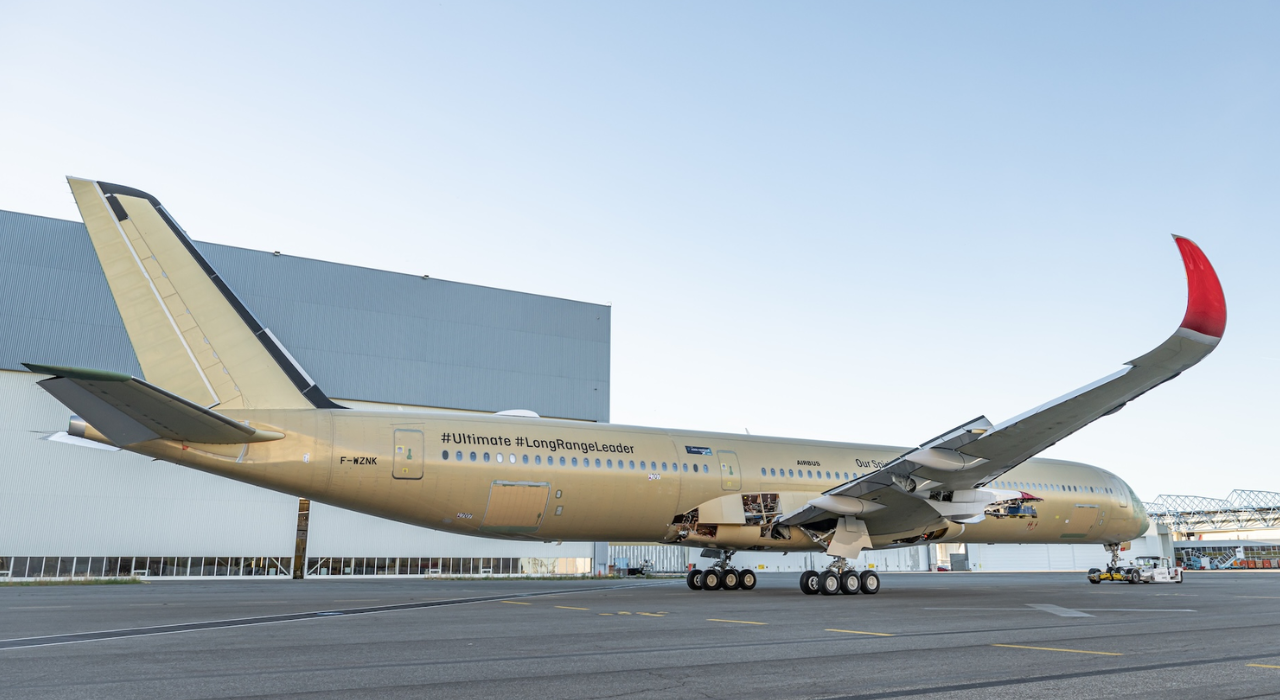
Qantas Airbus A350-1000ULR (Ultra Long Range) aircraft pictured at Airbus’ headquarters in Toulouse, France./ Qantas
The name also echoes aviation history. During World War II, so-called “Double Sunrise” flights operated between Perth and Ceylon (now Sri Lanka). Those endurance missions were so long that the sun rose twice during the journey.
A preview inside the aircraft
Daily Mail reporter Paudie Prendergast, who was invited by Qantas to preview aspects of the project, described visiting a mock-up of the cabin’s wellness area and touring the facility where the aircraft will be serviced.He wrote that he was given “a whistlestop tour” of Hangar 96 at the Qantas Jet Base at Sydney’s Kingsford Smith Airport, where the new aircraft will be maintained.Inside the plane itself, the airline plans a significantly lower passenger density compared with standard A350 aircraft.Instead of the usual 300-plus seats, the Project Sunrise layout will carry 238 passengers, arranged as:
- 6 First-Class suites (1-1-1 configuration)
- 52 Business suites (1-2-1 configuration)
- 40 Premium Economy seats (2-4-2 configuration)
- 140 Economy seats (3-3-3 configuration)
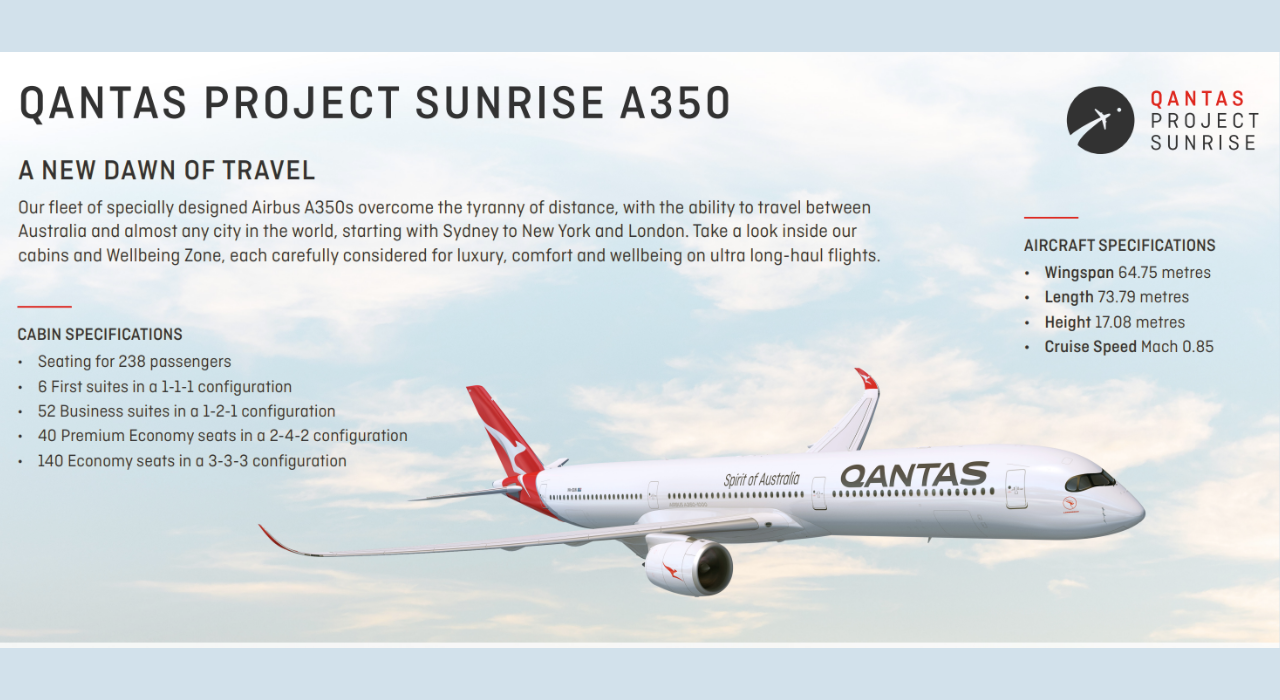
Qantas Project Sunrise
All cabins will include high-speed Wi-Fi provided at no additional cost, while the reduced seat count is intended to allow passengers more space to move around during the unusually long journey.
A “wellness zone” at 35,000 feet
One of the most unusual features of the aircraft will be a dedicated wellness zone, designed to help passengers manage the physical strain of spending almost a full day in the air.According to Prendergast’s preview, the space will offer self-serve healthy refreshments aimed at maintaining hydration, along with room for stretching and light exercise.Large screens will display guided stretching routines, and the walls will include exercise handles to support movement during the flight.Prendergast described the space as “effectively a yoga studio (of sorts) at 35,000ft, or simply somewhere people may wish to socialise.”The aircraft’s interior designer David Caon, who has worked on the project since 2018, told the Daily Mail that balancing aesthetics and engineering constraints was a complex task.He said:“We had a team of six people working on it full time for two years – things like aircraft weight, maintainability, safety and comfort all have to be weighed against the aesthetic decisions we make.”
Designing a flight that reduces jet lag
Because of the extreme length of the journeys, Qantas partnered with the Charles Perkins Centre at the University of Sydney to study ways of reducing fatigue and jet lag.The research has influenced several aspects of the cabin design, including lighting patterns and meal timing.Lighting systems will replicate the “unique quality of light in the Australian Outback”, while meal services will be timed to match passengers’ circadian rhythms, helping travellers adjust more easily to new time zones.
From multi-day journeys to a single flight
The upcoming flights represent a dramatic shift from the early days of travel between Australia and Europe.The route between Sydney and London, known historically as the “Kangaroo Route,” once took several days.In the 1940s, passengers travelled aboard Lockheed Constellation aircraft, stopping along the way in Darwin, Singapore, Calcutta, Karachi, Cairo, Tripoli and Rome, often with overnight stays in Singapore and Cairo.Those early aircraft relied on four propeller engines and had cramped cabins, making the journey long, noisy and far less comfortable than modern long-haul travel.Even so, those flights were once considered a technological marvel.Today, a journey that once required four to five days could soon be completed in under a single day.
The next step in ultra-long-haul aviation
Project Sunrise will surpass the current longest non-stop passenger flight, which runs between Singapore and New York and lasts just over 19 hours.Other extremely long routes exist, such as flights between Shanghai and Buenos Aires, but those journeys involve refuelling stops.By contrast, the new Qantas services will remain airborne for the entire journey.If successful, they could signal a wider shift toward direct ultra-long-haul travel, potentially reshaping how airlines design aircraft and long-distance routes in the years ahead.