


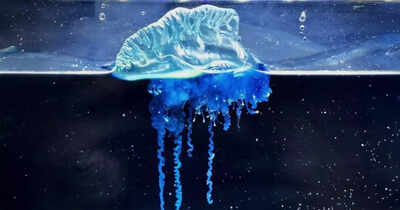
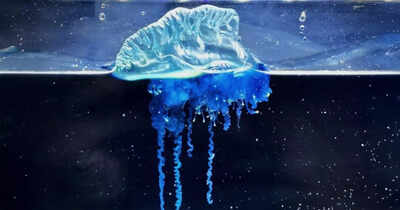
A vivid blue jelly-like organism appeared on a beach in northern Japan and did not seem to belong there. The water was cooler than the places where such creatures are usually seen, and locals were unsure what they were looking at. At first glance it resembled the Portuguese man-of-war, a species better known from warmer seas. The resemblance turned out to be misleading. After closer work in the lab, researchers realised it did not match any described species. What washed up in Sendai Bay was something new. Its presence does not offer simple answers, but it adds to a growing sense that coastal waters around Japan are changing in ways that are not always obvious.
A strange blue creature washed up on a Japanese beach and scientists say it is new
A student from Tohoku University collected the organism during routine coastal work. The organism stood out primarily because its appearance was unusual for that area. Its colour was unusually bright, and its shape was slightly off from what researchers expected. The specimen was taken back to the laboratory without much expectation of a major finding. Only later did it become clear that it did not fit existing descriptions of known Physalia species.
Careful comparisons reveal something different
Detailed examination followed, slower than the initial discovery. Individual structures were studied one by one and compared with older records and drawings. The process was awkward at times. Physalia bodies are tangled and complex, and small differences are easy to miss. Still, the more closely the team looked, the harder it became to place the organism within the known groups.
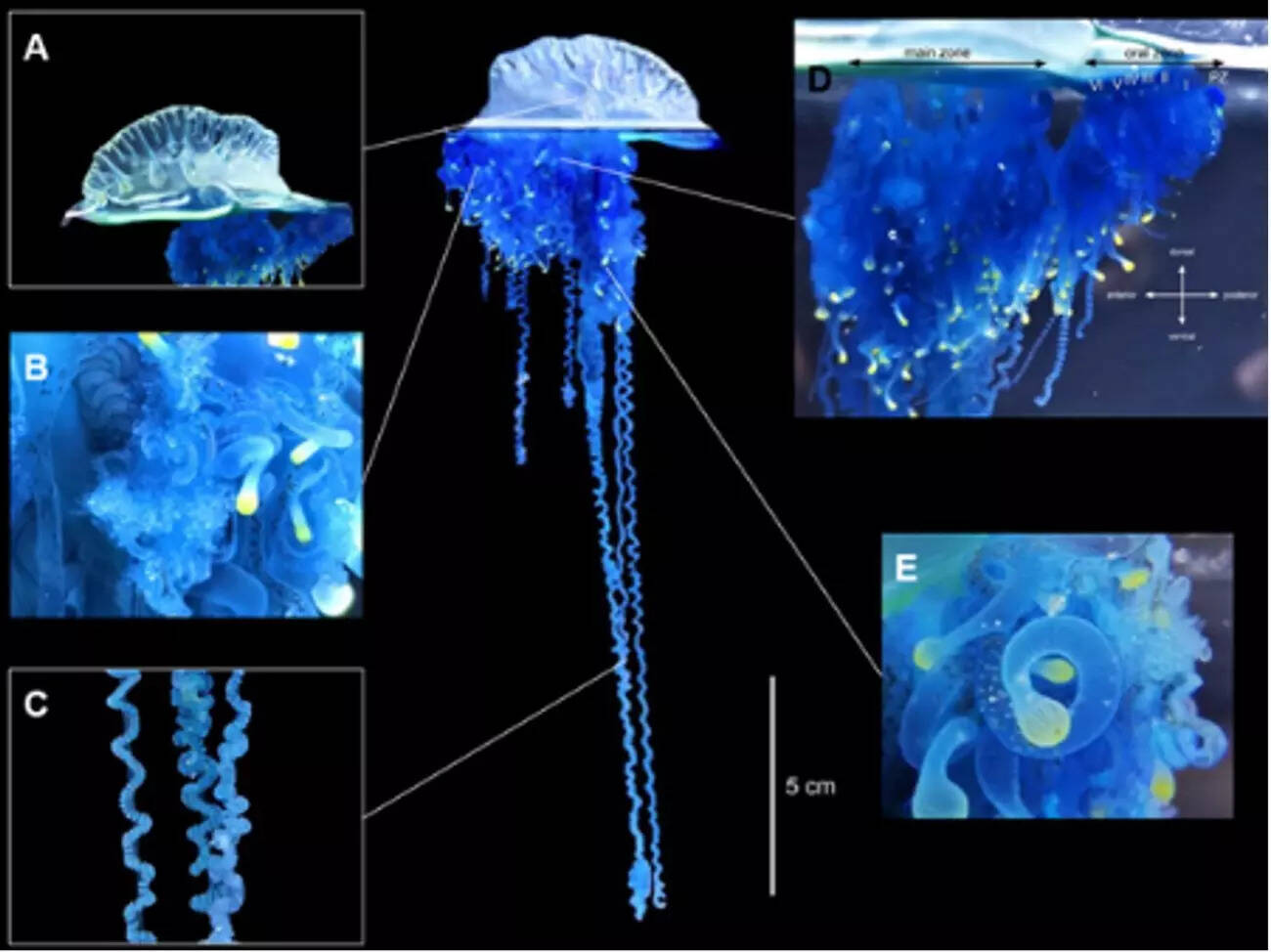
A strange blue creature washed up on a Japanese beach and scientists say it is new (Image Credit – Tohoku University / Cheryl Lewis Ames et al)
DNA confirms a new species
Genetic testing helped settle the matter. DNA sequences did not match those of other Physalia species recorded in Japanese waters. The data pointed clearly to a separate species, now named Physalia mikazuki. The name refers to the crescent moon symbol linked to Sendai’s historical ruler, a quiet nod to where the discovery took place.
Overlapping ranges went unnoticed for years
The findings also shifted assumptions about where Physalia species live. Until now, Physalia utriculus was thought to be the only member of the genus present in Japan. The new analysis suggests both species share parts of the same region. They may have done so for a long time without being recognised as separate, only drawing attention once one appeared further north.
Ocean currents may explain the journey
The sighting in the Tohoku region marked the northernmost record of any Physalia species. To explore how it arrived there, researchers ran simulations of surface currents. The models traced a possible path from southern waters, carried by the Kuroshio Current. Recent shifts in that current, along with warmer sea temperatures, may have made the journey possible.
A reminder of changing coastal conditions
Researchers are cautious about drawing broad conclusions. Still, the discovery sits alongside other signs that marine species are moving beyond their historical ranges. Warmer waters do not force change overnight, but they can quietly widen the margins of where life can persist. This find adds one more piece to that picture.
Beauty and risk in the same organism
Physalia species are striking to look at but carry venomous tentacles that can cause painful stings. The team behind the study stresses the importance of public awareness. Reports from the shore often provide the first clue that something unusual is happening. For now, Physalia mikazuki remains a small but telling presence, noticed by chance and understood only gradually.