




In the summer of 2008, as Barack Obama’s improbable march toward the White House gathered momentum, an ageing civil rights titan leaned over during a television break, unaware that his microphone was still live, and whispered words that would instantly become one of the most startling political hot-mic moments in modern American history. Jesse Jackson, veteran of marches, jail cells, presidential campaigns, and moral crusades, muttered that Obama had been “talking down to black people” and that he wanted to cut off his manhood.It was crude, shocking, and deeply human all at once. It captured something larger than a scandal. It revealed the complicated generational tensions within Black American politics at a historic moment. And in many ways, it perfectly embodied the contradictions of Jesse Jackson himself, who has now died at 84, leaving behind a life that was as consequential as it was colourful.To understand why Jackson reacted so viscerally to Obama, one must first understand who he was. Long before Obama’s rise, Jesse Jackson was the closest thing America had to a national Black political candidate. Born in segregated South Carolina, he came of age in the crucible of the civil rights movement. As a young organiser, he worked alongside Martin Luther King Jr., participated in marches across the South, and became known for his fiery oratory and instinct for political mobilisation.Jackson did not merely inherit King’s legacy after the assassination. He transformed it. Where King focused primarily on civil rights and moral persuasion, Jackson broadened the fight into economic justice and political power. Through Operation Breadbasket and later his PUSH organisation, he pressured corporations to hire Black workers and invest in Black communities. He became a bridge between protest movements and political institutions.In the 1980s, he attempted something revolutionary. He ran for president not as a symbolic protest candidate but as a serious contender. His “Rainbow Coalition” sought to unite minorities, working-class whites, farmers, labour unions, and progressive activists into a new political bloc. In 1984 and 1988, his campaigns fundamentally reshaped Democratic Party politics, forcing the party to engage more deeply with issues of racial inequality, poverty, and social justice.
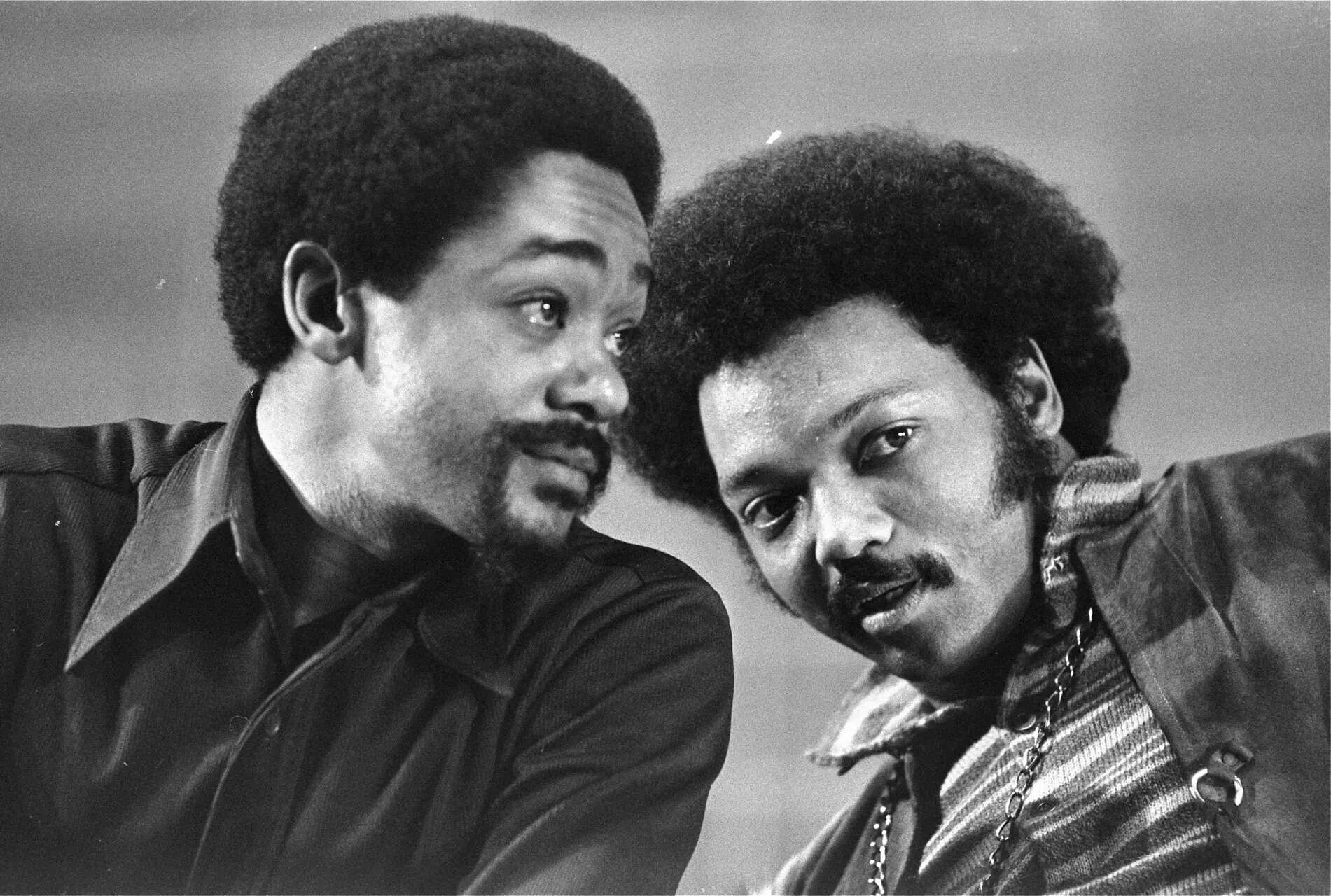
FILE – Bobby Seale, left, and the Rev. Jesse Jackson talk at the National Black Political Convention in Gary, Ind., March 12, 1972. (AP Photo, File)
For a generation of Black Americans, Jackson represented possibility. He was the first to show that a Black candidate could win primaries, command national attention, and influence policy debates. Without his campaigns, Obama’s presidency would have been far harder to imagine.Yet Jackson was never a saintly figure carved in marble. He was a restless, controversial, often polarising personality. His career included diplomatic missions to free American hostages abroad, dramatic confrontations with political leaders, and a long record of rhetorical missteps. He apologised more than once for offensive remarks or impulsive statements. He could be inspiring and divisive in the same breath.The 2008 Obama incident fit into this pattern, but it also carried deeper emotional significance. Jackson had spent decades urging Black Americans to demand structural change from the political system. When Obama, during a Father’s Day speech, emphasised personal responsibility among Black families, Jackson felt the message ignored systemic injustices like unemployment, housing crises, and inequality.To Jackson, Obama seemed to be shifting the conversation from collective struggle to individual morality. To many younger Black leaders, however, Obama represented a new strategy: broadening appeal to win power within mainstream institutions.The clash was not simply personal. It was generational. Jackson came from an era of street protests, confrontation, and racial solidarity politics. Obama emerged from a world of coalition-building, technocratic messaging, and post-racial rhetoric.In the end, Jackson quickly apologised. Obama accepted the apology. The moment faded from headlines. But it left behind a symbolic imprint. It showed that even within movements for justice, change often produces tension between pioneers and successors.Jackson’s long life was defined by such tensions. He stood at the intersection of activism and politics, morality and pragmatism, unity and controversy. He could negotiate with foreign dictators one year and lead domestic protests the next. He spoke in the language of scripture yet navigated the gritty realities of electoral power.Perhaps that is why he remained relevant for so long. Jackson was never just a relic of the 1960s. He continuously reinvented himself, adapting to new political landscapes while maintaining his core commitment to justice and equality.In his later years, even as illness limited his public appearances, his presence remained symbolic. He was a living link to the civil rights era, a reminder that progress did not arrive through inevitability but through struggle, sacrifice, and relentless advocacy.The hot-mic remark about Obama, embarrassing as it was, ultimately humanised him. It revealed a man who felt deeply invested in the cause he had spent his life advancing. It showed a veteran activist grappling with the fact that history was moving forward, sometimes in ways he did not fully recognise.Now, with his passing, that history feels more distant. Jesse Jackson leaves behind a complicated legacy, one that includes towering achievements, controversial moments, and enduring influence. He was a preacher, a protester, a politician, and above all, a relentless voice for those he believed had been left behind.In American political life, few figures embodied both the promise and the contradictions of social change as vividly as Jesse Jackson. And perhaps that is why even his most awkward moments, including one caught by an open microphone, continue to echo as reminders that history is made not by perfect heroes, but by passionate, flawed, and fiercely human individuals.