



Written by Anushka Verma
Published: November 24, 2025
In the vibrant and often tumultuous theater of Indian politics, where the line between public service and personal wealth is frequently blurred, Mamata Banerjee stands as a formidable and paradoxical figure. The firebrand leader of the All India Trinamool Congress (TMC) and the Chief Minister of West Bengal, Banerjee, popularly known as ‘Didi’ (elder sister), has cultivated an image of a Spartan, people’s champion. Central to this persona is the widely reported narrative of her modest net worth, which consistently places her at the top of the list of India’s “poorest” chief ministers. This article delves deep into the financial disclosures, political career, and the ethos of austerity that defines Mamata Banerjee, exploring the woman behind the headline-grabbing figure of 15 lakh rupees.
The Headline Figure: Deconstructing Mamata Banerjee’s Net Worth
According to various affidavits submitted to the Election Commission of India in relation to her electoral campaigns, Mamata Banerjee’s declared net worth is approximately ₹15 lakh (1.5 million rupees). This strikingly low figure for a politician of her stature and tenure has been a cornerstone of her political identity. To put this into perspective, this amount is less than the price of a premium sedan in the country and is dwarfed by the assets declared by many of her political contemporaries, both within and outside her party.
A closer look at her asset declaration reveals a portfolio that is as simple as it seems. It primarily consists of:
- Cash and Bank Balances: A minimal amount held in savings accounts.
- Non-Agricultural Land: A small plot of land.
- Gold: A solitary gold ring, often mentioned as her only significant piece of jewellery.
- Movable Assets: Her personal belongings, which are reported to be sparse.
What is perhaps more telling is the list of liabilities she has declared, which includes loans from close family members, suggesting a personal life funded not by corporate largesse or complex financial instruments, but through simple, personal debt.
A Comparative Glance: Mamata Banerjee’s Declared Assets Over Time
| Year | Election / Affidavit | Total Movable Assets (Approx.) | Total Immovable Assets (Approx.) | Total Liabilities (Approx.) | Reported Net Worth (Approx.) |
|---|---|---|---|---|---|
| 2016 | West Bengal Assembly | ₹2.3 Lakh | ₹28 Lakh | ₹0 | ₹30 Lakh |
| 2021 | West Bengal Assembly | ₹1.8 Lakh | ₹13.5 Lakh | ₹0 | ₹15 Lakh |
| 2024 | General Elections | Data consistent with 2021 figures | Data consistent with 2021 figures | Data consistent with 2021 figures | ₹15 Lakh |
Note: Figures are based on publicly available affidavits and media reports. The apparent drop in net worth between 2016 and 2021 is attributed to changes in the declared value of her immovable assets.
The Persona of Austerity: More Than Just a Number
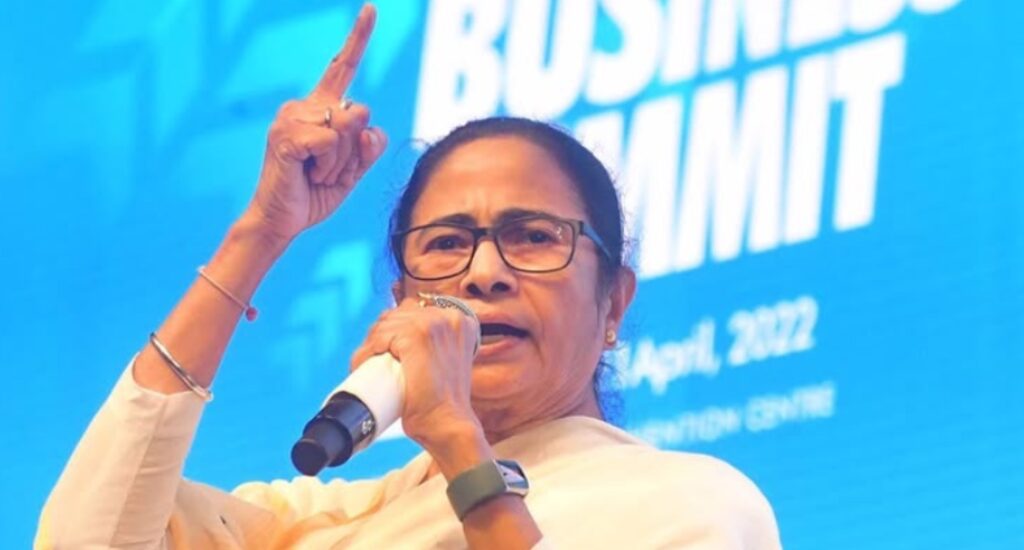
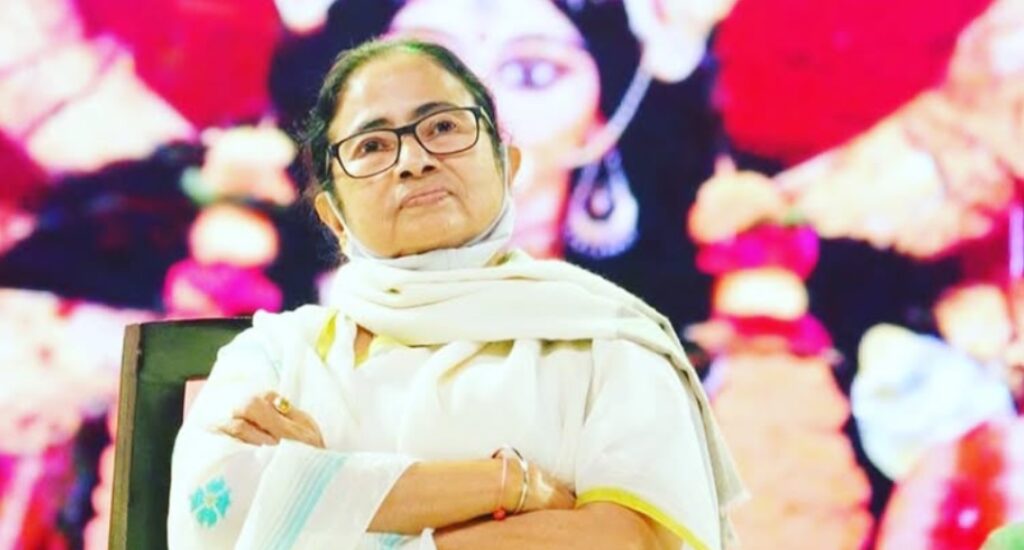
Mamata Banerjee’s net worth is not merely a financial statistic; it is an integral part of her brand. She is often depicted in a simple, white cotton sari with a blue border and worn-out rubber slippers, a visual that powerfully reinforces her connection with the common man. Anecdotes about her personal conduct are legendary in political circles. It is frequently reported that she refuses to use government funds for personal expenses, even for a cup of tea. She is known to reside in her unassuming home in Kalighat, Kolkata, rather than the opulent official chief minister’s residence, and leads a life of remarkable frugality.
This cultivated image serves a potent political purpose. In a state like West Bengal, with its history of communist rule and a deep-seated suspicion of the elite, Banerjee’s simplicity positions her as an authentic voice of the masses. It allows her to launch scathing attacks on her political opponents, particularly the Bharatiya Janata Party (BJP), whom she often accuses of being driven by corporate interests and amassing personal wealth at the expense of the poor.
From Humble Beginnings to the Seat of Power: The Mamata Banerjee Biography
To understand the woman, one must trace her journey. Mamata Banerjee was born on January 5, 1955, in Calcutta (now Kolkata), West Bengal, into a lower-middle-class family. Her father, Promileswar Banerjee, was a freedom fighter who passed away when Mamata was young, leaving the family in financial hardship. Her mother, Gayetri Banerjee, struggled to raise the children, an experience that undoubtedly shaped Mamata’s resilient and combative spirit.
Her academic pursuits are a testament to her determination. She earned a Bachelor of Arts degree in History from Jogamaya Devi College, followed by a Master’s degree in Islamic History from the University of Calcutta. Not stopping there, she also attained a degree in Education from Shri Shikshayatan College and a law degree from the Jogesh Chandra Chaudhuri Law College, Calcutta. Her academic accolades were later recognized with honorary Doctorates, including a Doctor of Literature (D.Litt.) from the University of Calcutta and a Doctorate from the Kalinga Institute of Industrial Technology in Bhubaneswar.
Her political career began in the student wing of the Indian National Congress, and her rise was marked by fierce grassroots activism. She gained national prominence in the 1990s for her relentless and vocal opposition to the then-three-decade-long Communist Party of India (Marxist) government in West Bengal. One of her most defining moments came in 2006 when she was severely injured during a protest against land acquisition in Singur, an issue that would later become the catalyst for her political ascent.
In 1998, she broke away from the Congress to form her own party, the All India Trinamool Congress (TMC), aligning it with the BJP-led National Democratic Alliance (NDA). The pinnacle of her political struggle was reached in 2011 when she led the TMC to a historic victory, ending the 34-year reign of the Left Front government in West Bengal. She became the Chief Minister, a position she has held since, securing subsequent victories in 2016 and 2021 against formidable challenges from the BJP.
The Political Firestorm: Contextualizing the Recent Controversies
The provided text mentions that Mamata Banerjee is currently in the news, and this context is crucial. The reference is to the West Bengal School Jobs for Cash Scandal, a major controversy that has engulfed her administration. The Supreme Court of India upheld a Calcutta High Court order canceling the appointments of over 25,000 teachers and non-teaching staff who were allegedly appointed through illegal means in exchange for bribes.
Mamata Banerjee’s strong reaction to this verdict, where she questioned the judiciary’s decision, drew significant criticism. A BJP MP filed a complaint with the Chief Justice of India against her remarks, alleging contempt of court. This scandal represents a significant challenge to her image as an incorruptible leader of the common people. Her political opponents have been quick to seize on this, arguing that while her personal wealth may be minimal, her administration has been plagued by corruption, creating a dissonance between her personal brand and her party’s governance.
Analysis: Sincere Asceticism or Calculated Populism?
The discourse around Mamata Banerjee’s net worth inevitably leads to a critical question: Is this a genuine reflection of her lifestyle, or a meticulously crafted tool of populist politics?
The Case for Sincerity: Her lifestyle, documented over decades, shows a remarkable consistency. From her choice of attire to her residence and daily habits, there is little evidence of a hidden life of luxury. Those who support her argue that her values were forged in the crucible of personal loss and struggle, making her aversion to wealth authentic. For her millions of supporters, this authenticity is beyond question; it is the very source of her political capital.
The Case for Political Strategy: Critics, however, point to the immense financial power of her political party, the TMC. They argue that while her personal assets may be negligible, she presides over a party machinery that is often accused of amassing significant resources and engaging in rampant corruption, as seen in the teacher recruitment scandal. From this perspective, her personal austerity is a strategic smokescreen, a powerful narrative that insulates her from direct allegations and allows her to maintain a moral high ground while her party operatives engage in the messy business of political funding.
Conclusion: The Enduring Enigma of Mamata Banerjee
Mamata Banerjee remains one of the most compelling and enigmatic figures in modern Indian politics. Her declared net worth of ₹15 lakh is more than just a number on an affidavit; it is a powerful political statement, a symbol of resistance, and the bedrock of her public identity. In a democracy where voters are increasingly skeptical of the wealthy elite, her image as the “commoner’s leader” provides her with a unique and enduring appeal.
Whether one views her as a genuine ascetic or a master political strategist, the fact remains that the narrative of her modest wealth has been incredibly effective. It has helped her build a formidable political fortress in West Bengal, withstand national political storms, and position herself as a key opposition voice in the country. As the political landscape continues to evolve and new controversies emerge, the story of Mamata Banerjee’s net worth will undoubtedly remain a central theme in understanding her legacy—a legacy built as much on her political victories as on her proclaimed personal sacrifices.


