

By Anushka Verma November 1, 2025
Introduction: The Price of a New Era
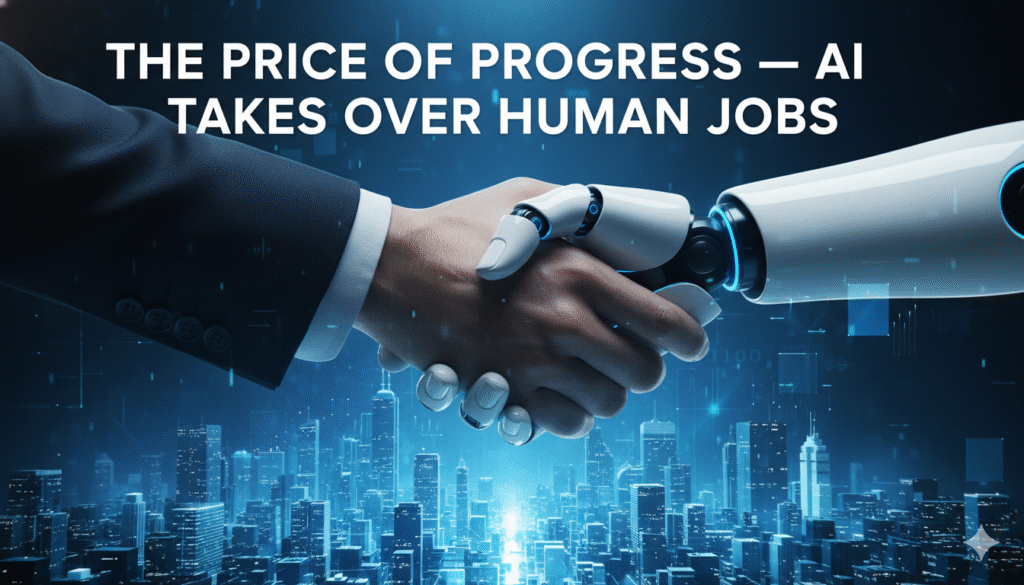
Artificial Intelligence (AI) is no longer a distant dream or a speculative technology. It’s here — transforming industries, redefining economies, and forcing humanity to question its very role in the workforce.
At the 2025 TechCrunch Disrupt conference, Vinod Khosla, the legendary Silicon Valley investor and founder of Khosla Ventures, made a bold declaration that stunned both entrepreneurs and policymakers:
“Most of the jobs in this country are really not jobs humans should have. Working on an assembly line or in 100-degree heat — that’s servitude to survival, not human dignity.”
In his deeply philosophical yet economically grounded address, Khosla envisioned a future where AI will make essential services like healthcare, education, and legal aid virtually free — while at the same time, it could displace millions of workers worldwide.
But is this future a utopia of abundance, or the price of progress that humanity must pay?
Table: Vinod Khosla’s 2025 AI Predictions and Timelines
| Category | Prediction / Statement | Target Year | Implication |
|---|---|---|---|
| Workforce Disruption | 80% of high-value jobs automated | 2030 | Massive unemployment and restructuring |
| Corporate Change | Fortune 500 companies to vanish 3x faster | 2035 | Entrepreneurial rise, corporate extinction |
| Economic Growth | GDP growth > 5% annually | 2035 | Deflationary economy, shared abundance |
| Public Wealth | 10% of corporations into a national pool | 2035 | Redistribution of AI-driven wealth |
| Free Services | Healthcare, Education, Legal advice | 2035–2040 | AI democratizes essential services |
| Energy Revolution | Super-hot geothermal power (5 GW per site) | 2027 | Sustainable energy for AI infrastructure |
AI as the Great Liberator — or the Ultimate Disruptor?
Khosla’s argument is not about the destruction of jobs but the liberation of humans from repetitive, mechanical labor. He believes that AI’s purpose is to elevate human existence — not replace it.
According to him, society must stop glorifying jobs that merely ensure survival and instead build systems that allow people to pursue creativity, empathy, and innovation.
“The idea that humans must work 40 years on a factory line just to survive is flawed. AI should free us to do better things — to be more human.”
Yet, critics argue that while AI may promise liberation, the transition period could be chaotic. Displacement without preparation could widen inequality and erode social stability, especially in developing economies.
A Billion-Dollar Bet on AI Workers
Khosla Ventures has quietly shifted its investment philosophy over the last few years.
Instead of focusing on AI tools that assist humans, the firm is now betting heavily on AI agents that replace human workers.
“Two or three years ago, we decided there was more value in building workers who do the work than building tools for human workers,” Khosla said.
The firm’s portfolio reflects this vision — with key investments in Cognition, Replit, and other AI-first startups that create autonomous digital employees capable of programming, designing, and marketing without human intervention.
Khosla’s thesis is simple yet radical:
“More value is generated when you replace a $100,000, $200,000, or $500,000 worker.”
For him, AI workers represent the next industrial revolution — one that won’t just replace human labor but will multiply economic efficiency tenfold.
The Startup Opportunity in Every Profession
Khosla sees AI as an entrepreneurial explosion.
He believes every job title today — from accountant to architect — can be reinvented as an AI startup.
“For every single profession, there’s a startup opportunity in building an AI version — AI accountant, AI structural engineer, AI chip designer, AI marketer, you name it.”
This shift mirrors the “software-eats-the-world” movement of the early 2010s — but now it’s AI eating professions.
And just like the software revolution created billion-dollar empires like Google and Facebook, Khosla believes AI will produce a thousand new billion-dollar startups within the next decade.
However, he also warns founders against complacency.
“Every YC class, half of the startups become obsolete before they finish because the models have already introduced their features.”
In this hyper-fast AI landscape, the speed of innovation has become both a weapon and a trap.
The Death of Fortune 500 Giants
In 2023, Khosla had already predicted that AI would automate 80% of high-value jobs by 2030.
At TechCrunch Disrupt 2025, he doubled down on that forecast — and went further.
By 2035, he said, Fortune 500 companies will exit the list three times faster than today’s rate, which is roughly 20 per year.
“All that business will be taken by entrepreneurs because incumbents failed to move quickly or were skeptical about what AI will do.”
This echoes the fate of legacy brands during previous industrial revolutions — companies that ignored digital transformation or automation were swiftly replaced by agile startups.
Khosla predicts that entrepreneurs, not corporations, will define the next decade of economic leadership.
Redefining Wealth: From Profit to Purpose
Perhaps the most striking part of Khosla’s talk wasn’t about startups or automation — it was about the moral economics of AI.
He proposed that 10% of every corporation’s equity should be placed into a national wealth pool — a shared fund for the citizens displaced by automation.
“When Trump bought 10% of Intel, I wondered if it wasn’t a good idea to take 10% of every corporation and put it in a national pool for the people.”
This idea, though controversial, is not entirely unprecedented.
It echoes Alaska’s Permanent Fund, which uses oil profits to pay dividends to every resident. Khosla envisions a similar model, where AI-driven GDP growth funds human well-being.
“By 2035, we’ll have a hugely deflationary economy. GDP growth will exceed 5% a year, creating enough abundance to share.”
His version of capitalism is one where innovation feeds equality, not just shareholder profits.
Utopian Vision: Free Healthcare, Free Education, Free Law
In Khosla’s imagined future, AI-driven abundance will eliminate the cost barriers to basic human rights.
By 2040, he predicts that AI expertise will make healthcare, education, and legal advice completely free for everyone.
“All healthcare expertise will be free, and we should provide it free to everybody. All education should be free. All legal services should be free.”
This is not a naive dream — it’s grounded in data.
AI systems like GPT-based tutors, AI diagnostic assistants, and legal reasoning models are already outperforming average human experts at near-zero marginal cost.
If scaled globally, such systems could collapse the price of expertise, making knowledge and wellness accessible to all.
The Energy Equation: AI Meets Geothermal Power
One major concern surrounding AI’s expansion is its energy consumption.
Critics argue that AI training consumes vast amounts of electricity, worsening climate impact.
But Khosla dismissed that fear:
“An inference today on ChatGPT is no more climate-consumptive than a Google search.”
He then unveiled a remarkable milestone by his portfolio company Mazama, which has developed super-hot geothermal wells reaching 450°C, capable of generating up to 5 gigawatts from a single site.
“At 450 degrees, you get ten times the power per well,” he explained, calling it “the hottest well any startup has ever created.”
Mazama expects to supply its first customer in 2027, potentially ushering in a new era of clean, limitless energy — the fuel that could sustain AI’s global ecosystem.
The Human Question: What Happens to Purpose?
For all his optimism, Khosla doesn’t shy away from the hardest question:
If AI takes over most jobs, what will give humans a sense of purpose?
His answer is both philosophical and practical.
He argues that purpose doesn’t come from employment but from engagement — creativity, curiosity, and contribution.
“Work should not be about survival; it should be about satisfaction. AI gives us the chance to redefine that.”
Sociologists and ethicists, however, warn that such a transition will require a complete rethinking of education and social structures.
Without it, millions may find themselves adrift in a world where their economic utility no longer defines them.
The Defensibility Dilemma
Khosla’s insights also highlight a new business paradox:
In an era where AI capabilities evolve weekly, defensibility — the traditional measure of a startup’s survival — becomes fragile.
“People ask me, ‘Won’t big models do this?’ I tell them, maybe — but speed, execution, and creativity are the only moats left.”
This mindset forces founders to build with AI, not against it.
Those who wait for perfect conditions may find their product irrelevant before launch.
As he humorously observed,
“Every YC batch has startups that are obsolete by demo day — that’s how fast AI moves now.”
From Disruption to Design: The Road Ahead
AI’s rise will be the most transformative force since electricity, and Khosla believes it demands a new social contract.
He envisions a world where:
- Machines handle 80% of routine tasks,
- Human creativity drives innovation and governance,
- AI wealth is redistributed to ensure stability, and
- Knowledge and healthcare become universal rights.
To achieve this, governments, educators, and innovators must design policies for abundance, not scarcity — a shift that challenges centuries of economic thinking.
Expert Reactions: Divided Between Hope and Fear
Economists and technologists are split on Khosla’s predictions.
Dr. Meera Sharma, a digital economy researcher at IIT Delhi, says:
“Khosla’s ideas are visionary but require global coordination. Free healthcare and education need policy frameworks, not just technology.”
Arjun Desai, a Bangalore-based AI entrepreneur, agrees with Khosla’s optimism:
“AI workers will revolutionize productivity. But we need human adaptability — emotional intelligence and ethics can’t be automated.”
The global debate continues: Is AI the great equalizer, or the great divider?
Conclusion: A Future Worth Building
Vinod Khosla’s vision is both audacious and unsettling.
He forces us to confront a truth we often ignore — that many of our jobs are relics of industrial survival, not expressions of human potential.
As AI reshapes our world, the question isn’t whether jobs will vanish — they will.
The real question is: What will replace them?
If we can channel AI’s power toward human enrichment instead of corporate control, Khosla’s dream — of a society where education, health, and justice are free — might not be a fantasy.
It might just be the price we pay for progress — a price worth paying.