

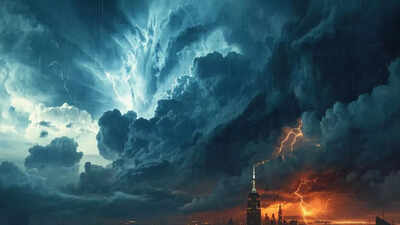
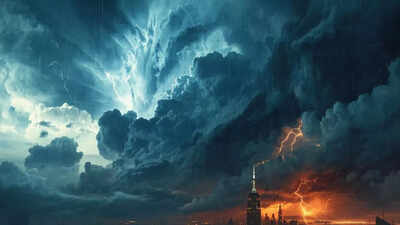
When the sky lights up in ribbons of green and red, it’s not just a pretty sight; it’s Earth reacting to a solar outburst. NASA has confirmed that the planet is currently facing the strongest geomagnetic storm of the year, one powerful enough to make auroras visible far beyond the polar regions. The event has sparked global excitement and scientific concern in equal measure.In a recent peer-reviewed study published by NASA’s Heliophysics Division, researchers explained how massive solar eruptions, known as coronal mass ejections (CMEs), can disturb Earth’s magnetosphere, trigger auroras, and disrupt power grids and communication networks. The study highlights that as the Sun nears its solar maximum, such extreme space weather events are becoming more frequent and intense.
How the NASA geomagnetic storm intensified
According to NASA and NOAA’s joint reports, the current geomagnetic storm reached a G5 level, the highest on the geomagnetic scale. It was caused by multiple CMEs launched in quick succession from the Sun, which merged into a massive solar plasma wave before hitting Earth. When these charged particles collided with our planet’s magnetic field, they generated an enormous energy transfer that fuelled this record-breaking storm.Researchers observed a significant drop in the Dst (Disturbance Storm Time) index, a clear indicator of geomagnetic activity. The event produced an unusually strong southward interplanetary magnetic field, allowing solar particles to penetrate deeper into Earth’s magnetosphere and energise the auroral regions.
What the NASA geomagnetic storm means for technology
The NASA geomagnetic storm has not only illuminated the sky but also highlighted vulnerabilities in human technology. Satellite operators reported temporary communication dropouts, while airlines rerouted some polar flights to avoid high radiation exposure.Geomagnetic storms like this can induce currents in power lines, interfere with GPS systems, and even cause transformer damage if prolonged. The 2025 event mirrors the historic 2003 “Halloween Storms”, when similar conditions led to satellite malfunctions and power disruptions across multiple countries.NASA scientists stress that better forecasting models and improved space-weather monitoring are vital to protect modern infrastructure. The agency’s Solar Dynamics Observatory and Parker Solar Probe continue to collect real-time data to enhance future storm predictions.
Safety tips during geomagnetic storms
For the general public, geomagnetic storms pose little direct physical risk. However, experts suggest a few simple precautions:
- Avoid relying solely on GPS navigation during strong storms.
- Use surge protectors for sensitive electronics.
- Stay updated via NASA or NOAA space weather alerts for accurate information.
- If you are an aurora chaser, venture to darker, open areas away from city lights for the best view.
This NASA-confirmed geomagnetic storm serves as a vivid reminder of how connected our world is to the Sun. It shows the double-edged nature of solar activity, capable of producing breathtaking auroras while testing the resilience of our technology.As scientists continue to study this event, the message is clear: the Sun’s power is both beautiful and unpredictable. Tonight, if you look up and see streaks of green or purple dancing across the sky, remember that you’re witnessing the planet’s magnetic shield in action, a glowing defence powered by the same star that sustains all life on Earth.Also read| Why time feels slower when you’re bored: The brain science behind it