


By Anushka Verma | Updated: November 12, 2025
Introduction: When Delhi’s Silence Shattered
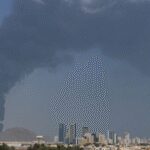
It was a calm Monday evening on November 10, 2025, when the peace near Delhi’s Red Fort was ripped apart by a sudden explosion.
A Hyundai i20 burst into flames near the monument’s northern parking zone, sending shockwaves through the capital. Within seconds, videos flooded social media — and so did the fear that India was once again staring at a terror network operating from within.
In the following hours, as smoke cleared and investigators rushed to the site, what emerged was not just a case of a lone attacker but a sophisticated, white-collar terror module — led by doctors, not traditional militants.
The probe would soon reveal a chilling truth: the prime suspect, Dr. Umar Nabi, a seemingly mild-mannered physician from Pulwama, Jammu & Kashmir, was the brain behind a group that had quietly assembled hundreds of kilograms of explosives under everyone’s nose.
The Making of a ‘Doctor-Terrorist’: Who Is Dr. Umar Nabi?
At first glance, Dr. Umar Nabi, 33, looked like any ordinary medical lecturer at the Al-Falah School of Medical Sciences & Research Centre, Faridabad.
Colleagues described him as polite, intelligent, and deeply religious — but never openly political or violent. Yet beneath that composed exterior was a growing obsession with what he reportedly called a “spectacular operation.”
Investigators say Umar’s radicalization began subtly around 2018, during his time in Pulwama. He reportedly came in contact with extremist circles online and was later influenced by a few radical clerics.
What set him apart was not anger or desperation — but strategy. He saw violence not as rebellion but as a scientific mission — something to plan with precision, much like a surgery.
It was also around this time that he met Dr. Muzamil Shakeel Ganai, a 31-year-old radiologist, also from Pulwama. Both men soon found themselves working at the same institution in Faridabad. According to investigators, their friendship quickly grew into an ideological alliance — one that blended academic intellect with extremist ambition.
The Al-Falah Connection: Education, Faith, and Radical Ideology
Faridabad’s Al-Falah School of Medical Sciences & Research Centre is known for training hundreds of medical students from across North India.
But within its bustling corridors, Umar and Ganai allegedly started holding private meetings after hours. Police now believe that these meetings, often disguised as study sessions or religious discussions, were where the blueprint of the module was born.
One of the frequent visitors during these discussions was Imam Ishtiyaq, a cleric from Mewat, who delivered sermons on campus and nearby mosques.
According to sources, Ishtiyaq played a crucial role in spiritually reinforcing Umar and Ganai’s plans. Investigators now allege he was not just a preacher — but a recruiter and motivator, offering ideological justification for violent “missions.”
The three — Umar, Ganai, and Ishtiyaq — slowly built a network of trusted individuals, many of them from the medical field. They believed educated men would attract less suspicion.
By 2023, this group had begun collecting small quantities of ammonium nitrate, detonators, and timing devices, under the pretext of research or chemical demonstrations.
The Faridabad Safehouse: 358 kg of Hidden Explosives
The most shocking discovery came days before the Red Fort explosion, when police raided Dr. Ganai’s rented house in Dhauj village, Faridabad.
Inside, officers found 358 kilograms of ammonium nitrate, along with wires, switches, and timing circuits. The explosives were neatly stored in suitcases and plastic drums, labeled as “lab materials.”
When interrogated, Ganai allegedly confessed that the material had been collected over several months, purchased in small quantities to avoid raising alarms.
He named Dr. Umar Nabi as the main planner — the one who directed the logistics, financing, and final target discussions.
Soon after Ganai’s arrest, Umar went off the grid.
Investigators believe this was when Umar panicked. He realized the network was collapsing and that he was next in line to be caught. Within 48 hours, Delhi would witness the “price of that panic.”
The Blast at Red Fort: Panic Takes a Deadly Turn
On November 10, 2025, Umar was seen driving his Hyundai i20 near the Red Fort area. CCTV footage shows the vehicle entering the vicinity around 6:30 PM.
For nearly 40 minutes, the car remained stationary — its hazard lights blinking.
At 7:10 PM, a powerful blast tore through the car. Investigators believe Umar had triggered the detonation himself, possibly unintentionally, while attempting to rig the explosive inside.
The remains of the car revealed metal ball bearings, ammonium nitrate traces, and partially fused detonators — evidence of a partially failed but still deadly explosion.
Forensic teams recovered parts of the ignition system and fragments that matched devices seized from Ganai’s home.
This confirmed what police had feared: the Red Fort blast was not an isolated act of madness but part of a larger, ongoing terror plan.
The Haryana Trail: A Red Ford EcoSport and a Farmhouse
As part of the probe, Delhi Police launched a massive manhunt for a red Ford EcoSport, registered in Umar’s name.
The car was later found abandoned at a farmhouse in Haryana’s Khandawali village, owned by a friend of Umar. The friend has since been detained for questioning.
Inside the car, investigators found tools, residue of chemical powder, and digital storage devices believed to contain blueprints of the explosive setup.
Forensic experts are now analyzing these drives, suspecting they may hold chat logs or digital communications revealing the group’s wider connections.
Officials say this farmhouse served as a temporary storage and planning hub — a “quiet countryside lab” where the group met on weekends.

Network Expansion: Doctors, Students, and a Preacher
The deeper investigators dug, the wider the web became.
Three more doctors from Kashmir were detained for questioning — including Dr. Adeel Majeed Rather and Dr. Shaheen Shahid Ansari, both associated with Al-Falah and private hospitals in UP.
While they have not been formally arrested, investigators believe they provided financial and logistical support to Umar and Ganai.
According to sources, money was routed through cryptocurrency transactions and small bank transfers, disguised as donations or consultancy fees.
The group even discussed using students to smuggle small chemical packets through courier services, posing them as lab supplies.
In Kashmir, the State Investigation Agency (SIA) has now taken over the probe from the local police, with support from the National Investigation Agency (NIA).
Dozens of suspects have been detained across Pulwama, Srinagar, and Anantnag for questioning.
Investigators’ Perspective: The ‘Intellectual Terror’ Challenge
“This case is a wake-up call,” said an SIA official on condition of anonymity.
“For years, we’ve been trained to look for radicalized youth in militant outfits. Now, we are facing educated, disciplined individuals who use science, not slogans, to plan attacks.”
The official added that Umar and Ganai represented a new evolution in homegrown extremism — “where ideology meets intelligence.”
Unlike conventional militants, these men could operate under the radar for years, holding respectable jobs and blending seamlessly into urban life.
Another Delhi Police source called the module “the most dangerous kind of threat — a terror of intellect rather than arms.”
Inside Their Mind: The Psychology of a ‘Spectacular Attack’
Investigators found journals and encrypted digital notes from Umar’s residence.
One recurring phrase caught their attention: “The spectacular act will echo longer than our names.”
Experts interpret this as an obsession with symbolic impact — Umar wanted to be remembered not as a killer, but as an “architect” of something unforgettable.
This psychological pattern mirrors that of “performative terrorists” who seek historical significance more than political change.
According to counter-terror psychologists, such personalities are harder to detect because they appear calm, composed, and socially functional — until their intellectual ego fuses with radical ideology.
The Search for Accountability: How Did They Go Unnoticed?
The case has raised uncomfortable questions about monitoring radicalization in professional institutions.
How could a network of doctors stockpile hundreds of kilograms of explosives, communicate online, and meet regularly without being noticed?
Officials are now coordinating with AICTE, Medical Council of India, and university administrators to strengthen background checks and staff monitoring systems in educational institutions.
Security agencies are also reviewing campus sermons and religious meetings, which, while not illegal, can sometimes become channels for radical indoctrination.
The Al-Falah Medical College administration has suspended all the accused and is cooperating with investigators.
The Ongoing Probe: New Fronts, New Questions
As of now, the case spans multiple states — Delhi, Haryana, Uttar Pradesh, and Jammu & Kashmir.
The State Investigation Agency (SIA) and Delhi Police’s Special Cell are jointly interrogating several suspects, while forensic teams continue analyzing digital evidence.
Authorities have not ruled out international links. Intercepts suggest possible connections to extremist groups operating from Pakistan-occupied Kashmir (PoK).
However, officials maintain that the current evidence primarily points to a self-sustained, locally funded module.
A senior Delhi Police officer summarized it succinctly:
“This was not about foreign control. It was about homegrown extremism — the price of unchecked ideology.”
Conclusion: The Price of Panic
The Red Fort blast has reopened India’s wounds and fears — but also its eyes.
It’s a stark reminder that terrorism today wears new faces.
Not all attackers emerge from shadows with guns; some wear white coats, carry stethoscopes, and dream of “spectacular acts.”
Dr. Umar Nabi’s story is not just about one man’s fall into fanaticism; it’s about the failure to spot the signs in time — the whispers, the online patterns, the misplaced passion for destruction disguised as purpose.
As the investigation expands and more layers unfold, India faces the difficult task of protecting both its borders and its classrooms from this new face of terror.

Frequently Asked Questions (FAQs)
1. What exactly happened during the Red Fort blast of 2025?
A Hyundai i20 exploded near Red Fort on November 10, 2025. Investigators later linked it to a terror module led by Dr. Umar Nabi, who allegedly died in the explosion.
2. Who are the main accused in the case?
The key figures include Dr. Umar Nabi, Dr. Muzamil Shakeel Ganai, Dr. Adeel Majeed Rather, Dr. Shaheen Shahid Ansari, and cleric Imam Ishtiyaq.
3. What kind of explosives were used?
Police recovered over 350 kg of ammonium nitrate-based explosives and detonators from various locations connected to the group.
4. Was Umar Nabi killed in the explosion?
Forensic tests are still underway, but early reports suggest Umar may have been inside the vehicle at the time of the blast.
5. Is there any foreign link to this terror module?
As per current intelligence inputs, the module appears to be self-funded and locally organized, though some online communication with foreign handlers is under probe.
6. Why is this case being called a ‘white-collar terror module’?
Because most of the accused are educated professionals — doctors and lecturers — who used their social status to avoid suspicion while planning attacks.
7. What is being done to prevent such incidents in future?
Authorities are tightening surveillance in educational institutions, reviewing sermons, and monitoring digital activity to identify radical tendencies early.