


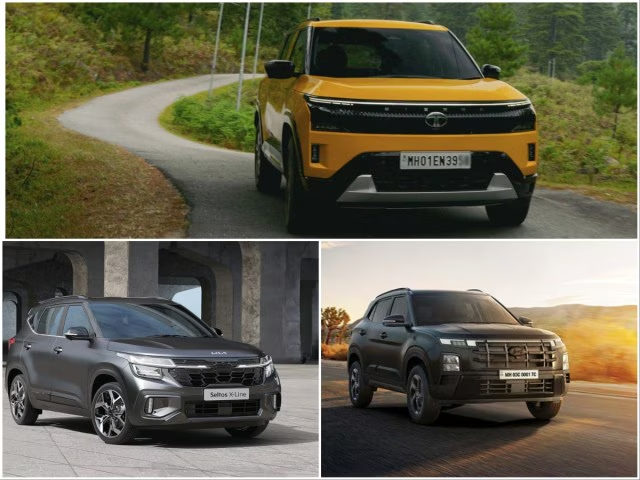
The Indian mid-size SUV segment, a battleground defined by fierce competition and discerning customers, has just welcomed a legendary name back into the fold. Tata Motors has officially launched the much-anticipated Tata Sierra, a modern reincarnation of an iconic nameplate from India’s automotive past. With its bold, unconventional design and a promise of cutting-edge features, the Sierra aims to carve a distinct niche for itself. However, its success will be measured directly against the segment’s undisputed champions: the Hyundai Creta and the Kia Seltos. These two siblings have long set the benchmark for sales, features, and overall package appeal, creating a formidable duopoly.
For the average Indian car buyer, the base model often represents the sweet spot—the most accessible entry point into a coveted brand and body style. It’s where value proposition is scrutinized the most, balancing essential features with an attractive price tag. In this comprehensive analysis, we will dissect the base variants of these three SUVs—the Tata Sierra Smart+, the Hyundai Creta E, and the Kia Seltos HTE(O)—to determine which one offers the most compelling package. We will go beyond mere specifications to understand the philosophy behind each model and what it means for you, the consumer.
The Stakes are High: A Segment Overview and Pricing Strategy
The mid-size SUV segment is the heartland of the Indian passenger vehicle market. Buyers here expect a heady mix of commanding road presence, a feature-rich cabin, robust performance, and uncompromised safety. For years, the Creta and Seltos have delivered precisely that, with periodic updates keeping them fresh and relevant. The arrival of the Sierra is the most significant shake-up this segment has seen in recent times, primarily due to its disruptive design that harks back to the original three-door SUV but is now reimagined as a contemporary five-door.
When it comes to pricing, the first skirmish is fought on the sticker price. The Tata Sierra positions itself as a premium offering from the get-go, with its base Smart+ variant starting at Rs. 11.49 lakh (ex-showroom). This immediately sets it apart, commanding a premium of approximately Rs. 70,000 over the Kia Seltos HTE(O) (Rs. 10.79 lakh) and nearly Rs. 77,000 over the Hyundai Creta E (Rs. 10.72 lakh). This pricing strategy begs the question: does the Sierra offer enough in its base trim to justify this initial financial outlay? The answer lies in a detailed examination of what each vehicle brings to the table.
Exterior Dimensions and Presence: A Tale of Proportions
At first glance, these three SUVs adopt distinctly different design languages. The Sierra is unapologetically futuristic and boxy, the Creta sports a sharp and aggressive stance, while the Seltos leans towards a sophisticated and European-inspired aesthetic.
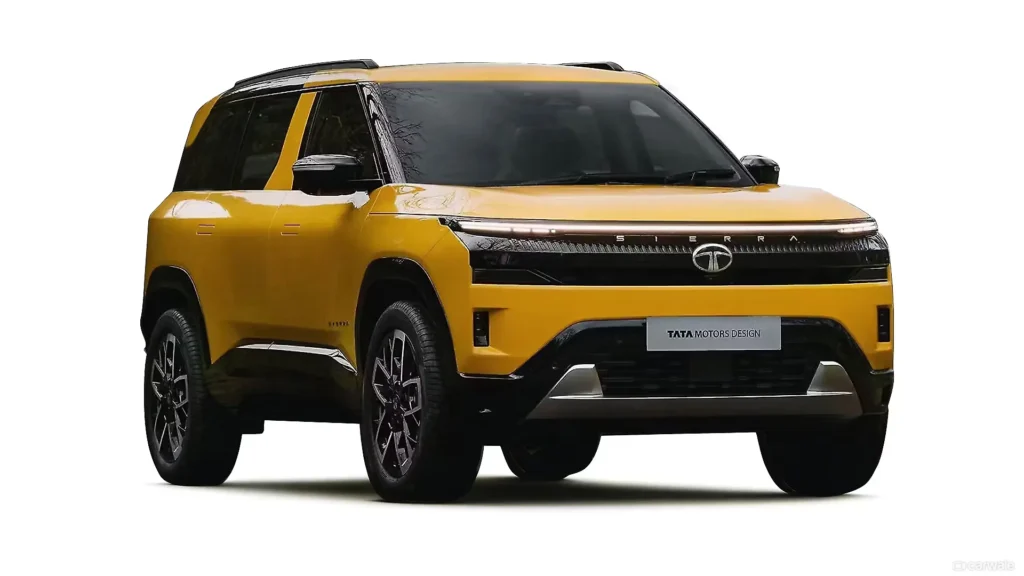
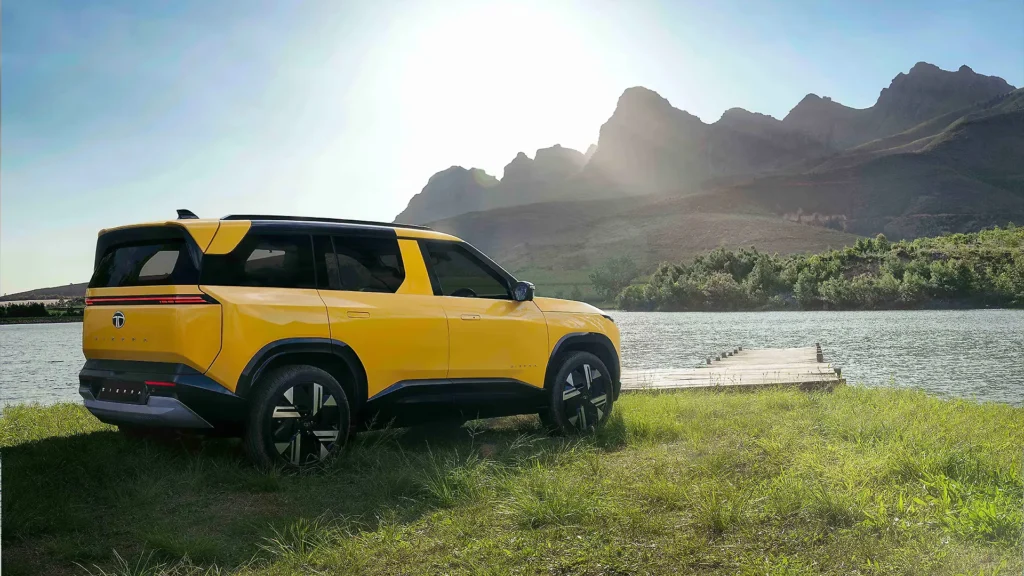
Tata Sierra Smart+: The Sierra’s design is its biggest differentiator. It boasts a muscular, upright silhouette with a near-vertical rear end, a signature element of the original. Despite being the shortest in length at 4340 mm, it is the widest (1841 mm) and tallest (1715 mm) vehicle in this comparison. This boxy profile isn’t just for show; it translates into exceptional interior space, a point we will revisit. A significant advantage for the Sierra is its best-in-class ground clearance of 205 mm, ensuring that bad roads and speed breakers are tackled with supreme confidence. The base Smart+ variant is surprisingly well-equipped externally, featuring bi-LED projector headlamps, light-saber-style LED DRLs, LED tail lamps, and flush-fitting door handles with welcome illumination. This gives the base model a premium, top-variant-like appearance.
Hyundai Creta E: The Creta has a commanding road presence with its cascading grille, sharp lines, and boomerang-shaped LED DRLs (though the base E variant gets bi-functional projector headlamps instead of full LEDs). It measures 4330 mm in length, 1790 mm in width, and 1635 mm in height, making it the most compact in its overall footprint. Its ground clearance is a respectable 190 mm, which is standard for the segment but less than the Sierra’s. The base E variant does show its entry-level status more clearly than the Sierra, with simpler wheel designs and the absence of some LED elements.
Kia Seltos HTE(O): The Seltos, sharing its platform with the Creta, has a length of 4365 mm, making it the longest of the trio. Its width and height are 1800 mm and 1620 mm respectively, placing it squarely between the Creta and the Sierra in terms of girth but making it the lowest-slung, contributing to its car-like stance. It also features a 190 mm ground clearance. The base HTE(O) trim comes with halogen projector headlamps, but it retains the stylish star-map LED DRLs and connected LED tail lamps, ensuring it still looks modern and appealing.
The Verdict on Exteriors: The Sierra’s base model wins on visual premiumness and rugged intent, thanks to its full LED lighting and superior ground clearance. The Seltos follows closely with its sophisticated design language, while the Creta E, though handsome, most visibly betrays its base-variant status.
Interior Space, Practicality, and Boot Capacity
This is where the Sierra’s dimensional strategy pays significant dividends.
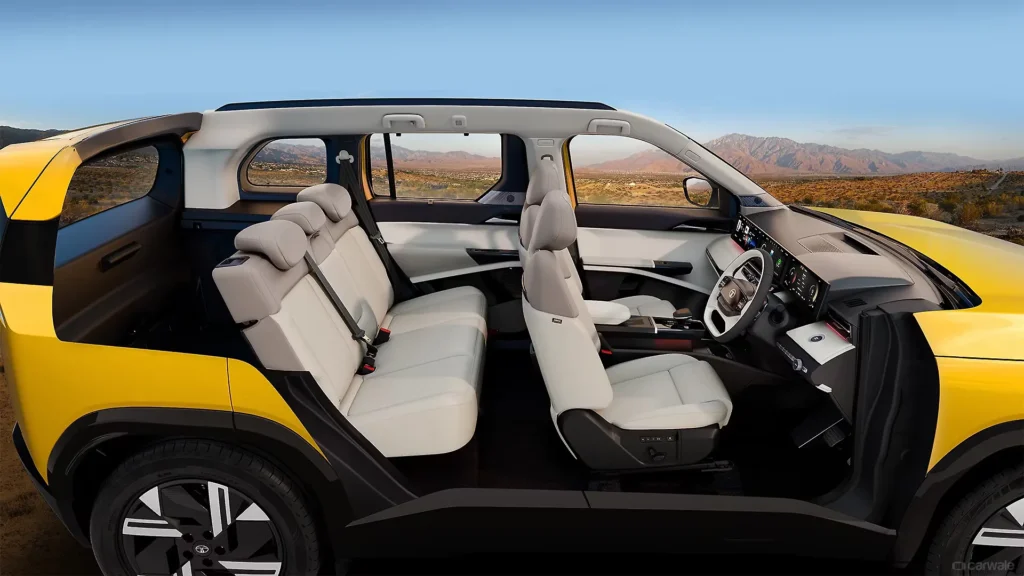
Tata Sierra Smart+: The Sierra’s boxy design philosophy has a direct and positive impact on interior roominess. It offers a truly airy and spacious cabin, with best-in-class headroom and shoulder room. The 622-litre boot space is in a different league altogether, dwarfing the 433 litres offered by both the Creta and Seltos. This is a monumental advantage for families, frequent travelers, or anyone who needs to carry a lot of luggage. The interior of the Smart+ is focused on practicality, featuring rear AC vents, a front sliding armrest, and power windows all around.
Hyundai Creta E & Kia Seltos HTE(O): Both the Creta and Seltos offer well-packaged, comfortable interiors with a strong focus on ergonomics. The quality of materials and fit-and-finish in both is generally considered segment-leading. However, the trade-off for their sleeker exterior designs is less headroom and a significantly smaller boot. The 433-litre boot is adequate for daily needs but cannot match the Sierra’s van-like utility.
The Verdict on Interiors: If outright space and cargo-carrying ability are your top priorities, the Tata Sierra is the undisputed winner. The Creta and Seltos counters with potentially better perceived interior quality and a more driver-centric cockpit layout.
Feature Showdown: How Loaded are the Base Trims?
Gone are the days when base variants were barren and feature-less. Let’s see how these entry-level models are equipped.
Kia Seltos HTE(O): The Seltos has often been praised for democratizing features, and its base variant is a testament to that. It surprisingly comes with an 8-inch infotainment touchscreen with wireless Android Auto and Apple CarPlay, a feature often reserved for higher trims. It also boasts a full digital cluster with a 4.2-inch color TFT MID, steering-mounted audio controls, and all-door speakers with front tweeters. This gives it a significant technological edge in this comparison.
Tata Sierra Smart+: The Sierra Smart+ takes a more pragmatic approach. Instead of a large touchscreen, it features a 4-inch digital driver’s display and focuses on essential convenience. It includes two front USB ports (including a fast-charging 45W Type-C), a tilt and telescopic steering wheel, and an 8-way extendable sunvisor. Its highlight is the extensive use of LED lighting, both inside and out, which enhances the premium feel.
Hyundai Creta E: The Creta E is the most basic in terms of infotainment in this lineup. It forgoes a touchscreen system, meaning you miss out on integrated smartphone connectivity. Its focus is squarely on delivering the core fundamentals of a car with an emphasis on safety (as detailed below) and essential driving comfort.
The Verdict on Features: The Kia Seltos provides the most tech-forward base variant experience. The Tata Sierra offers a balanced mix of premium lighting and practical features, while the Hyundai Creta E keeps it simple and functional.
Safety: A Non-Negotiable Priority
In today’s market, safety is paramount, and it’s commendable that all three manufacturers have equipped their base models robustly.
Tata Sierra Smart+ and Kia Seltos HTE(O): Both these SUVs come equipped with six airbags as standard across all variants, along with standard Electronic Stability Program (ESP), ABS with EBD, and rear parking sensors. The Sierra also adds a perimetric alarm for added security.
Hyundai Creta E: The Hyundai Creta, in a significant move, also offers six airbags, ESP, and four disc brakes as standard fitment across its entire range. This ensures that even the most affordable Creta offers a high level of passive and active safety, matching its key rivals.
The Verdict on Safety: It’s a three-way tie. All three base models offer a comprehensive and impressive safety suite, making any of them a secure choice for a family.
Powertrain and Performance: The Heart of the Matter
All three base models are powered by a 1.5-litre, naturally-aspirated petrol engine coupled with a 6-speed manual transmission, making for a very level playing field.
| Specification | Tata Sierra Smart+ | Kia Seltos HTE(O) | Hyundai Creta E |
|---|---|---|---|
| Price (ex-showroom) | Rs 11.49 lakh | Rs 10.79 lakh | Rs 10.72 lakh |
| Engine Capacity | 1498 cc | 1497 cc | 1497 cc |
| Max Power | PS @ 6000 rpm | PS @ 6300 rpm | PS @ 6300 rpm |
| Transmission | 6-Speed Manual | 6-Speed Manual | 6-Speed Manual |
| Boot Space | 622 litres | 433 litres | 433 litres |
| Airbags | 6 | 6 | 6 |
| Key Base Model Features | Bi-LED Headlamps, LED DRLs & Taillights, 4-inch Digital Cluster, Rear AC Vents, 45W Type-C USB | 8-inch Touchscreen, Wireless AA/Apple CarPlay, 4.2-inch Digital Cluster, LED DRLs | 6 Airbags, ESP, 4 Disc Brakes, Rear Defogger, Projector Headlamps |
Note: The exact power and torque figures for the Sierra were not fully detailed in the provided text and should be verified upon official release.
Driving Dynamics: While the core engine specifications are similar, the driving experience will differ. The Sierra, being the tallest and heaviest, might feel more relaxed and commanding. The Creta and Seltos, with their lower centre of gravity, are likely to offer a more agile and car-like driving experience. The real-world fuel efficiency and refinement of these engines will be a key differentiator, with the Hyundai-Kia duo having a established reputation for smooth and efficient powertrains.
The Final Reckoning: Which Base Model SUV is for You?
Choosing between these three compelling base models ultimately depends on what you value most in your new SUV.
Choose the Tata Sierra Smart+ if:
- You prioritize bold, head-turning design and want a base model that looks premium.
- Interior space and a massive 622-litre boot are absolute necessities.
- You frequently encounter rough roads and need the highest 205 mm ground clearance.
- You are willing to pay a slight premium for this unique combination of style and space.
Choose the Kia Seltos HTE(O) if:
- In-car technology is your top priority. The 8-inch touchscreen and digital instrument cluster in a base model are unmatched.
- You appreciate a sophisticated and modern design language, both inside and out.
- You want a feature-rich experience right from the entry level without immediately stepping up to higher trims.
- You seek a dynamic and engaging driving posture.
Choose the Hyundai Creta E if:
- Your budget is the primary deciding factor. It is the most affordable entry point into this hot segment.
- You want the assurance of a comprehensive 6-airbag and ESP safety suite at the lowest cost.
- You value the proven reliability, extensive service network, and high resale value of the Hyundai brand.
- You are satisfied with a no-frills infotainment system and can rely on your smartphone for navigation and music.
The launch of the Tata Sierra has successfully disrupted the mid-size SUV formula. It has forced a re-evaluation of what a base model can and should be, pushing the boundaries on design, space, and premium features at the entry-level. While the Kia Seltos remains the tech champion and the Hyundai Creta the value king, the Sierra carves out a powerful identity as the spacious and stylish alternative. The ball is now in the customer’s court, and the ultimate winner will be the one that best aligns with their individual aspirations and lifestyle.