


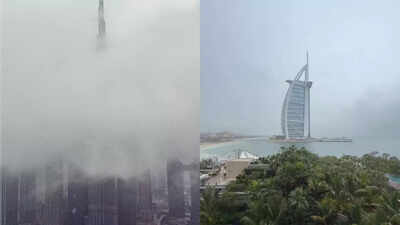
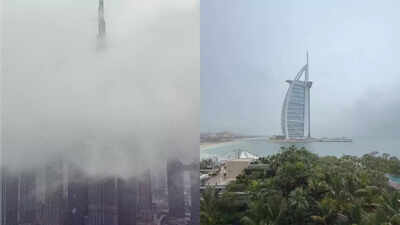
A spell of rare spring rain has swept across the United Arab Emirates this week, bringing dark clouds, gusty winds and thunderstorms to cities more accustomed to clear desert skies. From Dubai and Abu Dhabi to the eastern and northern emirates, residents have woken up to wet roads, reduced visibility and cooler temperatures as a wave of atmospheric instability continues to shape the country’s weather pattern.According to the authorities, the unsettled conditions are being driven by a low-pressure system interacting with an upper-air trough, creating the ideal environment for convective clouds, thunderstorms and intermittent rainfall across the Emirates. While rain in the UAE is always welcomed in a region defined by arid landscapes, the current spell has also disrupted travel, affected work schedules and prompted safety warnings for motorists and residents.With forecasts predicting several days of unsettled weather, many residents are now asking the same question: when will the rain finally ease?
What’s causing the current wave of rain across the UAE?
As per the UAE’s National Centre of Meteorology (NCM), the country is currently under the influence of a surface low-pressure system combined with an extension of an upper-level trough. This combination enhances vertical cloud formation, producing convective clouds capable of generating rain, lightning and occasionally hail.These weather systems move moisture-laden air across the region and trigger instability in the atmosphere. As a result, clouds grow rapidly and release rainfall across scattered areas of the country, often accompanied by thunder and strong winds. Wind speeds during this period have occasionally reached up to around 45 km/h, stirring dust and sand and reducing horizontal visibility in some areas. The combination of rain and dust can create hazardous driving conditions, especially on highways and open desert roads.Meteorologists say that such systems are not uncommon during the transition between winter and spring in the Gulf, when temperature differences between air masses create instability. However, the scale and persistence of this week’s rain have made it particularly noticeable.
Which parts of the UAE are seeing the most rain?
Rainfall during this period has been scattered but widespread, affecting several regions at different times of the day. Northern and eastern parts of the country, including mountainous areas and inland cities such as Al Ain, have been among the most affected. These regions often experience stronger convective activity because the terrain helps lift moist air and form clouds.Forecasts suggest that rainfall has moved gradually across the country during the week –
- Early in the week: Showers were reported across several emirates with lightning and thunder.
- Midweek: Rain became more concentrated in eastern regions and mountainous areas.
- Later in the week: Weather systems began spreading towards coastal areas and islands before gradually weakening.
Some areas have also seen brief but intense downpours, creating puddles and localised flooding in low-lying spots.
How long will the unsettled weather last in the UAE?
The key question for residents is when the weather will return to normal. According to meteorologists, the unstable conditions are expected to persist until around Friday, March 27, with rainfall continuing intermittently across parts of the UAE.Here’s the expected pattern through the rest of the week –
- Wednesday: Scattered showers are expected across several regions during the day, with rainfall becoming more concentrated in eastern areas before gradually easing overnight.
- Thursday: Rain chances may temporarily weaken in the morning but could redevelop later in the afternoon, particularly in northern and eastern areas before spreading toward coastal regions.
- Friday: Rain is
forecast to begin near coastal areas and islands before expanding inland, marking the final phase of the unstable weather pattern.
After Friday, meteorologists expect the atmosphere to stabilise gradually, allowing clearer skies and more typical spring weather to return across the Emirates.
Cooler temperatures and rough seas predicted for the UAE
Along with rain, the unstable weather has also brought a noticeable drop in temperatures across the country. Typical daytime temperatures during this period have been forecast at:
- 24–27°C in coastal areas
- 23–28°C inland
- 17–21°C in mountainous regions
Meanwhile, seas in the Arabian Gulf and the Oman Sea may become rough during periods of strong cloud activity and winds. These conditions can affect marine travel, fishing and leisure activities near the coast.
Weather disruptions across the UAE cities
The rainy spell has also had practical impacts on daily life in the UAE. Authorities across several emirates have activated emergency response measures to deal with rain-related incidents and maintain road safety. Municipal teams have been deployed to pump water from streets and monitor drainage systems, while traffic authorities have advised motorists to reduce speed and maintain safe distances.In some areas, precautionary steps have included:
- Flexible or remote work guidance for certain sectors
- Free public parking during severe weather
- Increased deployment of emergency vehicles and water pumps on major roads
Such measures aim to minimise disruption and ensure that public services continue functioning smoothly during the wet conditions.
Safety advice for UAE residents
Authorities have urged residents to remain cautious while the unstable weather continues. Key safety recommendations include:
- Avoid driving through flooded valleys or low-lying areas
- Reduce speed on wet roads and maintain safe following distances
- Secure outdoor items that could be blown away by strong winds
- Avoid sea activities when waters are rough
- Follow official weather updates from meteorological authorities
- Drivers are also advised to allow extra travel time, especially during periods of heavy rain or reduced visibility.
A reminder of the UAE’s changing climate patterns: When sunshine is likely to return
Rainfall in the UAE is typically concentrated between December and March, with most of the year remaining dry. However, meteorologists say climate variability and regional weather systems can sometimes bring unusual bursts of rainfall outside the typical pattern. The current spell of wet weather is a reminder of how quickly conditions can change in the Gulf’s desert climate. What begins as a clear morning can turn into thunderstorms by afternoon when convective clouds develop rapidly.For residents, the showers are both a disruption and a novelty, transforming dry streets into reflective pools and bringing a rare sense of winter-like weather to the Emirates. If forecasts hold, the worst of the unsettled weather should begin easing toward the end of the week, with rain gradually decreasing after March 27. Clearer skies and more stable conditions are expected to return afterward, allowing the UAE to transition into its typical warm spring weather. Until then, residents are likely to see a few more cloudy skies, scattered showers and gusty winds.