


By: Anushka Verma
Updated: November 2, 2025
Introduction
Apple, the company that redefined smartphones, tablets, and wearables, appears ready to make its next big move into the smart-home ecosystem. According to industry insiders, the Cupertino-based giant is developing a smart doorbell that may feature Face ID, iCloud integration, and an all-new Proxima chip — the same processor rumored to power future versions of the HomePod and Apple TV.
If true, this would mark Apple’s first direct step into a product category currently dominated by Amazon’s Ring and Google Nest Hello, signaling a major expansion of the Apple Home lineup. Here’s everything we know — from design and connectivity to the expected price in India and global markets.
At a Glance
| Feature | Expected Details |
|---|---|
| Product Name | Apple Smart Doorbell (rumoured) |
| Chipset | Apple Proxima Chip |
| Key Features | Face ID Unlock, iCloud Video Storage, Home App Integration |
| Compatibility | HomePod, Apple TV, iPhone, iPad |
| Connectivity | Wi-Fi 6, Thread, Bluetooth 5.3, UWB |
| Expected Price (India) | ₹29,999 – ₹34,999 |
| Expected Price (Global) | $299 – $349 |
| Launch Timeline | First half of 2026 (expected) |
| Developer of Chip | Apple Silicon Team |
| Primary Functionality | Smart video doorbell with secure facial recognition and cloud storage |
| Storage Support | iCloud Secure Video |
| Privacy Features | On-device Face ID processing, end-to-end encryption |
Apple’s Next Home Device: The Big Picture
Apple’s smart-home ambitions have gradually evolved through the HomePod series, Home app, and deep Siri integration across devices. The rumored smart doorbell fits naturally into this ecosystem, potentially serving as the gateway to a more secure and connected Apple Home experience.
Unlike existing options that rely heavily on third-party apps, Apple’s doorbell could merge directly with iOS HomeKit, creating a frictionless user experience. Imagine a doorbell that recognizes your family members using Face ID, sends notifications to your Apple Watch, and stores all video securely in iCloud Private Relay — all while maintaining Apple’s hallmark on-device privacy.
Design and Build Quality
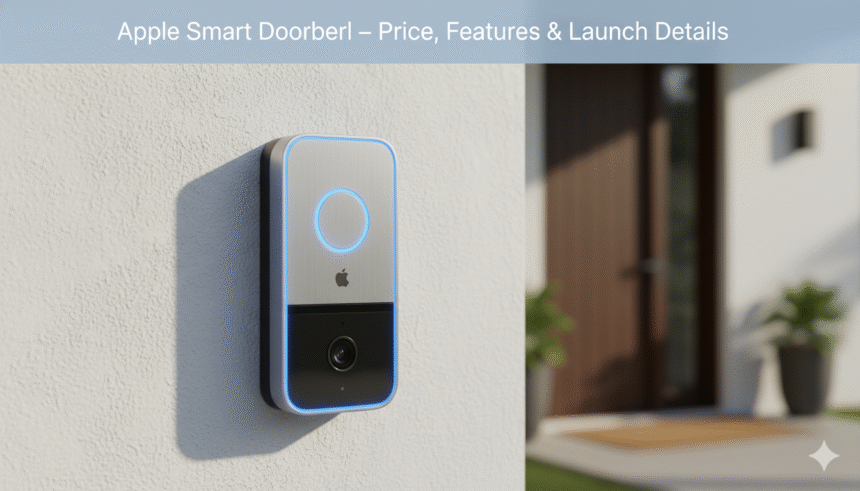
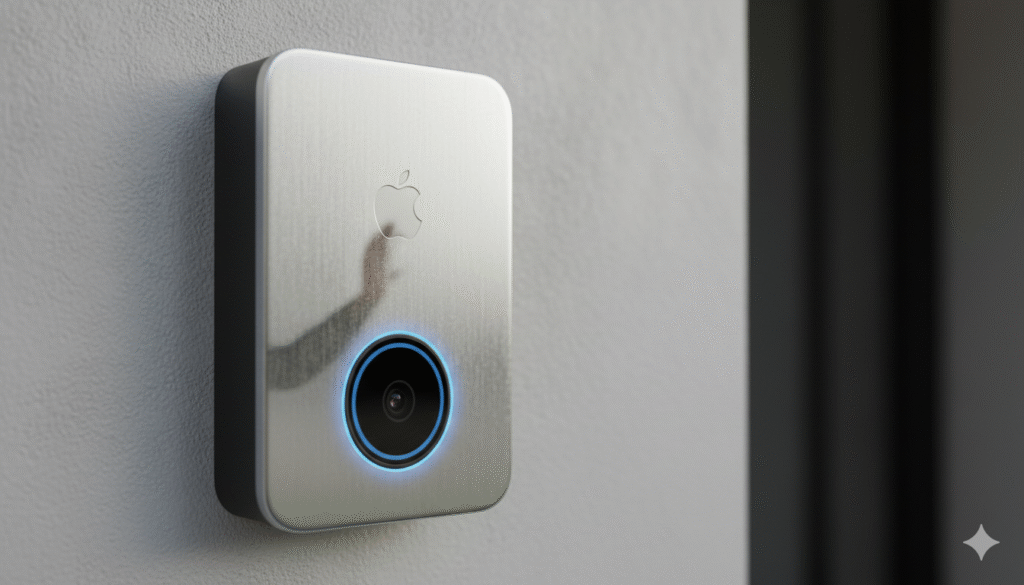
If there’s one thing Apple is famous for, it’s design. The smart doorbell will likely follow the company’s minimalist aluminium-glass design language, possibly featuring a ceramic shield-like coating for durability.
Analysts predict two finish options: Space Grey and Silver, aligning with Apple’s current aesthetic palette. The camera module is expected to use a 4K ultra-wide sensor with night-vision support, smart HDR, and spatial audio microphones to capture ambient sound accurately.
Ergonomics and Aesthetics
- Compact rectangular frame with rounded edges.
- Single illuminated ring for interaction — inspired by Apple’s Watch Crown.
- Integrated speaker for two-way communication.
- IP67 dust- and water-resistant certification for outdoor durability.
Apple may also include adaptive brightness for the LED ring, automatically adjusting based on ambient light conditions — similar to the True Tone technology used in iPhones.
The Proxima Chip — Apple’s Secret Weapon
The heart of this device is expected to be the Proxima chip, a new silicon architecture designed exclusively for Apple’s smart-home line.
What We Know About the Proxima Chip
- 7 nm architecture focused on energy efficiency.
- Neural Engine optimized for real-time facial recognition.
- On-device AI processing for motion detection and threat analysis.
- Integrated Secure Enclave for encrypted storage of biometric data.
- Multi-device synchronization enabling communication between the HomePod, Apple TV, and the doorbell without cloud latency.
The inclusion of the Neural Engine ensures the doorbell can instantly recognize familiar faces without uploading data to the cloud, maintaining privacy while offering convenience.
Face ID Comes Home
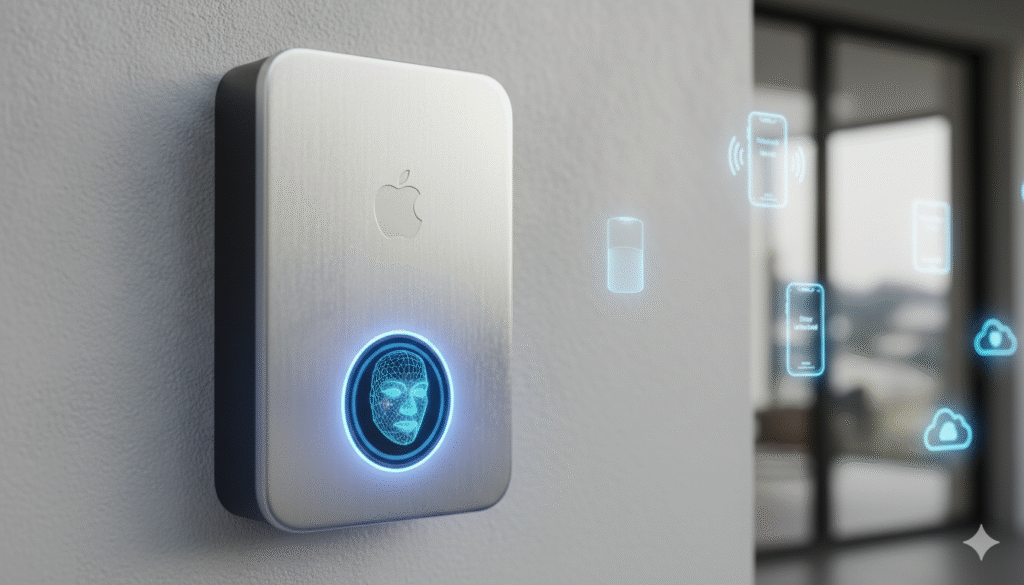
Perhaps the most exciting feature is the integration of Face ID, Apple’s biometric authentication system. While Face ID has been a hallmark of iPhones and iPads, its presence in a doorbell would be groundbreaking.
Imagine returning home — your doorbell recognizes your face, confirms your identity locally, and automatically unlocks the Home Kit-enabled smart lock. Visitors or delivery personnel can trigger specific automation workflows: for example, a temporary access QR code sent to your phone or voice-activated communication via Siri.
Use Cases
- Family Recognition: Automatically unlocks for recognized members.
- Guest Access: Issues short-term digital keys.
- Delivery Mode: Records package drop-offs securely.
- Security Alerts: Notifies the homeowner in real time if an unknown person is detected.
iCloud Integration and Privacy
Privacy has always been Apple’s strongest differentiator. The upcoming doorbell is rumored to leverage iCloud Secure Video, allowing users to store and encrypt footage without sharing data with third parties.
Key Privacy Features
- End-to-end encryption for all video feeds.
- On-device video analysis using the Proxima chip.
- Anonymous motion detection metadata (no user tracking).
- Two-factor authentication for remote access.
Unlike many competitors, Apple’s doorbell may not depend on continuous cloud streaming; instead, it could use event-based recording to save energy and storage.
Integration with the Apple Ecosystem
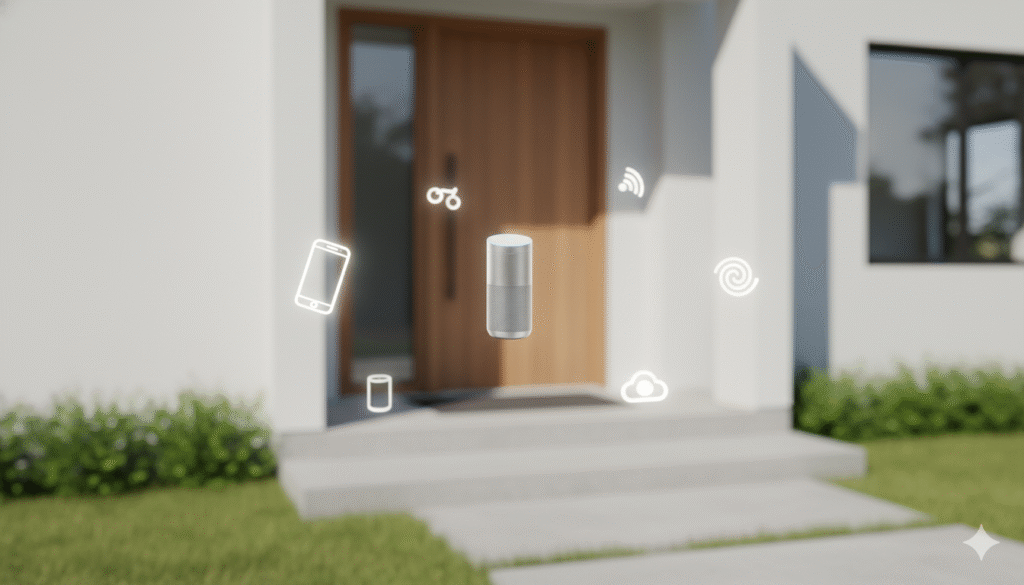
The real power of Apple products lies in their ecosystem — and this smart doorbell will likely extend that synergy.
- HomePod Integration: Receive alerts or communicate via intercom directly from the HomePod.
- Apple Watch Notifications: See who’s at your door instantly on your wrist.
- Apple TV Display: View the live camera feed while watching content.
- Shortcuts Automation: Create custom automation such as “turn on porch lights when doorbell rings.”
Additionally, Thread and Matter protocols are expected, ensuring compatibility with non-Apple smart-home devices, an approach Apple has been embracing since 2022.
Smart Security and AI Features
The Proxima chip is also likely to enable several AI-driven features designed to enhance household security:
- Object Detection: Identify whether the motion is caused by a person, pet, or vehicle.
- Package Recognition: Detect and timestamp deliveries.
- Custom Zones: Focus surveillance on key areas like the front gate or walkway.
- Adaptive Alerts: The system learns which movements are routine and reduces false alarms.
- Voice Control: Use Siri commands like “Who’s at the door?”
Apple might also allow Home App customization, letting users personalize alert tones, event timelines, and visitor identification preferences.
Battery Life and Power Management
Apple is expected to offer both wired and battery-powered variants. The wired model could integrate with existing doorbell systems, while the wireless version may feature a long-lasting lithium battery supporting MagSafe charging.
Estimated Battery Performance
- Battery model: Up to 6 months on a single charge.
- Wired model: Continuous power with low heat dissipation.
- Charging: MagSafe dock or USB-C.
The Proxima chip’s energy efficiency should help maintain long standby times without sacrificing performance.
Expected Price and Availability
While Apple hasn’t confirmed the product, multiple leaks suggest the Apple Smart Doorbell could be priced competitively for the premium segment.
| Region | Expected Price |
|---|---|
| United States | $299 – $349 |
| Europe | €319 – €359 |
| India | ₹29,999 – ₹34,999 |
| Australia | AUD 499 – AUD 549 |
Launch Timeline
Analysts expect Apple to unveil the doorbell at the Spring 2026 event, alongside updates to HomePod 3 and Apple TV Pro. Pre-orders could open shortly after, with deliveries beginning in Q2 2026.
Comparing Apple’s Doorbell with Competitors
| Feature | Apple Smart Doorbell | Google Nest Hello | Amazon Ring Pro 2 |
|---|---|---|---|
| Chip | Apple Proxima | Google Tensor | Ring Processor |
| Facial Recognition | Face ID (on-device) | Google AI Cloud | Limited |
| Storage | iCloud Secure Video | Google One Cloud | Ring Protect Plan |
| Privacy Focus | High (on-device encryption) | Moderate | Low |
| Price (USD) | $299 – $349 | $249 | $249 |
| Integration | iPhone, HomePod, Apple TV | Android, Nest | Alexa Devices |
Apple’s entry could shake up the segment by combining hardware security, software ecosystem, and premium design — areas where competitors still fall short.
Software Experience
The upcoming Home App revamp in iOS 19 is expected to bring better camera widgets, multiple feed views, and improved AI tagging. The doorbell will likely run on this new framework, offering:
- Real-time visitor ID with photo tags.
- Cross-device notifications synced across iPhone, iPad, and Mac.
- Siri automation and custom responses.
Apple may also introduce “Visitor History” — a secure, chronological list of who came to your home, accessible only with Face ID authentication.
Sustainability and Environmental Impact
In line with its 2030 carbon-neutral goal, Apple’s doorbell is likely to be manufactured using recycled aluminium and rare earth materials. Packaging could be 100% plastic-free, and the product may include a low-power mode that automatically reduces power draw when idle.
Apple’s environmental page will likely highlight metrics such as:
- 30% reduction in power consumption.
- 90% recyclable materials.
- Zero mercury or PVC use.
Consumer Expectations and Market Impact
The smart-home sector is projected to exceed $240 billion by 2026, and Apple’s reputation for tight hardware-software integration positions it perfectly to capture a premium niche.
Tech analyst Rahul Mehta notes, “If Apple can deliver the same seamless experience in the home as it does on the iPhone, it could redefine what smart security means.”
Users are particularly excited about Apple’s privacy-first approach, potentially making the Apple Smart Doorbell the most trusted choice for families and professionals alike.
Challenges Apple May Face
While anticipation is high, Apple will have to navigate:
- High Price Point: Competing products start at half the price.
- Regional Restrictions: iCloud Secure Video availability varies by country.
- Integration with Non-Apple Devices: Despite Matter support, cross-ecosystem use may be limited.
- Installation Complexity: Apple may need authorized installers for wired models.
However, Apple’s strong retail and service network could offset these hurdles quickly.
Future Outlook
Experts believe the Apple Smart Doorbell is only the beginning. The Proxima chip architecture may eventually expand into smart locks, cameras, and lighting systems, forming a cohesive Apple Home security suite.
If executed successfully, Apple could transform the fragmented smart-home market into a unified ecosystem — privacy-driven, premium, and user-centric.
Conclusion
With the rumored Apple Smart Doorbell, the company seems poised to enter the next era of smart-home innovation. From Face ID integration and on-device AI to iCloud-based security, this device has the potential to become the centerpiece of modern connected living.
While pricing in the ₹30,000 range may position it as a luxury option, Apple’s history shows that consumers are willing to pay for a blend of privacy, design, and ecosystem convenience.
If all goes as rumored, the Apple Smart Doorbell could arrive in the first half of 2026, redefining how we interact with our homes — one doorstep at a time.