

Written by Anushka Verma
Published: November 24, 2025
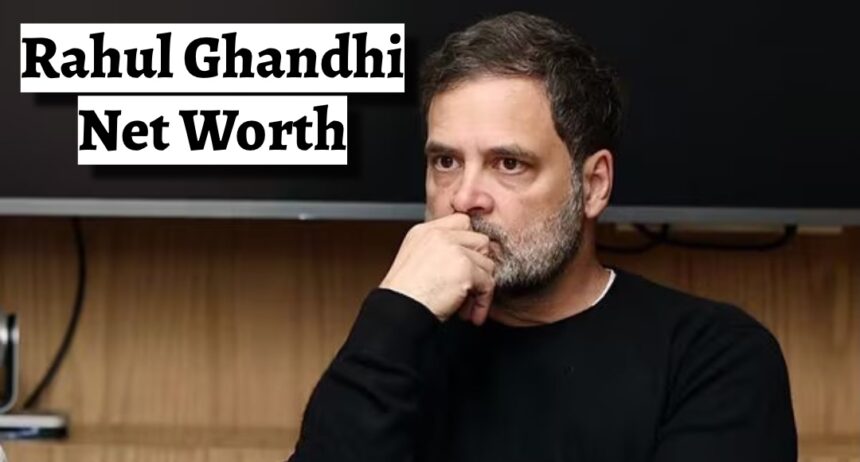
In the high-stakes arena of Indian politics, the financial standing of its key players is a subject of intense public scrutiny and curiosity. Rahul Gandhi, a scion of the Nehru-Gandhi dynasty and a central figure in the Indian National Congress, often finds his personal wealth under the microscope. Contrary to the vast, often exaggerated figures sometimes associated with political lineages, Gandhi’s declared assets present a picture of substantial, yet largely conventional, wealth built through inheritance, investments, and savings. According to his most recent election affidavits, Rahul Gandhi’s net worth is estimated to be in the realm of ₹20 crore (approximately $2.4 million USD), a figure that offers a fascinating glimpse into the economic profile of one of India’s most prominent opposition leaders.
This comprehensive analysis delves beyond the headline number, unpacking the composition of his wealth, tracing the sources of his income, and situating his financial narrative within his broader political and personal biography. It is a story not of extravagant corporate holdings, but of strategic investments in blue-chip companies, mutual funds, and a portfolio of immovable property.
The Foundation of Wealth: Understanding the ₹20 Crore Figure
The primary source of public information regarding Rahul Gandhi’s finances is the affidavit he submits to the Election Commission of India when contesting elections. These legally binding documents provide a snapshot of his declared assets and liabilities. The data reveals a balanced portfolio split between movable and immovable assets.
Breakdown of Rahul Gandhi’s Declared Assets (Approximate Figures)
| Asset Category | Specifics | Approximate Value (in INR) |
|---|---|---|
| Total Net Worth | Combined Value of All Assets | Over ₹20 Crore |
| Immovable Assets | Residential and Commercial Properties | ~ ₹11 Crore |
| Movable Assets | Liquid and Financial Holdings | ~ ₹9 Crore |
| Cash in Hand | Liquid Cash | ₹55,000 |
| Listed Company Investments | Holdings in Publicly Traded Companies | ~ ₹4.3 Crore |
| Mutual Funds | Investments in various Mutual Fund schemes | ~ ₹3.81 Crore |
| Bank Deposits | Savings and Fixed Deposits | Undisclosed, but significant |
| Other Assets | Jewellery, Vehicles, etc. | Undisclosed |
As the table illustrates, Gandhi’s wealth is not concentrated in a single asset class. His immovable assets, valued at approximately ₹11 crore, largely consist of inherited family property. The more dynamic part of his portfolio is his movable assets, worth around ₹9 crore, which showcases a clear preference for the stock market and systematic investment plans through mutual funds.
Deconstructing the Investment Portfolio: A Savvy Financial Strategy
A closer look at Rahul Gandhi’s movable assets reveals a pattern of prudent and strategic financial planning. His investment choices reflect a risk profile that is calculated and growth-oriented.
- Blue-Chip Stock Investments: Reports indicate that Gandhi has significant investments in listed companies, with a notable focus on the Tata Group. Investing in stalwarts like Tata Motors or Tata Consultancy Services (TCS) is a classic strategy for long-term, stable growth, leveraging the reputation and market strength of India’s largest conglomerate. His portfolio in this segment is valued at a substantial ₹4.3 crore.
- Mutual Fund Holdings: With nearly ₹3.81 crore invested in mutual funds, Gandhi demonstrates a belief in diversified, professionally managed equity and debt instruments. This approach helps in mitigating risk while participating in the growth of the broader economy, a common tactic for high-net-worth individuals seeking balanced exposure to the market.
- Liquidity and Savings: While he maintains a modest ₹55,000 in immediate cash, a standard practice for liquidity, a significant portion of his wealth is also held in bank deposits. These fixed deposits and savings accounts provide a safe, albeit lower-yield, foundation for his financial structure.
This investment strategy paints a picture of an individual who relies on professional financial advice and adheres to principles of diversification and long-term wealth creation, rather than speculative ventures.
Rahul Gandhi: The Political Persona and Biographical Sketch
To understand the man behind the net worth, one must look at his journey. Rahul Gandhi’s life has been inextricably linked with the political destiny of India.
Name: Rahul Gandhi
Date of Birth: 19 June 1970
Place of Birth: New Delhi, India
Parents: Rajiv Gandhi (Former Prime Minister) & Sonia Gandhi (Former Congress President)
Education: St. Stephen’s College, Delhi (Undergraduate), Harvard University (did not complete degree), Rollins College (B.A.), Trinity College, Cambridge (M.Phil.)
Political Party: Indian National Congress (INC)
Born into India’s most prominent political family, Rahul Gandhi is the son of former Prime Minister Rajiv Gandhi and former Congress President Sonia Gandhi, and the grandson of former Prime Minister Indira Gandhi. His educational journey took him abroad, though it was not without its disruptions. After initial studies at St. Stephen’s College in Delhi, he attended Harvard University but left following his father’s assassination in 1991 for security reasons. He later earned a Bachelor of Arts degree from Rollins College and a Master of Philosophy in Development Studies from Trinity College, Cambridge.
He entered the political fray in 2004, contesting and winning from the family bastion of Amethi in Uttar Pradesh. Since then, he has served as a Member of Parliament from Amethi (2004-2019), Wayanad in Kerala (2019-2024), and most recently, from Rae Bareli in Uttar Pradesh (2024-present). He held the position of Congress President from December 2017 to July 2019, a period that included the 2019 general elections. He also serves as the Leader of the Opposition in the Lok Sabha since June 2024, a role that formally acknowledges his position as the prime ministerial candidate for the opposition INDIA bloc.
Beyond his parliamentary roles, he has been involved with the Indian Youth Congress and the National Students’ Union of India, aiming to revitalize the party’s youth wing. He is also a trustee of the Rajiv Gandhi Foundation and the Rajiv Gandhi Charitable Trust, organizations focused on social development, a role that connects him to his family’s philanthropic legacy.
The Politician in the Public Eye: Recent Engagements and Context
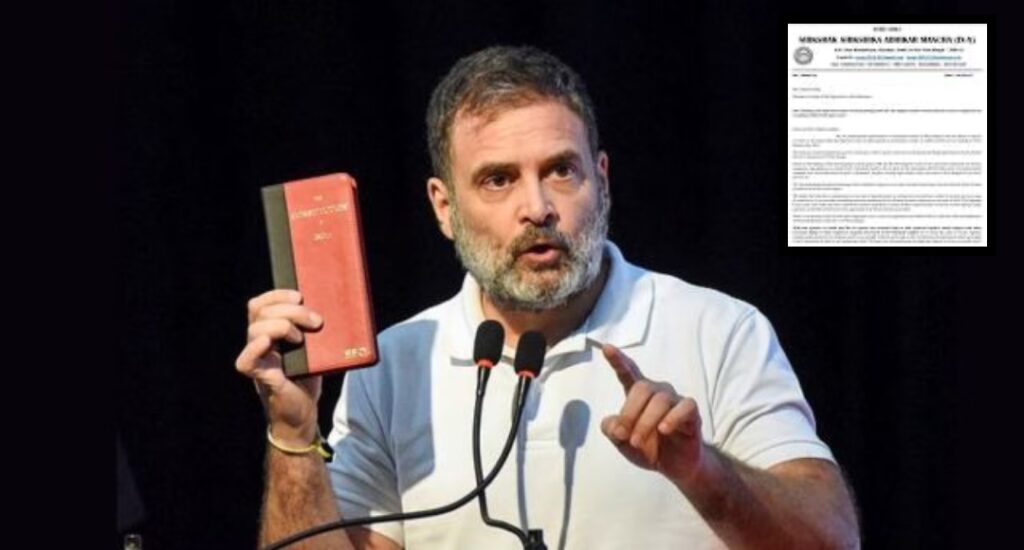
Rahul Gandhi’s financial disclosures often come into public discourse alongside his political actions. A recent instance that brought him back into the headlines was his intervention in the West Bengal teacher recruitment scandal. In a move that underscored his role as the Leader of the Opposition, Gandhi wrote a public letter to President Droupadi Murmu, seeking her intervention.
He posted on the social media platform X (formerly Twitter), stating, “I have written a letter to the Honorable President of India, Smt. Droupadi Murmu Ji, demanding her intervention in the case of thousands of qualified school teachers in West Bengal who lost their jobs after the judiciary canceled the teacher recruitment process. I have requested her to urge the government to take the necessary steps to ensure that the candidates selected in a fair manner are allowed to continue.”
This action is characteristic of his political strategy—taking up issues of public grievance and leveraging constitutional offices to hold the government accountable. It is these ongoing political battles that keep public interest in all aspects of his life, including his personal wealth, consistently high.
Conclusion: A Portrait of Privilege and Prudent Management
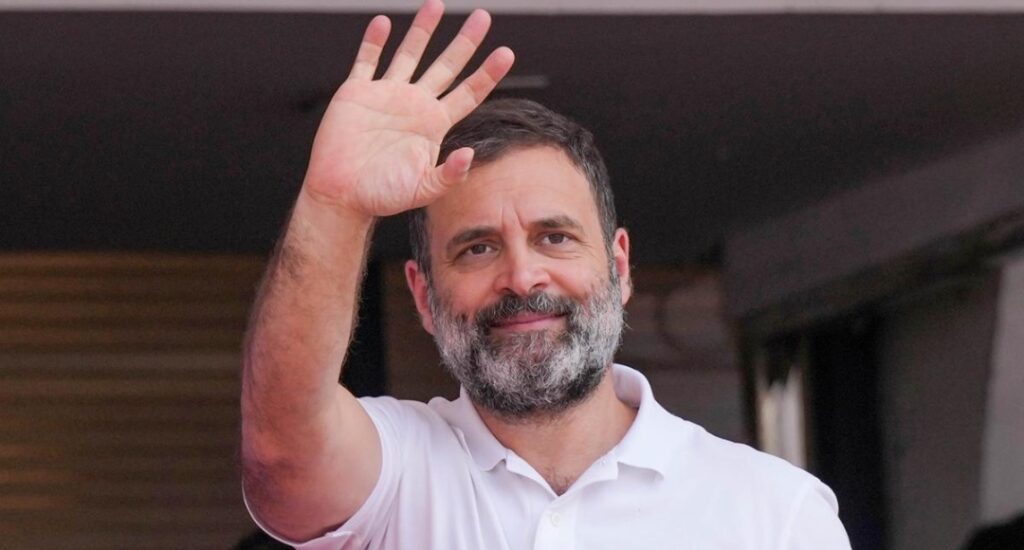
Rahul Gandhi’s net worth of over ₹20 crore places him among the more affluent members of the Indian Parliament, though he is far from being the wealthiest. His asset portfolio reflects a balance between inherited real estate and self-managed, growth-oriented financial investments. The breakdown of his wealth—from his investments in Tata companies and mutual funds to his bank deposits—reveals a sophisticated and prudent approach to asset management.
In the grand narrative of Indian politics, where perception is often as important as reality, Rahul Gandhi’s financial disclosures present a figure whose wealth is significant yet largely aligned with that of other high-net-worth professionals in the country. It is a wealth built on a foundation of family legacy, but one that is being managed with a clear eye on modern financial instruments and long-term stability. As he continues in his strengthened role as the Leader of the Opposition, this financial profile will remain a key point of reference for both his supporters and critics alike.