


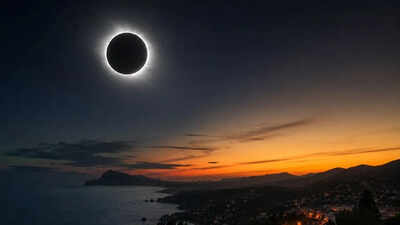
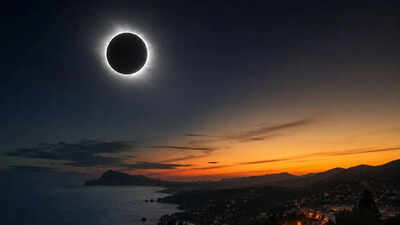
The summer of 2026 is expected to bring an unusual rush of visitors to parts of northern and eastern Spain. Hotels are already seeing increased interest, travel plans are being made months ahead of time, and astronomy enthusiasts have begun studying maps with unusual attention. The reason is simple. On 12 August 2026, a total solar eclipse will pass across Spain during the evening, creating a brief period when the Moon completely obscures the Sun for observers within a narrow path.According to Euronews, the eclipse will move from the Atlantic coast towards the Mediterranean, passing over a series of cities, coastal landscapes and inland regions. Some locations offer sea views, others wide open terrain. A few combine accessibility with favourable viewing conditions. Here are some of the places expected to attract the most attention.
Best places to see the August 2026 total solar eclipse across Spain
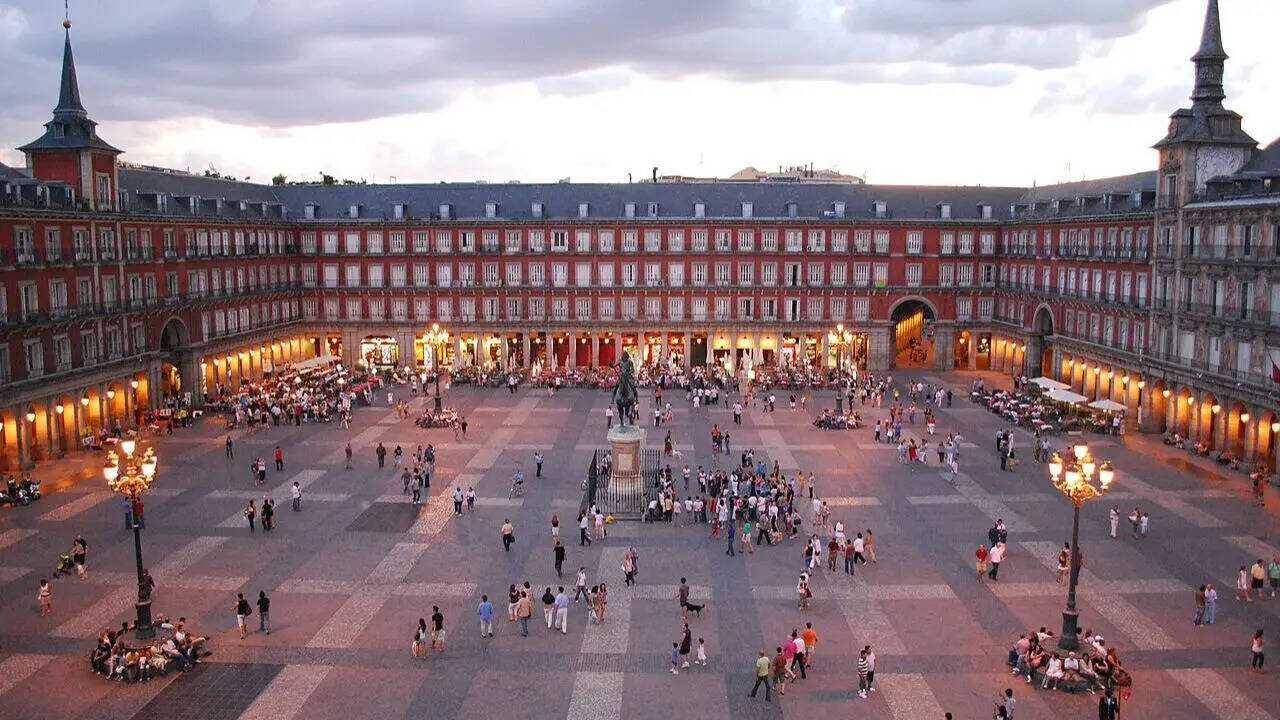
1. Llas Beach, Punta Roncadoira lighthouse and Cathedrals BeachGalicia is set to be among the first regions in Spain to experience totality, placing several of its coastal landmarks in a particularly strong position for eclipse viewing. According to Euronews, Llas Beach, Punta Roncadoira lighthouse, and Cathedrals Beach are among the recommended locations. All three sit along the Atlantic coast, where broad horizons make it easier to follow the Sun as it lowers towards the evening sky. The eclipse is expected to reach its peak here at roughly the same time the coastline begins to move into sunset light.2. A Coruña, Oviedo, Santander and BilbaoNot every observer will be looking for a remote viewpoint. Some of the largest population centres within the eclipse path may prove just as appealing. As per Euronews, A Coruña, Oviedo, Santander and Bilbao all fall within the band of totality. Their position allows visitors to witness the event while remaining close to transport links, accommodation and city services. For many travellers, that practical advantage could be as important as the eclipse itself.3. Babia Biosphere Reserve and Picos de EuropaAway from the coast, northern Spain offers a different setting altogether. Euronews highlights the Babia Biosphere Reserve and the Picos de Europa among the inland areas worth considering. Both locations are known for expansive natural landscapes and relatively low levels of light pollution. While weather conditions can never be guaranteed, these regions provide the sort of open surroundings often sought by people planning to observe major astronomical events.4. Bardenas RealesThe landscape of Bardenas Reales looks very different from the green scenery associated with much of northern Spain. Located across parts of Navarre and Aragon, this semi-desert region is singled out by Euronews as one of the country’s standout eclipse-viewing locations. The appeal lies largely in its broad horizon and clear sightlines. With few natural barriers interrupting the view, observers may be able to follow the event from beginning to end without obstruction.5. León, Burgos ZaragozaSeveral inland cities also sit directly beneath the eclipse corridor. León, Burgos and Zaragoza will all experience totality, placing them among the more accessible options for travellers. Their central locations and established infrastructure are likely to make them popular bases for visitors arriving from elsewhere in Spain and abroad.6. Castellón, Valencia and AlbuferaAs the eclipse continues eastward, attention shifts towards the Mediterranean coast. Castellón and Valencia will be among the final mainland locations to experience totality. The open spaces of Albufera are a favourable viewing area. With the eclipse occurring late in the day, coastal settings may offer particularly clear views as the Sun approaches the horizon.7. Palma de Mallorca and the Balearic coastThe eclipse route eventually reaches the Balearic Islands, where Palma de Mallorca becomes one of the last major locations in Spain to witness totality. Coastal areas around Mallorca provide opportunities to observe the event with the Mediterranean forming the backdrop. The timing means the eclipse will take place shortly before sunset, bringing the astronomical event and the changing evening light together in the same stretch of sky.
Why the August 2026 total solar eclipse is already attracting visitors to Spain
pc: wikipedia
The eclipse may still be months away, yet its impact is already being felt. Euronews reports that accommodation demand has risen in several destinations located within the path of totality, with some areas recording substantial increases in prices and bookings.For anyone hoping to witness the event, location will matter. Experts cited by Euronews recommend choosing places with an unobstructed western horizon, avoiding buildings, hills or mountains that could block the view at the critical moment. If skies remain clear on the evening of 12 August 2026, large parts of Spain will have a front-row seat to one of the year’s most anticipated astronomical events.