



By Anushka Verma
Updated : November 10, 2025
Highlights at a Glance
| Particulars | Details |
|---|---|
| Project Name | Redevelopment of Jawaharlal Nehru (JLN) Stadium into Integrated Sports City |
| Location | New Delhi, India |
| Total Area | 102 acres |
| Previous Renovation Cost (2010) | ₹961 crore (for Commonwealth Games 2010) |
| Recent Upgradation Cost (2024) | ₹50 crore (for World Para Athletics Championship) |
| New Plan | Demolition of existing structure to build a modern “Sports City” |
| Key Features | Multi-sport arenas, residential athlete village, training centers, commercial zones |
| Project Status | Ideation phase (as per Ministry source) |
| Objective | To utilize underused land and modernize Delhi’s sports infrastructure |
| Supervising Ministry | Ministry of Youth Affairs and Sports |
| Author | Anushka Verma |
Introduction
The Jawaharlal Nehru Stadium, one of Delhi’s most iconic landmarks and a symbol of India’s sporting aspirations, is once again at the center of transformation. After a lavish ₹961 crore renovation ahead of the 2010 Commonwealth Games, and a recent ₹50 crore upgrade before the World Para Athletics Championship, the 102-acre facility is now poised for a complete makeover — this time, not just a facelift but a demolition and rebirth into a state-of-the-art Sports City.
According to reliable sources within the Ministry of Youth Affairs and Sports, the proposal aims to maximize the underutilized land and create a holistic sporting ecosystem that combines world-class infrastructure, athlete accommodation, and commercial sustainability.
While the plan is still in its ideation phase, its implications for Delhi’s sports landscape — and indeed, for India’s sports future — are profound.
The Legacy of Jawaharlal Nehru Stadium
Built in 1982 for the Asian Games, the Jawaharlal Nehru Stadium (JLN) has long been regarded as the beating heart of Indian sports. Over the decades, it has hosted a multitude of landmark events — from the 1982 Asian Games opening and closing ceremonies, to the 2010 Commonwealth Games athletics and football finals, and countless national-level tournaments.
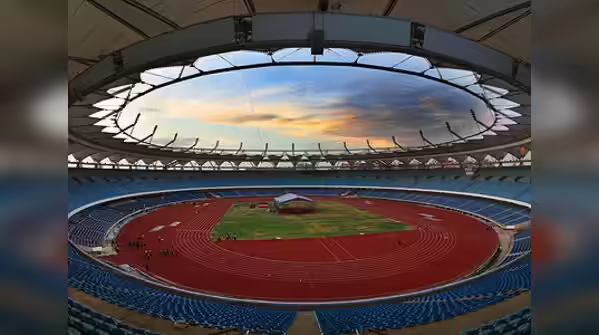
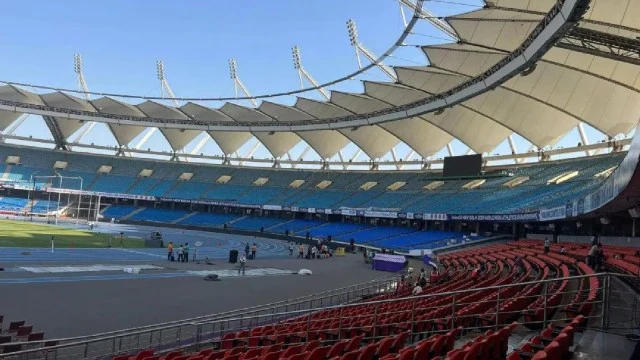
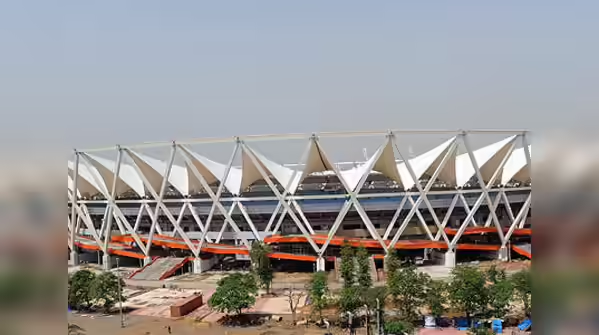
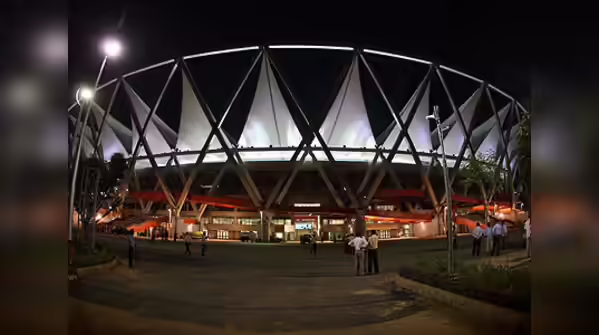
The stadium was renovated on a massive scale in preparation for the 2010 Games. The ₹961 crore project turned the venue into one of the most advanced multi-purpose facilities in Asia at the time, boasting a capacity of 60,000 spectators, top-tier synthetic tracks, advanced lighting systems, and world-class media facilities.
Yet, despite its grandeur, a significant portion of the stadium’s 102-acre complex has remained underutilized over the years. Much of the space lies idle, hosting only occasional athletic events or government functions.
Why Demolish a ₹961 Crore Structure?
The question on everyone’s mind: Why demolish a stadium that was so recently renovated at such enormous cost?
Officials within the ministry argue that the maintenance costs and limited functionality of the existing structure outweigh its benefits. “The JLN Stadium is a landmark, but it was designed for the sporting needs of the 1980s and early 2000s,” a senior source from the sports ministry explained. “Today, we require integrated training and residential facilities — something the current setup cannot accommodate.”
The Sports City proposal aims to use the same land more effectively — transforming it into a hub for multi-disciplinary sports, training academies, and athlete housing. The concept envisions not just a stadium, but a complete sports ecosystem.
The Vision: A New Era for Indian Sports
1. An Integrated Sports Ecosystem
The proposed Sports City would include:
- Olympic-standard stadiums for athletics, football, hockey, and indoor sports.
- High-performance training centers for disciplines like wrestling, boxing, shooting, and badminton.
- Residential zones for athletes and coaches, creating a campus-style training environment.
- Commercial complexes, such as retail areas and sports tech centers, to make the facility self-sustaining.
2. Smart and Sustainable Design
Unlike the 2010 model — which prioritized aesthetics and short-term event readiness — the new vision emphasizes sustainability and long-term usability:
- Use of solar energy and rainwater harvesting systems.
- Modular design for easy maintenance.
- Digital infrastructure for data-driven training.
- Reduced carbon footprint through green building techniques.
3. Accessible to the Public
The Ministry also plans to make parts of the complex open to the public, encouraging community fitness and participation. Public gyms, cycling tracks, and wellness centers could be part of the master plan.
The Economic Equation
The decision also has deep financial implications.
A ₹961 crore renovation and an additional ₹50 crore spent in 2024 bring the total investment in JLN Stadium to over ₹1,000 crore in the past decade and a half. Yet, its return on investment has been modest. Event frequency and attendance have remained low, while annual maintenance costs reportedly exceed ₹20 crore.
Proposed New Investment
While official figures haven’t been announced, urban development experts suggest that creating a Sports City of this scale could cost anywhere between ₹3,000 to ₹5,000 crore — depending on the scope of residential and commercial facilities included.
However, ministry officials believe this will be a long-term investment in India’s sports future. A public-private partnership (PPP) model may also be considered to attract corporate and foreign funding.
Lessons from the Commonwealth Games Era
The 2010 Commonwealth Games left behind not just infrastructure but also a legacy of financial scrutiny. While the Games were hailed for transforming Delhi’s infrastructure, they were also marred by controversies around corruption, project delays, and cost overruns.
This time, the ministry appears determined to avoid similar pitfalls. The Sports City project will reportedly emphasize transparency, phased construction, and public accountability.
Urban planning experts are calling it an opportunity to “redeem” the mistakes of 2010 by developing infrastructure that actually benefits athletes, rather than just serving as a showpiece.
Public Reaction: Nostalgia Meets Modernization
The announcement has triggered mixed reactions among Delhiites and sports enthusiasts nationwide.
For many, the Jawaharlal Nehru Stadium is more than just a venue — it’s a symbol of national pride, a place where countless memories were made.
“I still remember watching the Commonwealth Games ceremonies with my family. The thought of it being demolished feels emotional,” said Rohit Sharma, a Delhi resident who attended several 2010 events.
Others, however, view it as a necessary evolution.
“We cannot cling to outdated infrastructure. If India wants Olympic medals, we need Olympic-standard facilities,” said Priya Deshmukh, a sports analyst and former athlete.
International Perspective: Global Cities and Sports Infrastructure
Across the world, major cities are reimagining old stadiums to meet new-age sporting and economic demands.
| City | Project | Purpose |
|---|---|---|
| London (UK) | Olympic Park (after 2012 Olympics) | Converted into multi-use sports, business, and residential district |
| Tokyo (Japan) | National Stadium rebuilt (2020) | Modernized for sustainability and future global events |
| Beijing (China) | Olympic Park repurposed | Expanded into commercial and fitness hubs |
| Paris (France) | Grand redevelopment before 2024 Olympics | Mixed-use infrastructure with public sports access |
Delhi’s Sports City plan mirrors this global trend — repurposing space not just for competitions, but for year-round engagement and economic productivity.
Environmental and Urban Impact
The demolition and redevelopment of such a massive structure also raise environmental and logistical questions:
- Waste Management: Demolition of concrete structures will generate thousands of tonnes of debris, requiring sustainable disposal.
- Traffic & Noise Pollution: Construction in a densely populated area like Lodhi Road may cause significant urban disruption.
- Green Zone Protection: The plan must align with Delhi’s master plan and environmental regulations, ensuring that green areas are preserved.
To mitigate these challenges, planners are expected to adopt eco-friendly demolition practices and green urban design principles.
The Road Ahead: From Ideation to Implementation
As of now, the Sports City project remains in the conceptual stage. The next steps will likely include:
- Feasibility Study by NITI Aayog or an expert planning agency.
- Environmental Impact Assessment (EIA).
- Design Tendering and Global Architecture Competition.
- Approval from Urban Development and Heritage Departments.
- Budget Allocation in the upcoming financial year.
If all goes according to plan, groundwork could begin as early as late 2026, with the new Sports City potentially operational by 2030.
Expert Opinions
Urban Planners’ Take
“A city like Delhi needs multi-functional infrastructure. Turning JLN into a Sports City aligns with global urban trends — provided it’s done sustainably.”
— Arvind Kumar, Urban Design Expert
Athletes’ Perspective
“Athletes don’t just need stadiums; they need homes, gyms, recovery centers, and community. This project could be a game-changer.”
— Shivani Chaudhary, National Athlete
Economists’ View
“If designed smartly, Sports City can become a tourism and commercial hub, generating employment and global events.”
— Dr. Karan Mehta, Economist, Delhi University
Symbolism: End of an Era, Start of a New One
The demolition of Jawaharlal Nehru Stadium will undoubtedly mark the end of an era — one that began with the dreams of the 1982 Asian Games and evolved through the 2010 Commonwealth spectacle.
But perhaps it also marks the start of a more ambitious chapter — one that envisions India not just as a participant but as a global leader in sports infrastructure and athlete development.
Conclusion
The decision to dismantle a stadium renovated just 15 years ago at ₹961 crore may seem drastic, but it reflects a larger paradigm shift in how India views sports. The proposed Sports City is not merely a replacement; it’s a reimagination — of purpose, design, and national ambition.
If executed with vision, transparency, and sustainability, the project could become a model for the future of sports in India — and a global showcase of how cities evolve to meet the aspirations of their people.
Until then, Delhi watches in anticipation as one of its greatest landmarks prepares to bid farewell — to make way for something even greater.