

By Anushka Verma
October 9, 2025
Introduction: Bridging the Digital Divide
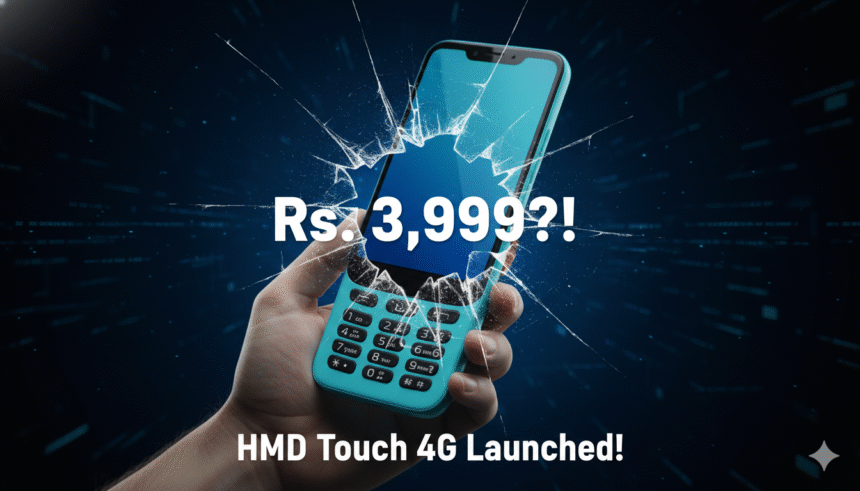
In the high-stakes arena of modern smartphones, where specifications wars and escalating price tags dominate headlines, a quiet revolution is brewing. Human Mobile Devices (HMD), the custodian of the iconic Nokia brand, has taken a deliberate step away from the frenzy with the launch of the HMD Touch 4G. This device, strategically positioned as a “hybrid phone,” is not designed to compete with flagship giants. Instead, it aims to serve a vast and often underserved segment of the market: users seeking the essential benefits of connectivity without the complexity, cost, or distraction of a full-fledged smartphone.
Priced at an accessible ₹3,999, the Touch 4G is a direct descendant of a beloved lineage, echoing the philosophy of Nokia’s pioneering Asha series. It recalls a time when devices were built for purpose, not just prestige. However, this is not merely a nostalgic rehash. The Touch 4G is a thoughtfully modernized tool for a specific audience—first-time internet users, students on a budget, seniors navigating the digital world, or anyone seeking a “digital minimalism” device that keeps them contactable without being constantly online. By leveraging a combination of a lightweight operating system and cloud-based applications, HMD is attempting to carve out a crucial niche, offering a smart-adjacent experience that is both pocket-friendly and profoundly practical. This article delves deep into every aspect of the HMD Touch 4G, analyzing its potential to redefine the entry-level mobile segment.
HMD Touch 4G: Complete Specifications Table
| Category | Specification |
|---|---|
| Launch & Pricing | Launched in India on October 9, 2025; Priced at ₹3,999 |
| Design | IP52 rating for dust and water resistance, 100 grams weight |
| Colour Options | Cyan, Dark Blue |
| Display | 3.2-inch TFT LCD, 240 x 320 pixels (QVGA) resolution |
| Platform | RTOS Touch (Real-Time Operating System) |
| Chipset | Unisoc T127 |
| Memory | 64MB RAM, up to 128GB internal storage, expandable via microSD (up to 32GB) |
| Camera | Rear: 2MP sensor with LED flash Front: 0.3MP selfie camera |
| Battery | 1,950mAh, USB-C charging port |
| Connectivity | 4G LTE, Wi-Fi, Bluetooth 5.0, 3.5mm headphone jack |
| Key Apps | Express Chat (messaging & video calls), Cloud-based apps (Cricket, Weather, Videos) |
Design and Build: Embracing Simplicity and Durability
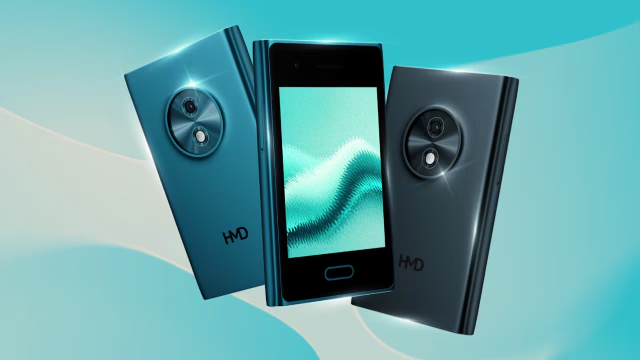
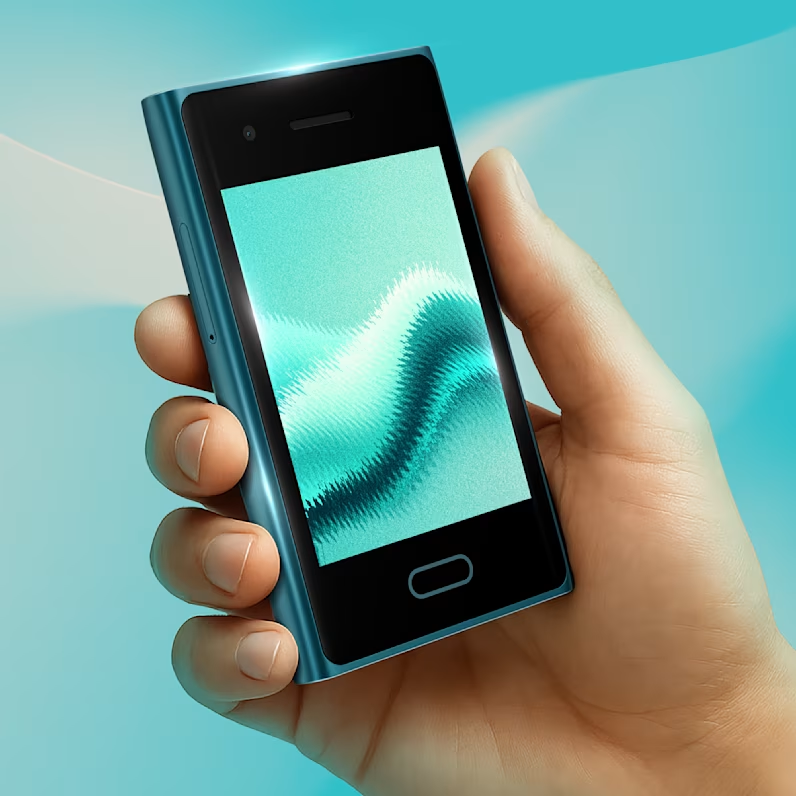
The HMD Touch 4G’s design philosophy is immediately clear: functional, friendly, and robust. In an age of slippery glass slabs, its lightweight construction of just 100 grams is a revelation. This makes it effortlessly portable, easily slipping into any pocket without becoming a burden. The device is offered in two fresh colourways—Cyan and Dark Blue—which inject a dose of youthful energy without being garish.
Beyond aesthetics, the build incorporates a crucial feature for everyday resilience: an IP52 rating. This certification signifies a level of protection against limited dust ingress and water droplets falling from a 15-degree angle. In practical terms, it means the phone can withstand accidental splashes or a light drizzle, a common-sense safeguard that is often absent in this price bracket. The circular camera island on the rear is a subtle nod to classic Nokia design, housing the single 2MP sensor and an LED flash. The overall form factor is a testament to the “pocket-friendly” promise, offering a secure and comfortable grip that minimizes the risk of accidental drops.
Display Analysis: The QVGA Window to the World
At the heart of the Touch 4G is a 3.2-inch TFT LCD display with a QVGA resolution of 240 x 320 pixels. In an era of 4K screens, this specification demands context. This is not a display for consuming high-definition video content or for intricate gaming. Its purpose is foundational: to provide a clear, functional window for essential tasks.
For its intended use—text-based messaging, navigating simple menus, viewing weather updates, and making video calls—the screen is adequate. Icons and text are legible, and the touch interface, while not as fluid as a high-end smartphone, is designed to be responsive for the core functions of the RTOS. The smaller size and lower resolution are, in fact, strategic advantages that contribute to the device’s exceptional power efficiency, allowing the 1950mAh battery to perform impressively. It serves as a reminder that for a massive segment of users, a display’s value is measured not in pixels, but in readability and battery longevity.
Performance and Software: The RTOS Touch & Unisoc T127 Duo
The performance profile of the Touch 4G is where its “hybrid” identity truly crystallizes. It is powered by the Unisoc T127 chipset, a processor engineered for power-efficient 4G connectivity in entry-level devices. This is paired with a minimal 64MB of RAM. These figures are not typos; they are deliberate choices that enable the device’s core value propositions: affordability and exceptional battery life.
The software experience is governed by RTOS Touch, a custom, lightweight real-time operating system. Unlike the complex layers of Android or iOS, RTOS is a streamlined, purpose-built platform. It boots up almost instantly, has no background processes draining the battery, and offers a snappy, lag-free experience for the tasks it is designed to handle. There is no app store, no bloatware, and no endless notifications. The interface is a grid of large, easy-to-tap icons for calling, messaging, and the pre-installed cloud apps. This simplicity is the system’s greatest strength, eliminating the learning curve and technical intimidation associated with smartphones for novice users.
Storage is handled by up to 128GB of internal space, which is generous for this category and can be further expanded via a microSD card (up to 32GB), allowing users to store music, photos, and other files without worry.
The “Cloud-Based Apps” Ecosystem: Smart Features, Minimal Hardware
This is the most innovative aspect of the Touch 4G. Since the RTOS cannot support native Android/iOS applications, HMD has cleverly turned to cloud-based solutions to deliver smart functionalities. These are essentially lightweight web applications that run in a optimized browser environment, offloading the processing heavy-lifting to remote servers.
The cornerstone of this ecosystem is Express Chat. This is a dedicated app that functions as an alternative to WhatsApp, supporting instant messaging, group chats, and crucially, video calling. For millions of users whose primary mode of digital communication is through such platforms, the Touch 4G provides a dedicated, affordable portal.
Beyond messaging, the phone comes with a suite of cloud apps that deliver curated information. Users can get live cricket updates, check weather forecasts, and watch trending videos from popular platforms. These apps are data-efficient and load quickly over a 4G or Wi-Fi connection, providing a taste of the internet’s utility without requiring powerful hardware. This approach is a direct and worthy successor to the strategy employed by the Nokia Asha series, proving that smart features can be democratized through clever software architecture.
Camera, Battery, and Connectivity
The imaging system on the Touch 4G is strictly utilitarian. The primary 2MP rear camera coupled with an LED flash is capable of capturing passable images in good lighting for memories or scanning documents. The 0.3MP front-facing camera exists primarily for video calls on Express Chat. It would be a misstep to judge these cameras by modern standards; they are functional tools for communication, not for photography.
The 1,950mAh battery is a powerhouse in the context of the device’s low-power components. With the efficient Unisoc chipset and the non-demanding RTOS, users can expect not just a full day of use, but potentially multiple days on a single charge. This is a game-changing feature for users in areas with unreliable electricity or for those who simply wish to be free from the daily charging ritual. The inclusion of a USB-C port for charging is a welcome modern touch, ensuring future-proofing and ease of use.
Connectivity is a core pillar of the Touch 4G’s value proposition. As the name promises, it supports 4G LTE for fast internet access and crystal-clear Voice-over-LTE (VoLTE) calls. It also includes Wi-Fi, Bluetooth 5.0 for connecting to wireless headphones, and a 3.5mm headphone jack, ensuring compatibility with a vast universe of audio accessories.
Target Audience and Final Verdict
The HMD Touch 4G is not for everyone. It is not for the power user, the mobile gamer, or the photography enthusiast. Its identity is beautifully specific. It is the perfect first phone for a child, providing connectivity and essential apps without the risks and distractions of a smartphone. It is an ideal device for senior citizens who find modern smartphones bewildering; the large icons, simple menu, and physical buttons (if any) offer a gentle introduction to the digital world. It is a brilliant secondary phone for professionals seeking a “digital detox” tool for weekends or holidays, allowing them to stay reachable without the pull of social media and email. Finally, it is a vital tool for budget-conscious users in rural and semi-urban areas, for whom a ₹3,999 price tag for 4G internet access is a transformative proposition.
Final Verdict:
The HMD Touch 4G is a bold and commendable experiment in a homogenized market. It succeeds not by competing on specs, but by understanding a fundamental user need that has been largely ignored. It is a well-executed, thoughtfully designed device that proudly occupies its “hybrid” category. For its target audience, it offers immense value: core connectivity, essential cloud-based apps, legendary battery life, and a simplicity that is both empowering and reassuring. While it is currently out of stock, its announced price of ₹3,999 makes it one of the most compelling entries in the budget segment, proving that in the world of technology, sometimes less is indeed more.