



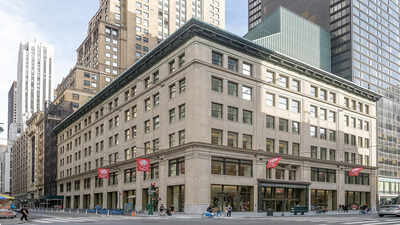
A significant $55 million donation revitalised the Mid-Manhattan Library, transforming it into the Stavros Niarchos Foundation Library. Image Credits: Wikimedia Commons
It is natural to conclude that in the evolving world of information technology, the traditional library has become less relevant than ever before as a central hub of urban life. These libraries are romanticised in our minds as quiet halls of dusty books and studious scholars. However, in the context of urban life, a public library is one of the key elements without which day-to-day activities, as well as professional development and networking, will be significantly hindered. The issue of contemporary public libraries lies not in the absence of interest from the public at large, but rather in the physical structure that was designed many years ago.When the New York Public Library announced a massive fifty-five million dollar contribution from the Stavros Niarchos Foundation, it looked like another standard entry in the ledger of high-profile cultural philanthropy. The target of this funding was the Mid-Manhattan Library, a branch that sat directly across the street from the famous stone lions of the main research building. For decades, this specific branch functioned as the true workhorse of the city library system. It was a place where ordinary residents went to actually check out books, look for work, or find a quiet desk.As explained in the official press release titled A Landmark Gift of $55 Million by the Stavros Niarchos Foundation, the building struggled due to its own success. Prior to the renovations being done, the branch had received up to one million and seven hundred thousand visits every year, and the library circulated two million materials. Simply put, the library’s infrastructure suffered wear and tear because of the excessive amount of human activity going on in the building. Thus, in this instance, the donation was less about creating the need than fulfilling the already substantial demand.
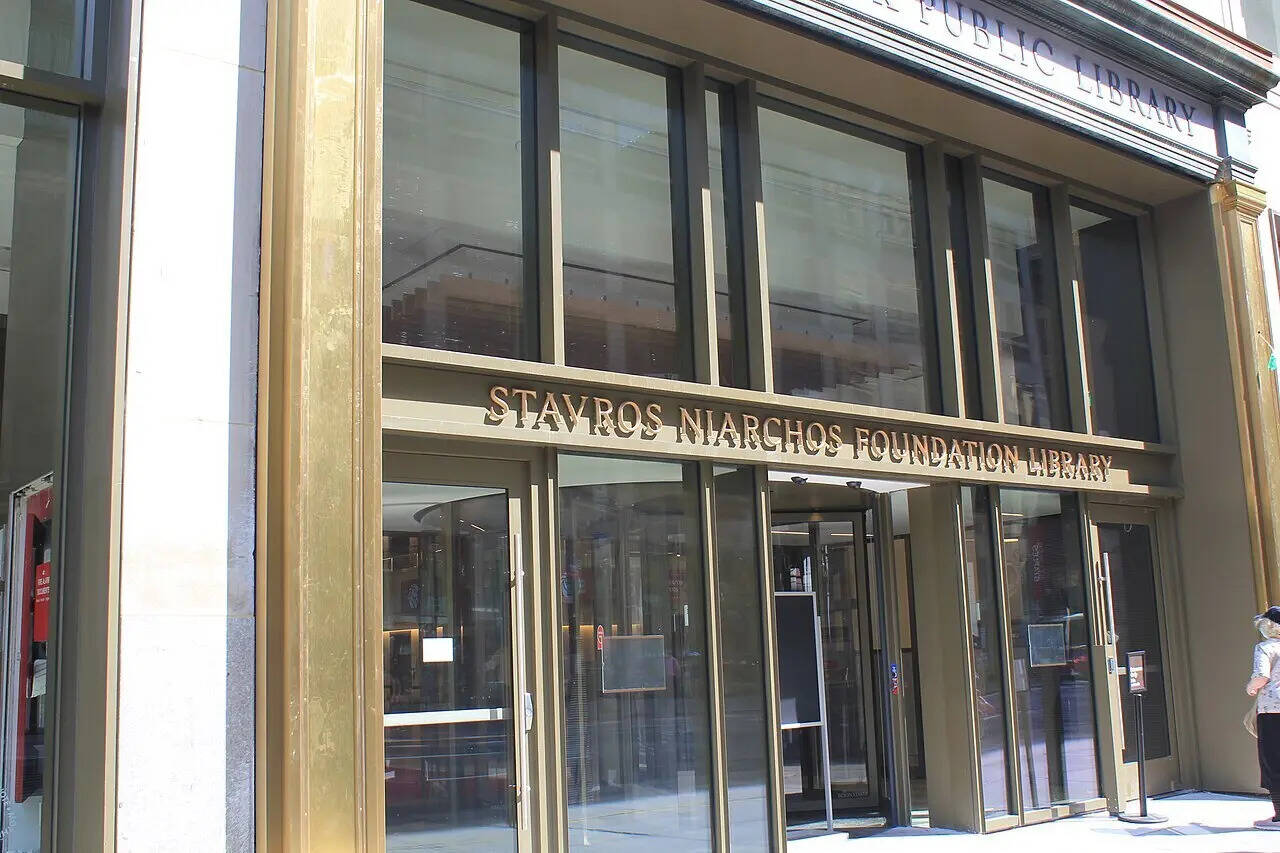
This renovation shifted focus from book storage to community needs, creating dynamic spaces for learning, interaction, and professional development. The redesigned library now serves as a vital, free democratic hub for ordinary New Yorkers. Image Credits: Wikimedia Commons
Why modern civic spaces need a full-fledged structural overhaulWith the money provided by the donors, the library system was able to redesign its entire space and create a completely new building focused on the circulation of media, education, and interactions between people. In the course of renovations, the branch was transformed into the Stavros Niarchos Foundation Library, fundamentally altering the way in which a modern library interacts with people. No longer did the building prioritise shelves over the needs of human visitors – the renovated architecture featured wide open spaces, designated learning zones, technical labs, and an outdoor terrace for visitors to use freely.The immediate return on this structural shift became obvious very quickly. According to the one-year impact report titled The New York Public Library’s Completely-Transformed Central Circulating Library Celebrates One Year, the reimagined building recorded hundreds of thousands of visits and massive circulation numbers within its first twelve months of operation. The facility hosted thousands of free public programs, adult learning courses, and computer sessions, proving that the space had evolved into a highly functional public engine rather than a static architectural monument.This was reflected in creating separate floors for separate demographics, including the creation of a special facility for young people and a large library for people looking for jobs. The new design demonstrated the potential of the contemporary form of giving, which can make a huge difference in terms of opening up resources and creating a large interior area in which one can stay, work, or learn absolutely free of charge.Democratic potential of a free public spaceThe true meaning of this change transcends any awards or acknowledgements. In the centre of an expensive city, free areas are quite hard to find nowadays. All public spaces in urban contexts function according to the principle of consumption; you have to buy coffee or pay for access to have a chance to sit with a laptop and work. This new library represents a break from the norm as it offers itself as a truly democratic facility.By anchoring this massive structural update to a permanent circulating branch, the project ensured that the daily life of ordinary New Yorkers was elevated. The transformation provided a textured, modern space where a student studying for an exam sits right alongside an immigrant practising English or an entrepreneur launching a business.The takeaway from all of this spending is that the best form of giving is the kind that reaches out precisely where people are already meeting up. It demonstrates that if you provide a community with a place where their learning and civic requirements are treated with respect, they will pack the place to the rafters. The real worth of the library does not lie in the huge sums seen on a donation slip, but rather in the hundreds of thousands of individual eureka moments that take place within its walls daily.