

Price Tag of Engineering Feat: Beyond Measure
By Anushka Verma | 11 October 2025
Introduction
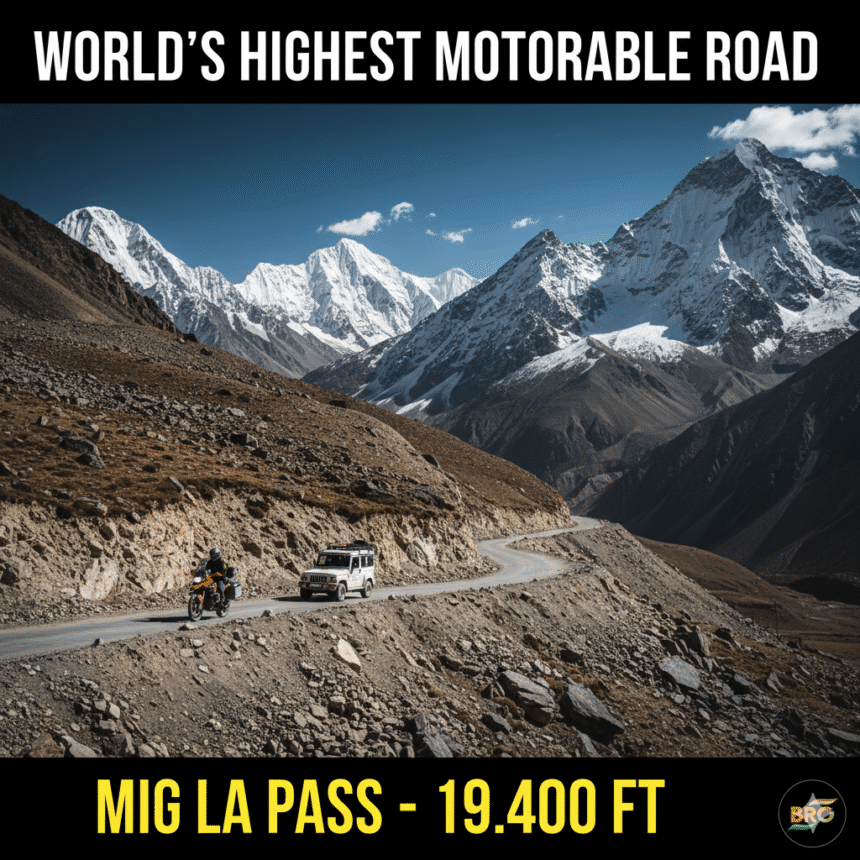
India has once again showcased its engineering prowess with a monumental achievement: the construction of the world’s highest motorable road at Mig La Pass in Ladakh, towering at an astonishing 19,400 feet above sea level. This newly built road surpasses the previous record held by Umling La, which stands at 19,024 feet, and marks a historic milestone for the Border Roads Organisation (BRO) under Project Himank.
The strategic significance of this road cannot be overstated. Beyond breaking a world record, it provides essential connectivity to remote border villages like Hanle, Likaru, and Fukche, facilitating military logistics, local trade, and tourism. At the same time, it highlights India’s ability to execute infrastructure projects under some of the most extreme and challenging conditions on the planet.
From an engineering perspective, the Mig La road is a triumph over nature itself. High-altitude construction involves low oxygen levels, sub-zero temperatures, frequent blizzards, and treacherous terrains. Successfully navigating these challenges is a testament to the skill, resilience, and dedication of the BRO engineers and workers.
For adventurers, travelers, and local communities alike, this road is more than asphalt and stones—it is a gateway to opportunity, accessibility, and exploration.
Key Highlights
| Feature | Detail |
|---|---|
| Location | Mig La Pass, Ladakh, India |
| Altitude | 19,400 ft (5,917 m) above sea level |
| Record | World’s highest motorable road |
| Constructed By | Border Roads Organisation (BRO) |
| Project | Project Himank |
| Connectivity | Links Likaru to Fukche near the Line of Actual Control (LAC) |
| Significance | Improved year-round access for locals, military, and tourists |
| Challenges Faced | Extreme cold, blizzards, oxygen scarcity, and shifting rock terrain |
| Leader of Project | Brigadier Vishal Srivastava |
Historical Context: BRO and Project Himank
The Border Roads Organisation (BRO) has a long-standing history of constructing roads in some of India’s most inaccessible regions. Established in 1960, BRO’s primary mission is to develop and maintain road networks in border areas and strategically sensitive regions. Over the decades, the organization has built thousands of kilometers of high-altitude roads, often under extreme weather conditions.
Project Himank, initiated in the 1980s, is one of BRO’s most ambitious initiatives. Focused specifically on the Ladakh region, Himank has been responsible for building iconic high-altitude roads, including the famous Khardung La and Umling La, previously considered the highest motorable roads in the world.
The construction of Mig La Pass continues this legacy, demonstrating BRO’s mastery in engineering high-altitude connectivity projects and reinforcing India’s strategic presence near the Line of Actual Control (LAC).
Strategic Importance of Mig La Pass
Mig La Pass is not just an engineering marvel—it is a critical strategic asset. Located close to the India-China border, the road enhances military logistics, enabling rapid mobilization of troops and supplies in remote regions. This is particularly vital given the challenging terrain and harsh winters that often cut off villages for months.
For the local population, the road offers several benefits:
- Improved accessibility: Villages like Hanle, Likaru, and Fukche now enjoy year-round connectivity, which was previously disrupted during winters.
- Economic growth: With easier access, local trade, handicrafts, and small businesses can reach wider markets.
- Healthcare and education: Ambulances and medical services can operate more efficiently, while students can commute to educational institutions with greater ease.
In essence, the Mig La Pass road strengthens both India’s strategic infrastructure and the socioeconomic fabric of local communities.
Engineering Marvel at 19,400 Feet
Constructing a road at nearly 6,000 meters above sea level is a feat of unparalleled difficulty. The challenges include:
- Oxygen Scarcity: The high altitude significantly reduces oxygen levels, making physical labor extremely taxing and increasing the risk of altitude sickness. Workers had to acclimatize gradually to maintain health and efficiency.
- Severe Weather: Temperatures often drop below -20°C, accompanied by high winds, blizzards, and snowstorms. The construction schedule had to account for extreme weather windows.
- Unstable Terrain: Shifting rock beds, landslide-prone slopes, and glaciers required innovative engineering solutions and constant monitoring for structural stability.
- Material Transportation: Hauling heavy machinery and construction materials to such altitudes posed a logistical nightmare. A combination of mules, helicopters, and specialized vehicles was used to transport essential equipment.
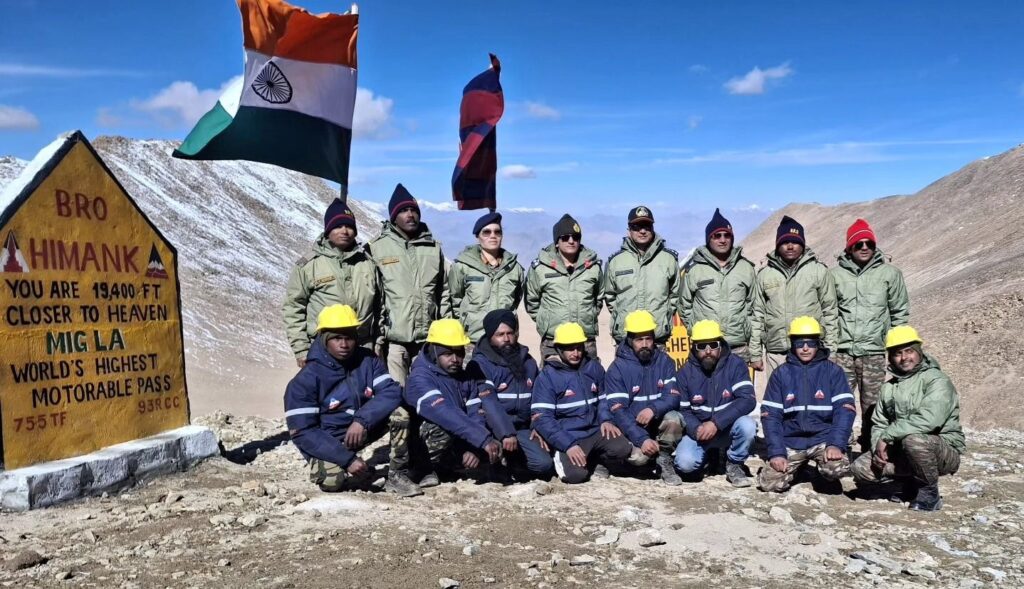
Led by Brigadier Vishal Srivastava, the project team demonstrated meticulous planning and extraordinary resilience. They overcame each obstacle with cutting-edge engineering techniques, reinforced road foundations, and rigorous safety protocols.
Economic and Social Impact
The road brings transformative changes to Ladakh’s remote communities:
- Trade and Commerce: Local products, including handicrafts, wool, and agricultural goods, can now reach broader markets.
- Tourism Potential: Increased tourist inflow can lead to more revenue for local businesses, homestays, and small enterprises.
- Healthcare Accessibility: Improved access allows timely delivery of medicines and emergency services.
- Educational Opportunities: Easier commuting ensures students can attend schools and colleges in neighboring towns.
In the long term, the road could catalyze sustainable economic development, making remote regions less isolated and more self-reliant.
Tourism and Adventure Opportunities
Ladakh has always been a magnet for adventure travelers, bikers, and trekking enthusiasts. Mig La Pass now offers unprecedented high-altitude experiences:
- High-Altitude Biking: Motorcyclists seeking extreme adventure now have a new ultimate challenge.
- Trekking and Mountaineering: The surrounding terrain is ideal for trekking routes that combine natural beauty with high-altitude adventure.
- Cultural Tourism: Visitors can engage with local communities, experience traditional Ladakhi culture, and explore offbeat locations like Hanle and Fukche.
Tourism operators anticipate increased interest in high-altitude road trips, adventure packages, and eco-tourism experiences, benefiting both local communities and the broader economy.
Comparison With Previous Records
| Road | Altitude | Status |
|---|---|---|
| Umling La, Ladakh | 19,024 ft | Previously the world’s highest motorable road |
| Mig La Pass, Ladakh | 19,400 ft | New World Record |
By surpassing Umling La by 376 feet, Mig La establishes India’s dominance in high-altitude road construction, reaffirming BRO’s global reputation.
Environmental Considerations
While the construction of high-altitude roads can threaten fragile ecosystems, the BRO has implemented eco-friendly measures:
- Slope Stabilization: To prevent landslides and soil erosion.
- Water Management: Proper drainage systems to avoid waterlogging and preserve natural streams.
- Biodiversity Protection: Efforts were made to minimize disturbances to local flora and fauna.
Sustainable engineering ensures that while the road serves strategic and economic purposes, it also preserves Ladakh’s delicate ecological balance.
Interviews and Perspectives
Local Residents:
“Before this road, we were cut off for months in winter. Now, supplies, medicines, and travel are easier. It changes our lives,” says a resident of Fukche.
Adventure Enthusiasts:
“Mig La is the ultimate high-altitude challenge. It is not just a road; it’s a journey to the top of the world,” remarks a biker who recently visited Umling La.
BRO Engineers:
“Every day at Mig La was a battle against nature. Extreme cold, low oxygen, and treacherous terrain tested our limits. Completing this road is a proud moment for all of us,” shares an engineer involved in Project Himank.
Global Significance
Mig La Pass is now recognized globally as the highest motorable road, attracting attention from adventure travelers, geographers, and infrastructure experts worldwide. Its construction serves as a benchmark for high-altitude engineering projects, inspiring nations facing similar geographical challenges to adopt innovative solutions.
Future Prospects
The Mig La road opens opportunities for further development:
- Expansion of Connectivity: BRO plans to extend roads to neighboring valleys, improving access for isolated communities.
- Adventure Tourism Packages: Tourism boards will promote high-altitude biking, trekking, and cultural tours.
- Global Recognition: Mig La is poised to become an iconic destination for both travelers and infrastructure enthusiasts.
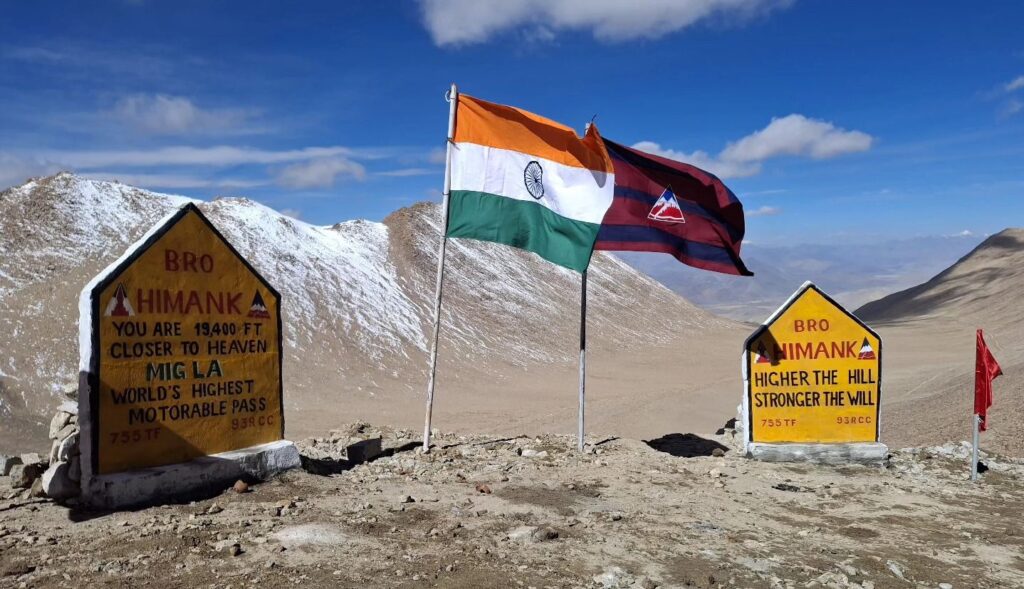
In addition, this project highlights the importance of high-altitude engineering expertise, setting standards for other regions with challenging terrains.
Challenges and Lessons Learned
Several lessons emerge from the construction of Mig La Pass:
- Human Resilience: Success depends on acclimatization, physical endurance, and teamwork.
- Advanced Engineering Techniques: Reinforced foundations, slope stabilization, and innovative machinery were crucial.
- Environmental Responsibility: Balancing infrastructure development with ecological preservation is essential.
- Strategic Planning: Logistics, supply chain, and timely execution require careful coordination, particularly in extreme conditions.
These lessons will guide future high-altitude infrastructure projects in India and globally.
Conclusion
The construction of the Mig La Pass road at 19,400 feet is a landmark achievement that blends engineering excellence with strategic foresight. It provides critical connectivity to remote regions, facilitates economic growth, supports tourism, and enhances India’s strategic infrastructure along the LAC.
For locals, it is a lifeline. For adventurers, it is a dream come true. For the nation, it is a testament to human ingenuity and perseverance. This project exemplifies India’s ability to overcome natural extremes, showcasing the strength, resilience, and vision of its people and institutions.
With Mig La now on the world map, Ladakh stands as a beacon of adventure, opportunity, and high-altitude engineering mastery, setting new standards for infrastructure development in challenging terrains worldwide.